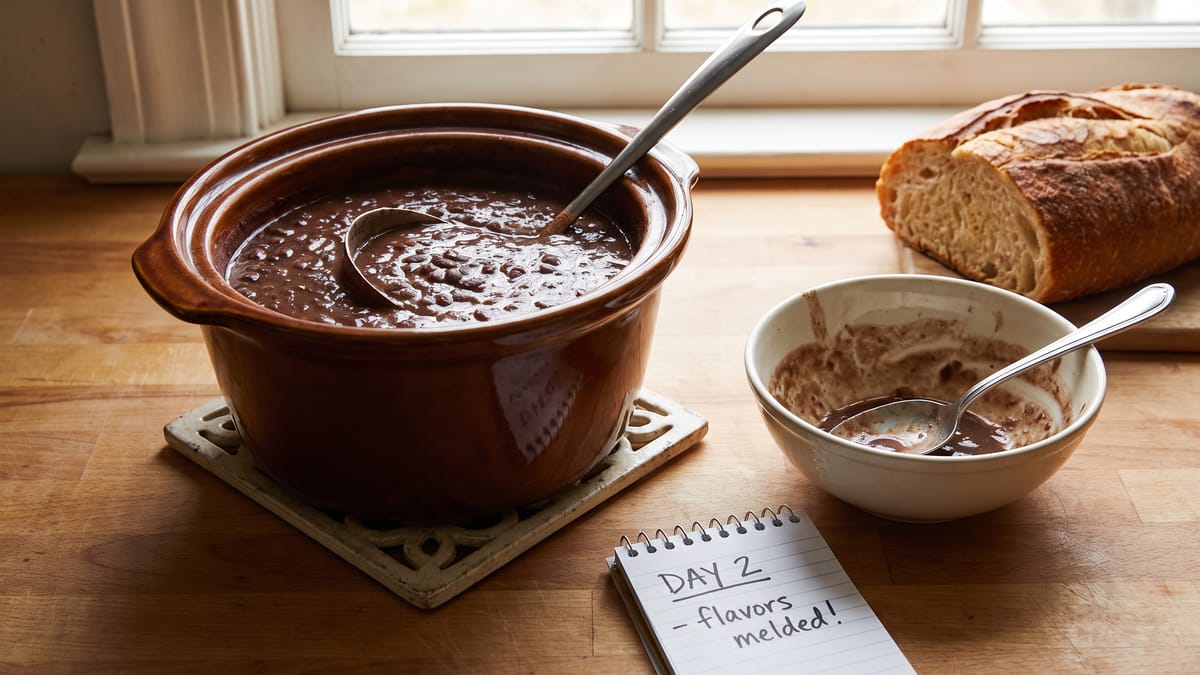
Why Your Slow-Cooker Chipotle Black Bean Soup Tastes Better the Next Day
There are some culinary phenomena that defy immediate explanation, moments when a dish you’ve lovingly prepared tastes good on day one, but absolutely transcendent on day two. This often happens with stews, chilis, and, most gloriously, with a robust slow-cooker chipotle black bean soup. We’ve all experienced it, that moment of reheating a bowl of last night’s creation and finding it has transformed into something richer, deeper, and profoundly more satisfying. But why? What magical alchemy takes place in the quiet hours of refrigeration that elevates a perfectly respectable soup to a dish of unparalleled deliciousness?
Today, we're diving deep into the heart of this mystery, unraveling the delicious science behind why your slow-cooker chipotle black bean soup, brimming with tender chicken, smoky chipotles, and creamy black beans, tastes unequivocally better the next day. It’s a journey into the subtle art of flavor development, texture transformation, and the hidden power of time itself.
The Slow Dance of Flavor Development
Let's begin with the very essence of slow cooking: time. Our slow cooker is a vessel of patience, allowing ingredients to commune and exchange their aromatic secrets over extended periods. This isn't a quick sauté or a rapid boil; it's a gentle, prolonged simmer that encourages a profound melding of flavors. When we talk about our chipotle black bean soup, this means every element, from the earthiness of the black beans to the smoky heat of the chipotle peppers, the savory depth of the chicken, and the bright notes of the aromatics, gets ample opportunity to intermingle and integrate.
Imagine a symphony orchestra. On day one, each instrument plays its part beautifully, but perhaps a little independently. Overnight, however, something shifts. The individual notes begin to harmonize in a more profound way, their vibrations resonating together to create a richer, more cohesive sound. This is precisely what happens with the flavors in your soup. The individual components, which are distinct when freshly cooked, begin to fuse into a unified, complex profile. The spicy kick of the chipotle becomes less of a sudden burst and more of a lingering warmth, woven into the fabric of the entire dish. The subtle sweetness of the onion and the pungent garlic, having simmered for hours, release their full aromatic potential, becoming integral rather than merely additive.
The Power of Collagen and Gelatin: A Mouthfeel Marvel
One of the unsung heroes in our slow-cooker chipotle black bean soup, and a primary reason for its next-day superiority, is the humble bone-in chicken thigh. While boneless, skinless chicken breasts might seem like a quicker, leaner option, they simply cannot deliver the same depth of flavor or, crucially, the same transformative textural magic. Bone-in thighs are rich in connective tissue and collagen. During the long, slow cooking process, this collagen gradually breaks down and converts into gelatin.
Gelatin is a culinary marvel. It’s what gives stocks their body, what makes a perfectly roasted chicken moist, and what contributes immensely to the luxurious mouthfeel of our next-day soup. When the soup is hot and freshly made, this gelatin is fully dissolved and dispersed throughout the liquid. As the soup cools overnight in the refrigerator, the gelatin sets, creating a slightly thicker, more viscous consistency. Then, upon reheating, it re-melts, but its presence is now more pronounced, lending a velvety, almost unctuous quality to each spoonful. This isn't just about thickness; it's about a richer, more satisfying texture that coats the palate beautifully and enhances the perception of flavor. It prevents the soup from feeling thin or watery and contributes to a more substantial, comforting experience. This conversion of collagen to gelatin also helps prevent the chicken itself from drying out, keeping it succulent and flavorful even after extended cooking.
Starch Retrogradation: The Secret to Creamier Texture
Beyond the gelatin from the chicken, another significant factor in the overnight transformation of our soup's texture is starch retrogradation. This might sound like a scientific term, but it’s a process we encounter frequently in the kitchen. Black beans, like many legumes, are rich in starches. When they cook, these starches absorb water and swell, contributing to the initial thickness of the soup.
However, as the soup cools and rests in the refrigerator, these swollen starch molecules begin to reorganize and crystallize. This process, known as starch retrogradation, causes the liquid in the soup to thicken considerably. Have you ever noticed how leftover rice becomes firmer, or how a gravy gets much thicker in the fridge? That's starch retrogradation at work.
For our black bean soup, this means that the broth, which might have been pleasantly thick on day one, becomes wonderfully dense and creamy on day two. It’s a natural thickening agent that develops without any extra effort on our part. This enhanced creaminess isn't just a textural improvement; it also helps to carry and distribute the flavors more effectively, making each spoonful a more concentrated burst of taste. If the soup becomes too thick for your liking upon reheating, a splash of water or broth will easily bring it back to your desired consistency. This thickening also makes it incredibly versatile; a super-thick leftover soup can even be repurposed into delicious refried beans.
The Emulsification Evolution: A Smoother, Richer Broth
Another subtle but crucial transformation that occurs overnight relates to the fat content in the soup. Our recipe, especially if we include a touch of chorizo or use bone-in chicken thighs, will have some rendered fat. When the soup is freshly made, this fat might still be somewhat dispersed, but it can also tend to separate and pool on the surface.
Overnight, as the soup cools and then is reheated, the various components, particularly the gelatin from the chicken and the starches from the beans, work to emulsify the fat more evenly throughout the liquid. We can further aid this process by blending a portion of the beans and any chorizo into a smooth paste. This paste acts as a natural emulsifier, helping to integrate the fat seamlessly into the soup rather than allowing it to form an oily slick on top. The result is a richer, more luxurious broth that feels smoother and more cohesive on the palate. The fat, instead of being a separate element, becomes an intrinsic part of the soup's overall texture and flavor profile, contributing to its depth and satiety.
Building the Foundation: A Recipe for Next-Day Greatness
Now that we understand the "why," let's talk about the "how." Crafting a slow-cooker chipotle black bean soup that truly shines on day two begins with thoughtful preparation and an understanding of how each ingredient contributes to the final masterpiece.
### The Aromatic Overture: Sautéing for Depth
While the slow cooker is a bastion of convenience, a little upfront effort goes a long way. We always recommend taking the time to sauté your aromatics, like onions, garlic, and perhaps some bell peppers, before adding them to the slow cooker with the liquid. This simple step is crucial for building foundational flavor. Sautéing caramelizes the sugars in the onions, deepens the garlic's pungency, and unlocks the full aromatic potential of these ingredients. These rich, developed flavors will then have hours to meld and infuse into the entire soup, creating a more complex and satisfying base. Just remember, every layer of flavor we build contributes to that transcendent next-day experience.
### The Bean Backbone: Dried vs. Canned
For the absolute best results and that desired creamy texture, we advocate for using dried black beans. While canned beans are convenient, dried beans offer a superior texture and absorb the flavors of the soup more effectively.
If using dried beans, a crucial step is soaking them overnight in salted water. This isn't just about convenience; soaking softens the bean skins, significantly reduces cooking time, and helps prevent the beans from bursting during the long simmer. It also aids in more even cooking, ensuring each bean is tender throughout.
When cooking dried black beans in a slow cooker, typical times are 8 to 10 hours on low or 6 to 8 hours on high until the beans are very tender. A critical food safety note: dried beans must reach a simmer to be safe to eat. If your slow cooker's low setting does not visibly achieve a simmer, we strongly recommend increasing the heat to high for at least 15 minutes to ensure proper cooking and safety.
### The Chicken Heart: Bone-in Thighs for the Win
As we discussed, bone-in chicken thighs are indispensable for this soup. Their inherent richness, combined with the collagen that transforms into gelatin, is what gives our soup its luxurious body and mouthfeel. We simply place them directly into the slow cooker, nestled among the beans and aromatics. They will slowly tenderize and release their incredible flavor into the broth.
### The Spice Sieve: Building Layers of Heat and Smoke
The heart of our "chipotle" black bean soup lies, naturally, in the chipotle peppers. Chipotle peppers in adobo sauce offer a fantastic balance of smoky heat and a tangy, slightly sweet undertone. The amount you use is entirely up to your heat preference. We often start with half a chipotle pepper for a mild warmth, increasing to one or more for a bolder, spicier kick. The adobo sauce itself is also packed with flavor, so don't discard it.
To create a truly deep and layered flavor profile, we don't stop at chipotle. A sieve of spices, perhaps chili powder, cumin, smoked paprika, and oregano, adds further complexity. Toasting these spices briefly in a dry pan before adding them to the slow cooker can awaken their aromas even more intensely. These spices, like the aromatics, will have hours to infuse and meld, becoming an integral part of the soup's character rather than just a superficial dusting.
### The Liquid Foundation: Broth and Beyond
For the liquid component, a good quality chicken or vegetable broth is paramount. It forms the base that carries all the other flavors. We also often include a can of diced tomatoes, which adds a touch of acidity and sweetness, brightening the overall profile of the soup. A bay leaf or two, while seemingly minor, contributes a subtle herbaceous note that rounds out the savory elements.
The Finishing Touches: Shredding, Adjusting, and Enhancing
The beauty of slow cooking is its hands-off nature for much of the process, but there are a few key steps at the end that elevate the soup from good to truly exceptional.
### Shredding the Chicken: A Labor of Love
Near the end of the cooking time, when the beans are tender and the chicken is falling-off-the-bone soft, it's time to remove the chicken. Carefully lift the bone-in thighs from the slow cooker. Once they're cool enough to handle, discard the bones and any excess skin. Then, using two forks or your fingers, shred the tender chicken meat into bite-sized pieces. Return this shredded chicken to the soup. This ensures the chicken is perfectly distributed throughout each serving and prevents it from becoming overly mushy or dry from prolonged exposure to the heat.
### Adjusting the Heat: A Personal Preference
This is your opportunity to fine-tune the soup to your palate. Taste the soup. Does it need more heat? You can always add a bit more minced chipotle or a dash of the adobo sauce. If you've gone a bit too far, a dollop of sour cream or crema upon serving can help temper the spice. Speaking of which, sour cream or crema can also be stirred directly into the soup at this stage, adding a lovely tang and creaminess to the entire batch, though we often prefer to offer it as a garnish for individual servings.
### The Blending Boost: For Ultimate Creaminess
For that ultimate creamy texture we discussed, carefully remove about 1-2 cups of the soup (including some beans and a bit of the liquid) and blend it until smooth using an immersion blender or a regular blender. If using a regular blender, be extremely cautious when blending hot liquids, only filling the blender halfway and venting the lid. Return the blended portion to the slow cooker and stir it in. This creates that wonderful, thick, emulsified broth that makes the soup so irresistible on day two.
Scaling and Storage: Planning for Next-Day Bliss
This slow-cooker chipotle black bean soup is incredibly forgiving and scales beautifully.
### Scaling Up
If you're cooking for a crowd or simply want plenty of leftovers (which, let's be honest, is the whole point here!), you can easily double the recipe. Ensure your slow cooker is large enough to accommodate the increased volume, typically a 6-quart or larger for a doubled batch. You might need to add a bit more liquid if the ingredients seem too crowded, and the cooking time might extend slightly, but generally, the ratios remain consistent.
### Storing for Superiority
Once the soup has cooled, transfer it to airtight containers. It will keep beautifully in the refrigerator for 3 to 4 days, undergoing its magical transformation during this time. When you're ready to enjoy it, simply reheat it gently on the stove over medium-low heat, stirring occasionally, or in the microwave until warmed through. Remember, it will likely be much thicker than it was on day one, so don't hesitate to thin it with a splash of water, chicken broth, or even a bit of milk to achieve your desired consistency. This thickening also makes it ideal for repurposing; a very thick leftover soup can be mashed and used as a flavorful base for burritos or as a side of refried beans.
Putting It All Together: A Culinary Revelation
The phenomenon of food tasting better the next day isn't just an old wives' tale; it's a testament to the intricate processes of flavor development, textural transformation, and chemical reactions that continue long after the heat is turned off. For our slow-cooker chipotle black bean soup, it's a symphony of melding flavors, the transformative power of collagen converting to gelatin, the structural changes of starch retrogradation, and the graceful emulsification of fats.
So, the next time you ladle out a bowl of this wonderfully robust soup on day one, savor it, but know that you're only experiencing a prelude. The true masterpiece awaits you on day two, after a night of quiet contemplation in the refrigerator. It's a culinary revelation, a delicious reminder that sometimes, the best things in life, and in our slow cookers, are worth waiting for. Embrace the leftovers, for they are not merely remnants, but the promise of an even more profound and satisfying meal. Happy cooking, and even happier eating, especially tomorrow!