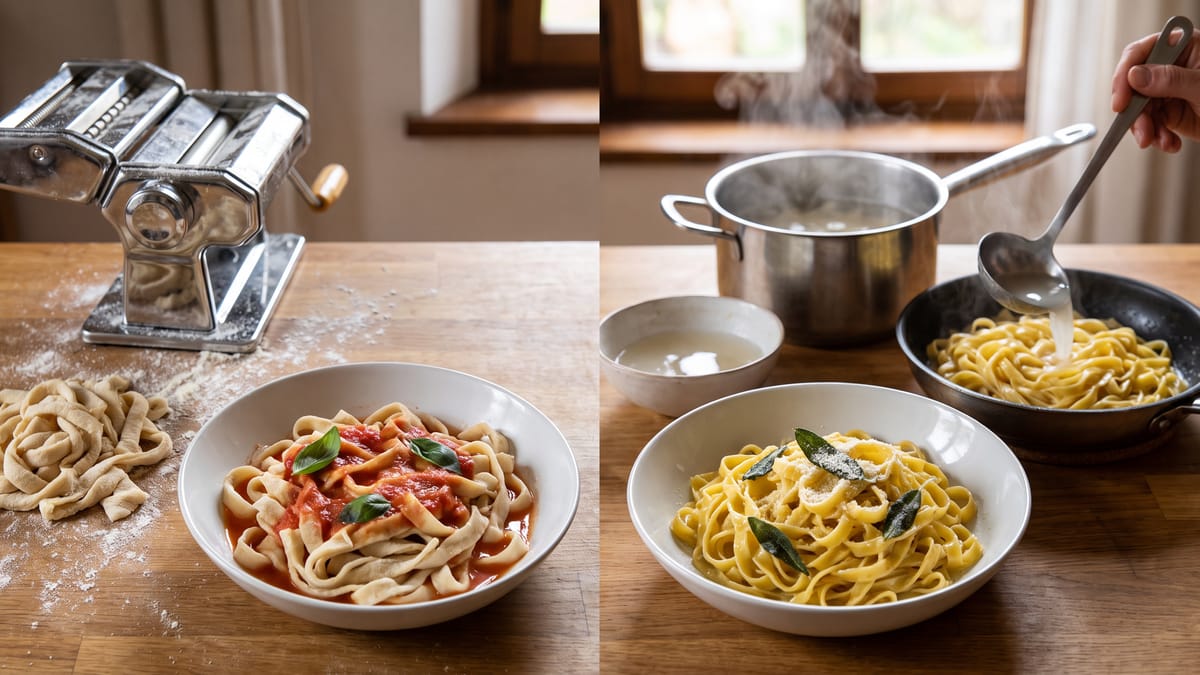
Why Your Homemade Pasta Never Tastes Like a Restaurant—and the Easy Fix
We’ve all been there, haven't we? That moment of triumph when we pull a fresh, homemade pasta dish from the kitchen, steam rising enticingly, only to take that first bite and realize, with a slight deflation of spirit, that it just doesn't quite measure up to the ethereal, perfectly textured pasta we savored at that charming trattoria last month. It's a common lament among home cooks, a culinary conundrum that leaves many scratching their heads. Why does our lovingly crafted tagliatelle, painstakingly rolled and cut, often fall short of that restaurant-quality ideal? We invest in good ingredients, follow recipes diligently, and even splurge on fancy pasta makers, yet the elusive perfection seems to remain just out of reach.
The truth is, achieving restaurant-caliber pasta at home involves a confluence of factors, many of which are often overlooked or misunderstood. It's not just about the flour and eggs, though those are undeniably crucial. It's about technique, yes, but also about understanding the science behind the dough, the nuances of hydration, the art of drying, and even the subtle alchemy of the cooking process itself. We're going to embark on a culinary journey together, dissecting the common pitfalls that prevent our homemade pasta from truly shining, and more importantly, providing you with the actionable, easy fixes that will elevate your pasta game from good to absolutely glorious. Get ready to transform your kitchen into your very own pasta laboratory, where every strand and every shape becomes a testament to your newfound mastery.
The Flour: More Than Just "All-Purpose"
Let's begin at the very foundation of any pasta, the flour. Many of us instinctively reach for the ubiquitous all-purpose flour from our pantry, assuming it's a suitable starting point. While it can certainly make a passable pasta, it's rarely the secret ingredient behind that restaurant-quality chew and tenderness. The magic, you see, often lies in the type of wheat and its milling process.
Understanding Semolina and "00" Flour
The two primary flours that serious pasta makers, both professional and amateur, swear by are durum wheat semolina and Italian "00" flour. Durum wheat is a hard wheat variety, rich in protein and gluten, which gives pasta its characteristic firmness and ability to hold its shape during cooking. Semolina, specifically, is a coarsely ground durum wheat, lending a slightly grainy texture and a beautiful golden hue to the pasta. It's fantastic for extruded shapes like orecchiette or cavatelli, and it can also be used, often in combination with other flours, for rolled pasta.
Italian "00" flour, on the other hand, is a finely milled soft wheat flour. The "00" refers to its fineness, indicating it has been ground to a powder-like consistency, removing most of the bran and germ. This results in a very low-ash, high-protein flour that produces incredibly silky, tender pasta. It's the go-to for delicate, egg-based pastas like tagliatelle, fettuccine, and ravioli. The high protein content, despite being a soft wheat, still provides enough gluten structure for a resilient dough.
The Easy Fix: Choose Your Flour Wisely
Our first simple fix is to ditch the all-purpose flour for your pasta endeavors, or at least, use it in combination with a more appropriate flour. For egg pastas, invest in a bag of Italian "00" flour. You'll immediately notice a difference in the dough's texture and the final product's tenderness. For a more robust, chewy pasta, particularly if you're making shapes that don't rely heavily on eggs, try durum wheat semolina. Many professional chefs combine these two, perhaps a 50/50 blend, to achieve a balance of tenderness and chew. Experiment to find your preferred ratio. The subtle nuances in flavor and texture will be immediately apparent, elevating your pasta from merely good to truly exceptional.
The Hydration Equation: Not Too Wet, Not Too Dry
Once we've selected our flour, the next critical step is hydration. This is where many home cooks, ourselves included in our early pasta-making days, often go astray. The common instinct is to add enough liquid, usually eggs or water, to create a pliable, soft dough right from the start. However, this often leads to a dough that's too sticky, difficult to work with, and ultimately results in a pasta that's either too soft or falls apart during cooking. Conversely, too little hydration leads to a crumbly, unworkable dough that cracks and resists stretching.
The "Goldilocks" Zone of Pasta Dough
The ideal pasta dough is firm, almost stiff, yet still cohesive. It should feel like a dense, smooth clay, not a soft bread dough. This firmness is crucial because it allows the gluten to develop properly during kneading, creating a strong, elastic network that gives the pasta its structure and chew. A firm dough also makes rolling and shaping much easier, preventing sticking and tearing.
The Easy Fix: Start Small, Adjust Gradually
Our easy fix here is to be conservative with your liquid. When making egg pasta, start with the recommended number of eggs for your flour quantity, but don't add all the liquid at once if you're using a recipe that calls for a range. If using water, add it tablespoon by tablespoon. Mix the ingredients until they just come together into a shaggy mass. Then, knead. As you knead, the dough will continue to hydrate and smooth out. If, after several minutes of kneading, the dough still feels excessively dry and crumbly, add a tiny bit more liquid, perhaps a teaspoon at a time, until it just comes together. It’s far easier to add more liquid than to correct an overly wet dough. The goal is a dough that requires a bit of effort to knead, but eventually becomes smooth and elastic, springing back when poked. This patient, gradual approach to hydration is a game-changer.
The Art of Kneading: Building Strength and Elasticity
Kneading is often seen as a chore, a necessary evil before the fun of rolling and cutting. However, for pasta dough, it's a fundamental step, arguably as important as the ingredients themselves. Proper kneading develops the gluten, the protein network within the flour, which gives pasta its characteristic chewiness and elasticity. Without sufficient kneading, your pasta will be weak, prone to tearing, and lack that satisfying bite.
The Science of Gluten Development
As we knead, the gluten proteins, glutenin and gliadin, link together to form long, elastic strands. Imagine these strands as tiny springs. The more we knead, the more these springs develop and intertwine, creating a strong, resilient matrix. This matrix allows the pasta to stretch thin without breaking and holds its shape beautifully during cooking. Insufficient kneading leaves these strands undeveloped, resulting in a dough that's difficult to roll and pasta that's gummy or falls apart.
The Easy Fix: Embrace the Knead, Rest and Repeat
Our simple fix for kneading is to commit to it. Don't stop at five minutes. For most pasta doughs, especially those made with "00" flour and eggs, we're looking at a solid 10 to 15 minutes of vigorous kneading by hand. If you're using a stand mixer with a dough hook, aim for 8 to 10 minutes. The dough should transform from a shaggy, rough mass into a smooth, supple, and elastic ball. When you press a finger into it, it should slowly spring back.
Another crucial, yet often overlooked, aspect is resting the dough. After kneading, wrap your dough tightly in plastic wrap and let it rest at room temperature for at least 30 minutes, or even an hour. This resting period allows the gluten to relax, making the dough much easier to roll and preventing it from snapping back. It's like giving the dough a much-needed spa treatment, leaving it pliable and cooperative. Think of it as a brief intermission before the main act.
Rolling It Out: The Pursuit of Thinness
This is where the magic truly begins to happen, transforming a humble ball of dough into delicate sheets. Many home cooks, however, stop short of rolling the dough thin enough, which is a significant factor in why homemade pasta can sometimes feel heavy or doughy compared to its restaurant counterpart. Professional kitchens aim for an almost translucent thinness, allowing the pasta to cook quickly and absorb sauces beautifully.
The Art of the Imperfectly Perfect Sheet
Whether you're using a hand-cranked pasta machine or a rolling pin, the goal is consistent, very thin sheets. With a pasta machine, we often err by skipping steps, jumping from a wide setting to a very narrow one too quickly. This can tear the dough or create unevenness. With a rolling pin, it's a matter of patience and technique, ensuring even pressure across the surface.
The Easy Fix: Go Thinner, Step by Step
Our easy fix here is to embrace the thinness. When using a pasta machine, start on the widest setting, and gradually decrease the thickness, passing the dough through each setting once or twice. Don't skip numbers. If your machine has settings from 1 to 9, for example, go through 1, then 2, then 3, and so on, until you reach your desired thinness. For most egg pastas, we're aiming for a setting of 6 or 7, sometimes even 8, depending on the machine and the desired outcome. The sheet should be thin enough that you can almost see your hand through it.
If you're using a rolling pin, this requires a bit more elbow grease and attention. Roll from the center outwards, rotating the dough frequently to maintain a circular or rectangular shape. Don't be afraid to stretch it gently with your hands as you roll. If the dough starts to snap back, let it rest for a few minutes, covered, before continuing. The thinner you roll it, the more delicate and restaurant-like your pasta will be. This pursuit of thinness is a critical differentiator.
Drying Time: A Crucial, Often Skipped Step
Once our pasta is beautifully cut and shaped, the temptation is to immediately plunge it into boiling water. However, this is another common mistake that can lead to subpar results. Fresh pasta, especially egg pasta, benefits immensely from a brief drying period. This isn't about making it shelf-stable, but rather about allowing the surface to firm up slightly.
The Science of Surface Drying
When fresh pasta is cooked immediately, the exterior can become mushy or overly soft before the interior is perfectly al dente. A short drying period allows the surface to dry out and form a slight skin. This skin acts as a protective barrier, helping the pasta hold its shape better during cooking and preventing it from becoming sticky or clumping together. It also contributes to that satisfying bite, providing a slight resistance that we associate with perfectly cooked pasta.
The Easy Fix: Give Your Pasta a Breather
Our simple fix is to embrace the drying rack. After cutting your pasta, arrange it in a single layer on a lightly floured surface, a clean kitchen towel, or ideally, a pasta drying rack. Allow it to air dry for 15 to 30 minutes, or even up to an hour, depending on the humidity in your kitchen. You'll notice the pasta becoming slightly stiffer and less pliable. This isn't about making it hard, just firm enough to withstand the rigors of boiling. For filled pastas like ravioli, a shorter drying time is usually sufficient, just enough to prevent sticking. This seemingly small step makes a significant difference in the final texture.
The Boiling Water: A Salty Sea and a Rolling Boil
We often hear the adage "pasta water should be as salty as the sea," and while that might be a slight exaggeration, the sentiment is absolutely correct. Many home cooks under-salt their pasta water, or don't use enough water, which significantly impacts the final flavor and texture of the pasta.
The Importance of a Brine
Pasta, being porous, absorbs water as it cooks. If that water is unsalted, the pasta will taste bland, regardless of how flavorful your sauce is. Salting the water generously seasons the pasta from the inside out, infusing it with flavor. Think of it as brining your pasta. As for the amount of water, pasta needs plenty of space to move freely and cook evenly. Overcrowding the pot lowers the water temperature too quickly, leading to gummy or unevenly cooked pasta.
The Easy Fix: Salt Generously, Boil Vigorously
Our easy fix is twofold. First, use a large pot, even for a modest amount of pasta. We want ample space for the pasta to swim. Second, and crucially, salt the water generously. For every liter of water, aim for at least one tablespoon of coarse sea salt. Taste the water; it should taste distinctly salty, like a light broth. Bring the water to a rolling boil, a vigorous, bubbling boil, before adding your pasta. This ensures the temperature doesn't drop too drastically when the pasta is added, allowing it to cook quickly and evenly. Once the pasta is in, give it a stir to prevent sticking. Cook fresh pasta for a very short time, often just 2 to 4 minutes, until it's perfectly al dente.
The Sauce Integration: A Marriage of Flavors
This is perhaps one of the most significant differentiators between homemade and restaurant pasta. We often drain our pasta, then dollop some sauce on top, giving it a quick toss. While this might be convenient, it misses a crucial step in creating a harmonious, cohesive dish. Restaurant chefs understand that the pasta and sauce aren't merely served together, they are married.
The Emulsion and the Finish
The magic happens in the pan, where the pasta, still slightly undercooked, meets the sauce. A splash of starchy pasta water, a knob of butter, and a vigorous toss create a beautiful emulsion. The starch from the pasta water helps to bind the sauce to the pasta, creating a glossy, rich coating that adheres to every strand. The butter adds richness and silkiness, and the final minute or two of cooking in the sauce allows the pasta to absorb the flavors, truly becoming one with the dish.
The Easy Fix: Finish in the Pan
Our simple fix is to always finish your pasta in the pan with the sauce. When the pasta is about a minute or two shy of being perfectly al dente, use tongs to transfer it directly from the boiling water into your pan of warm sauce. Don't drain it completely; we want some of that precious starchy pasta water. Add a ladle or two of the pasta cooking water to the pan. If using butter, add a knob now. Toss vigorously, or even stir with a wooden spoon, allowing the pasta to absorb the sauce and the liquids to emulsify. Continue cooking for another minute or two, until the sauce coats the pasta beautifully and the pasta is perfectly cooked. This step transforms a good pasta dish into an extraordinary one, creating that restaurant-quality sheen and depth of flavor.
The Tools of the Trade: Not Just for Show
While skill and technique are paramount, having the right tools can certainly make the process easier and more enjoyable. We often think of pasta makers as a luxury, but a good one can be a worthwhile investment, especially if you plan to make pasta regularly.
From Rolling Pin to Pasta Machine
A sturdy rolling pin and ample counter space are perfectly sufficient for making delicious pasta by hand. However, a hand-cranked pasta machine offers consistency in thinness and speeds up the rolling process considerably. For those who fall deeply in love with pasta making, a stand mixer attachment or an electric pasta extruder can further streamline the process. The key is to choose tools that empower you, not intimidate you.
The Easy Fix: Invest Wisely, Maintain Diligently
Our easy fix here is to consider investing in a basic hand-cranked pasta machine if you're serious about elevating your homemade pasta. It doesn't have to be the most expensive model, but a well-built one will last for years. If you already have one, ensure it's clean and well-maintained. Always flour your sheets lightly before passing them through the rollers, and clean the machine thoroughly after each use to prevent dough buildup. For those committed to hand-rolling, a good quality, heavy rolling pin and a large, clean work surface are your best friends. The right tools, used correctly, can significantly improve the consistency and quality of your pasta.
Putting It All Together
Achieving restaurant-quality pasta at home isn't about some secret ingredient or an arcane technique known only to professional chefs. It's about a series of small, deliberate choices and an understanding of the science and art behind pasta making. From selecting the right flour and meticulously hydrating the dough, to diligently kneading and patiently rolling it to an almost ethereal thinness, each step contributes to the final masterpiece.
Embracing the brief drying period, ensuring your pasta water is a briny, rolling sea, and critically, finishing your pasta directly in the sauce, are all transformative practices. These aren't just tips; they are fundamental principles that will elevate your homemade pasta from a humble meal to a culinary triumph. We encourage you to experiment, to taste, and to trust your instincts. The journey of making pasta is as rewarding as the eating itself. With these insights and actionable fixes, you are now equipped to create pasta that not only rivals, but perhaps even surpasses, your favorite restaurant's offering. So, roll up your sleeves, embrace the flour, and let the magic unfold in your kitchen. Buon appetito!