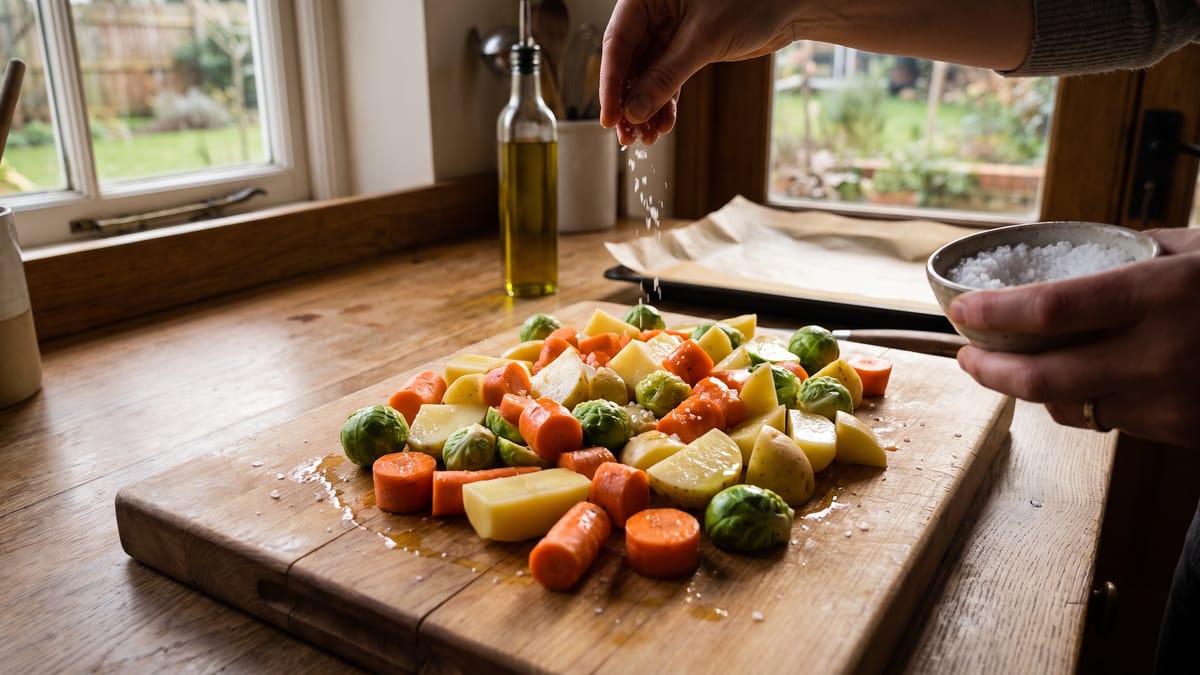
Why You Should Salt Roasted Vegetables Before They Hit the Pan
Roasted vegetables are a culinary delight, transforming humble roots and greens into caramelized, tender morsels bursting with flavor. We all aspire to those deeply browned, slightly crisp edges and a succulent interior, a far cry from the pallid, steamed versions that sometimes emerge from the oven. The secret to achieving this roasted nirvana often lies in a surprisingly simple step taken before the vegetables even touch the hot pan: salting. This seemingly minor action is, in fact, a foundational technique rooted in culinary science, capable of elevating your roasted vegetables from merely good to truly spectacular. It is a game-changer for browning, flavor, and texture, and understanding its nuances will unlock a new level of roasting mastery.
The Science of Salting: Osmosis and Maillard Magic
At the heart of why pre-salting works its magic is a process called osmosis. Vegetables, being living organisms, are largely composed of water, held within their cellular structures. When we apply salt to their surface, we create an osmotic gradient. The salt, being a solute, attracts water. Consequently, moisture is drawn out of the vegetable cells and onto the surface. This happens quite rapidly, often within three to five minutes. This surface moisture, if left unaddressed, would turn into steam in the hot oven, effectively steaming your vegetables rather than roasting them. Steaming prevents the crucial Maillard reaction, the chemical process responsible for those coveted brown crusts and complex, savory flavors.
By drawing out this initial burst of moisture, we are priming the vegetables for optimal browning. Once this moisture has been released, and critically, patted dry, the surface of the vegetable is ready to engage directly with the dry heat of the oven. This allows the Maillard reaction and caramelization, the browning of natural sugars, to begin much sooner and more effectively, resulting in a deeper, richer color and a more intense flavor profile. Furthermore, as water leaves the cells, the natural sugars and flavor compounds within the vegetable become more concentrated, leading to a more profound taste experience.
Timing is Everything: When and How Long to Salt
The timing of your salting is paramount and depends significantly on the type of vegetable you are roasting. For particularly watery vegetables, such as eggplant, zucchini, summer squash, or tomatoes, a longer salting period is highly beneficial. We recommend salting these types of vegetables approximately 30 to 60 minutes before they are destined for the oven. This extended period allows a substantial amount of moisture to be drawn out. After this salting period, it is absolutely crucial to pat the vegetables thoroughly dry with paper towels. This step removes the pooled moisture, preventing it from turning into steam and ensuring a dry surface for optimal browning.
Interestingly, while osmosis initially pulls water out, the brine created on the surface can be reabsorbed into the vegetable cells within 30 to 60 minutes, carrying the salt deep into the flesh. This process, as documented by culinary experts like Harold McGee, results in more evenly seasoned vegetables throughout, rather than just on the surface. For less watery vegetables, such as carrots, potatoes, or Brussels sprouts, salting immediately before roasting, or even after they have begun to brown, may be preferable to avoid over-softening. The key is to assess the inherent moisture content of your chosen vegetable.
The Right Salt for the Job
While any salt will technically draw out moisture, the type of salt we use can impact the process and our final result. For pre-salting, kosher salt is generally our preferred choice. Its larger, coarser crystals are easier to sprinkle evenly and adhere well to the surface of the vegetables. The larger crystals also dissolve more slowly, allowing for a more controlled drawing out of moisture. We aim for approximately one teaspoon of kosher salt per pound of vegetables for this pre-salting step, adjusting slightly based on personal preference and the specific vegetable. Fine table salt, with its smaller crystals, can sometimes over-salt quickly and may not distribute as evenly.
Common Pitfalls to Avoid
Even with the best intentions, a few common mistakes can derail our efforts to achieve perfectly roasted vegetables. One of the most critical is failing to pat the vegetables dry after salting. As we have discussed, any residual moisture on the surface will create steam, undermining our goal of crisp, browned edges. Take the time to thoroughly blot away any visible liquid.
Another frequent misstep is overcrowding the pan. When too many vegetables are crammed onto a baking sheet, they release moisture, and that moisture has nowhere to escape. This creates a steaming environment, again thwarting browning. Always arrange your vegetables in a single layer, ensuring there is ample space between each piece. If necessary, use two baking sheets rather than one overloaded one.
The oven temperature also plays a significant role. Lower temperatures, such as 375°F, tend to prolong cooking and can lead to softer, less browned results. For most roasted vegetables, we find that higher oven temperatures, around 425°F, are ideal. The intense heat speeds up evaporation and promotes the rapid crisping and browning we are after.
Finally, consider the unique case of mushrooms. While many vegetables benefit from pre-salting, mushrooms are an exception. They are incredibly porous and release a tremendous amount of moisture. Salting them too early can lead to excessive moisture loss and a rubbery texture. For mushrooms, we recommend salting after they have begun to brown in the pan, allowing them to release some moisture and develop color first.
Putting It All Together
The art of roasting vegetables is a dance between heat, moisture, and seasoning. By embracing the simple yet powerful technique of pre-salting, especially for watery vegetables, we are actively participating in that dance, setting the stage for superior results. We draw out excess moisture, concentrate inherent flavors, and prepare the surface for that irresistible Maillard reaction. Remember to choose the right salt, time your application thoughtfully based on the vegetable's moisture content, and most importantly, always pat dry. Combine this with proper pan spacing and a sufficiently hot oven, and you will consistently produce roasted vegetables that are deeply flavored, beautifully browned, and wonderfully textured. A final sprinkle of salt after roasting can provide an immediate burst of surface flavor, complementing the deep seasoning achieved through the pre-salting process. This holistic approach ensures every bite is a testament to thoughtful culinary execution.