Why You Should Add Pasta Water to Your Sauce Before Serving
We've all been there. A simmering pot of luscious pasta sauce, perfectly al dente noodles, and the promise of a delightful meal. We drain the pasta with gusto, perhaps shaking it a little too enthusiastically, then unceremoniously dump it into the awaiting sauce, give it a quick stir, and serve. It's a perfectly acceptable way to enjoy pasta, of course, but what if we told you there's a simple, almost magical ingredient often discarded without a second thought, that can elevate your pasta dishes from good to truly extraordinary? We're talking about pasta water, that cloudy, starchy liquid left behind after cooking our beloved noodles. Far from being mere waste, this humble liquid is a culinary secret weapon, a veritable elixir that can transform your sauces, bind your ingredients, and impart a professional sheen to your home-cooked meals.
The Unsung Hero: What is Pasta Water, Anyway?
Before we delve into the myriad reasons why you should embrace this culinary gem, let's first understand what pasta water actually is and why it possesses such remarkable properties. As pasta cooks, it releases starch into the surrounding water. This isn't just any starch; it's a specific type of starch that, when introduced into a sauce, acts as a natural emulsifier and thickener. Think of it as a subtle, flavor-neutral binder that helps marry all the disparate elements of your sauce into a harmonious whole. The water also absorbs some of the pasta's inherent flavor, albeit subtly, adding another layer of complexity to the final dish. It becomes a cloudy, slightly viscous liquid, a testament to its transformative power.
The Science Behind the Magic: Emulsification and Thickening
The primary reason pasta water is so invaluable lies in its ability to emulsify and thicken. An emulsion, in culinary terms, is a stable mixture of two liquids that would ordinarily separate, like oil and water. Many classic pasta sauces, particularly those involving oil, butter, or cheese, benefit immensely from emulsification. The starches in the pasta water act as a bridge, helping the fat and liquid components of your sauce come together, creating a smooth, velvety texture that clings beautifully to each strand of pasta. Without this emulsifying agent, your sauce might appear greasy or watery, with the oil separating from the other ingredients.
Beyond emulsification, pasta water also serves as a gentle thickener. Unlike flour or cornstarch, which can sometimes leave a pasty or gluey residue, pasta water thickens subtly, adding body and richness without overwhelming the delicate flavors of your sauce. It’s a natural, unobtrusive way to achieve that perfect consistency, ensuring your sauce is neither too thin nor too clumpy. This is particularly crucial for sauces that might otherwise be a bit watery, such as a simple tomato sauce or a light pesto.
The Culinary Benefits: Why It Matters for Your Sauce
Now that we understand the science, let's explore the tangible culinary benefits of incorporating pasta water into your sauce. These aren't just minor improvements; they are game-changers that can elevate your pasta dishes to new heights.
Achieving the Perfect Sauce Consistency
One of the most immediate and noticeable benefits is the ability to achieve that elusive, restaurant-quality sauce consistency. Have you ever wondered how professional chefs manage to create sauces that perfectly coat every piece of pasta without being either too runny or too thick? The answer, more often than not, involves judicious use of pasta water. It allows you to control the thickness of your sauce with precision, adding a little at a time until you reach your desired texture. This control is paramount, as the ideal consistency ensures that every bite is imbued with flavor.
Enhancing Flavor and Mouthfeel
While pasta water itself doesn't have a strong, distinct flavor, it acts as a flavor enhancer. By helping the sauce emulsify and cling to the pasta, it ensures that every ingredient, every herb, every spice, is evenly distributed and tasted with each mouthful. Furthermore, the slightly viscous nature of the emulsified sauce contributes to a more luxurious mouthfeel. It feels richer, more substantial, and more satisfying on the palate. This subtle textural improvement is often what differentiates a good pasta dish from a truly exceptional one.
Creating a "Sauce-Cling" Factor
This is perhaps the most crucial benefit. A well-made pasta dish isn't just about delicious ingredients; it's about how those ingredients interact with the pasta itself. We want our sauce to lovingly embrace each strand, each shape, rather than pooling at the bottom of the bowl. Pasta water, through its emulsifying and thickening properties, creates this desirable "sauce-cling" factor. The starches in the water help the sauce adhere to the pasta, ensuring that every forkful is a perfect marriage of noodle and flavor. This makes for a much more cohesive and enjoyable eating experience.
Reducing the Need for Extra Fats
Because pasta water helps create an emulsion, it can sometimes allow you to reduce the amount of extra fats, like butter or olive oil, that you might otherwise add to achieve a smooth texture. While we certainly aren't advocating for a fat-free existence, this can be a welcome benefit for those looking to lighten up their dishes without sacrificing flavor or texture. The starch acts as a natural bridge, allowing the existing fats to integrate seamlessly into the sauce.
A Simple, Cost-Free Ingredient
Perhaps one of the most appealing aspects of using pasta water is that it's completely free and readily available. You're already boiling water for your pasta, so why not harness its latent power? There's no special trip to the grocery store, no additional expense, just a conscious decision to save a little of that cloudy liquid before draining. It's a testament to the fact that some of the greatest culinary secrets are often the simplest.
When to Use Pasta Water: A Practical Guide
While the general principle is to add pasta water to your sauce, the timing and amount can vary depending on the type of sauce you're making. Here's a practical guide to help you incorporate this technique into your cooking repertoire.
For Creamy Sauces: Carbonara, Cacio e Pepe, Alfredo
Creamy sauces are where pasta water truly shines. For dishes like Carbonara, Cacio e Pepe, or Alfredo, the starch in the pasta water is essential for creating that silky, emulsified texture that defines these classics.
When making Carbonara, for instance, you'll often combine egg yolks, Pecorino Romano cheese, and black pepper. Adding a ladle or two of hot, starchy pasta water to this mixture, while whisking vigorously, helps to temper the eggs and create a smooth, creamy sauce that won't scramble. The starch acts as a stabilizer, preventing the sauce from breaking.
Similarly, for Cacio e Pepe, the magic lies in the emulsion of Pecorino Romano, black pepper, and pasta water. The starch helps the cheese melt into a luscious, cohesive sauce that clings perfectly to the pasta. Without it, you'd likely end up with clumpy cheese and a watery sauce.
For Tomato-Based Sauces: Marinara, Arrabbiata
Even seemingly straightforward tomato-based sauces benefit from a splash of pasta water. If your tomato sauce seems a little too thick or a bit dry, a ladle of pasta water can loosen it up while simultaneously adding body and helping it bind to the pasta. It prevents the sauce from simply sliding off the noodles. It also helps to mellow out any acidity in the tomatoes, creating a more balanced flavor profile.
For Pesto and Oil-Based Sauces
Pesto, with its vibrant green hue and rich flavor, can sometimes be a bit oily. A small amount of pasta water can help emulsify the oil with the other ingredients, creating a smoother, more cohesive sauce that adheres better to the pasta. For other oil-based sauces, like aglio e olio, the pasta water creates a light, glossy coating that ensures every strand is flavored.
For Meat Sauces: Bolognese, Ragu
While meat sauces are often robust and thick on their own, a touch of pasta water can still improve their texture and adherence. It helps to integrate the meat and vegetables with the sauce, creating a more harmonious blend and ensuring that every component is evenly distributed on the pasta. It can also help to loosen a sauce that has become too reduced.
The Technique: How to Save and Use Pasta Water
Saving and using pasta water is incredibly simple, yet it's a step often overlooked.
The Crucial Step: Don't Drain It All
The most important thing is to not drain all of your pasta water immediately. Before you pour the pasta into a colander, take a heatproof measuring cup or a ladle and scoop out at least one to two cups of the starchy cooking liquid. We often recommend saving even more, just in case, as you can always discard any excess.
Timing is Everything: When to Add It
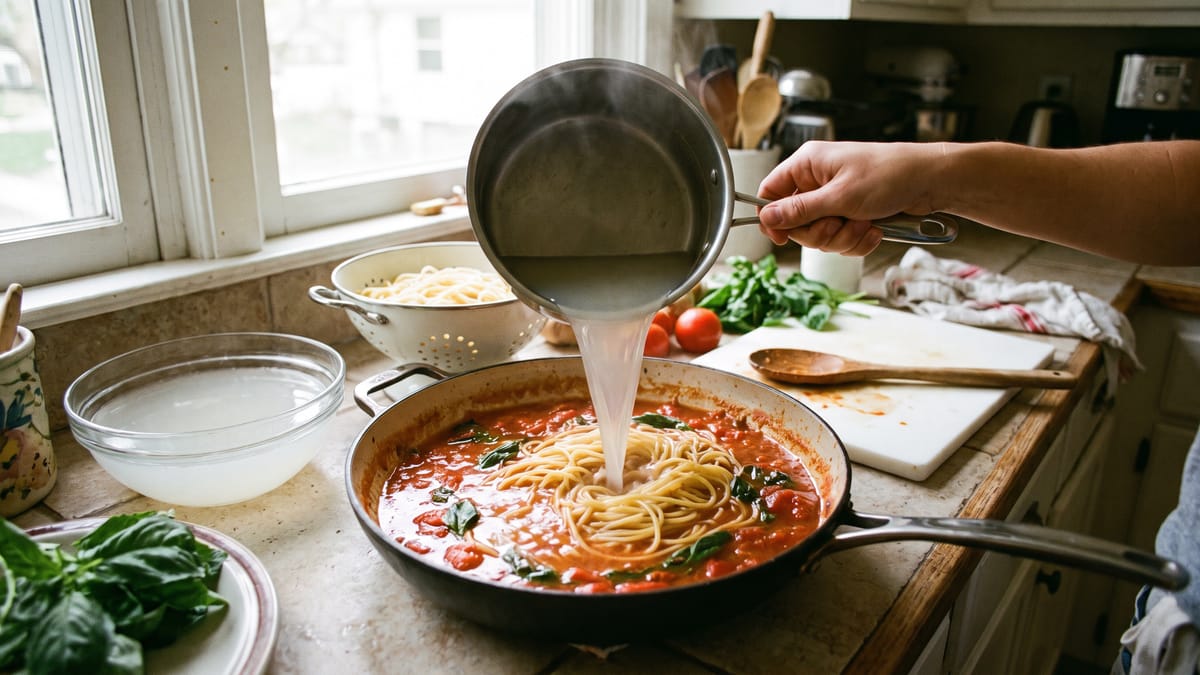
The ideal time to add pasta water is usually when you combine the cooked pasta with your sauce. After draining the pasta, transfer it directly to your pan of simmering sauce. Then, add the pasta water gradually, a ladleful at a time, stirring constantly. This allows you to observe the consistency and adjust as needed.
The "Sauté and Finish" Method
Many chefs utilize a technique where they finish cooking the pasta directly in the sauce with a splash of pasta water. This allows the pasta to absorb even more of the sauce's flavor and helps create a perfectly integrated dish. After cooking your pasta until it's just shy of al dente, transfer it directly to your pan of simmering sauce, along with a ladle or two of pasta water. Continue to cook for another minute or two, stirring frequently, until the pasta is perfectly al dente and the sauce has reached your desired consistency. This method is particularly effective for creamy or cheese-based sauces.
Don't Forget the Salt
Remember that pasta water is already seasoned with salt from cooking the pasta. When adding it to your sauce, be mindful of the overall saltiness of your dish and adjust accordingly. It's always better to add less initially and taste, then add more if needed.
Troubleshooting: What if My Sauce is Too Thin or Too Thick?
Even with the best intentions, sometimes things don't go exactly as planned.
If your sauce is too thin after adding pasta water, don't despair. Continue to simmer the sauce gently, allowing some of the liquid to evaporate and the starch to thicken further. You can also add a small knob of butter or a sprinkle of grated cheese, both of which can help to emulsify and thicken the sauce.
If your sauce is too thick, simply add a little more pasta water, a tablespoon at a time, until you reach your desired consistency. The beauty of pasta water is its versatility and the control it offers.
Beyond Pasta: Other Uses for Starchy Water
While our focus has been on pasta sauces, it's worth noting that this starchy liquid has other culinary applications.
Enriching Soups and Stews
A splash of pasta water can add body and richness to soups and stews, particularly vegetable-based ones, without altering their flavor profile significantly. It's a natural thickener that can create a more satisfying mouthfeel.
Binding Meatballs or Burger Patties
For some recipes, a small amount of starchy water can be used as a binder in meatballs or burger patties, helping them hold their shape and preventing them from drying out.
Baking Applications
Believe it or not, some bakers even use cooled pasta water in bread doughs or pizza crusts, as the starch can contribute to a softer crumb and a slightly more elastic texture.
Putting It All Together
So, there you have it. The humble, often overlooked, pasta water is a powerful culinary tool, a secret ingredient that can transform your pasta dishes from good to truly exceptional. It's a testament to the fact that some of the most impactful cooking techniques are often the simplest, requiring no special equipment or exotic ingredients. By understanding its scientific properties and mastering the art of incorporating it into your sauces, you'll unlock a new level of flavor, texture, and overall enjoyment in your home cooking. Next time you boil pasta, remember to save that cloudy, starchy liquid. It's not just water; it's culinary gold, waiting to elevate your next meal to gourmet status. We encourage you to experiment, to taste, and to discover the magic of pasta water for yourselves. Your taste buds, and your dinner guests, will thank you.