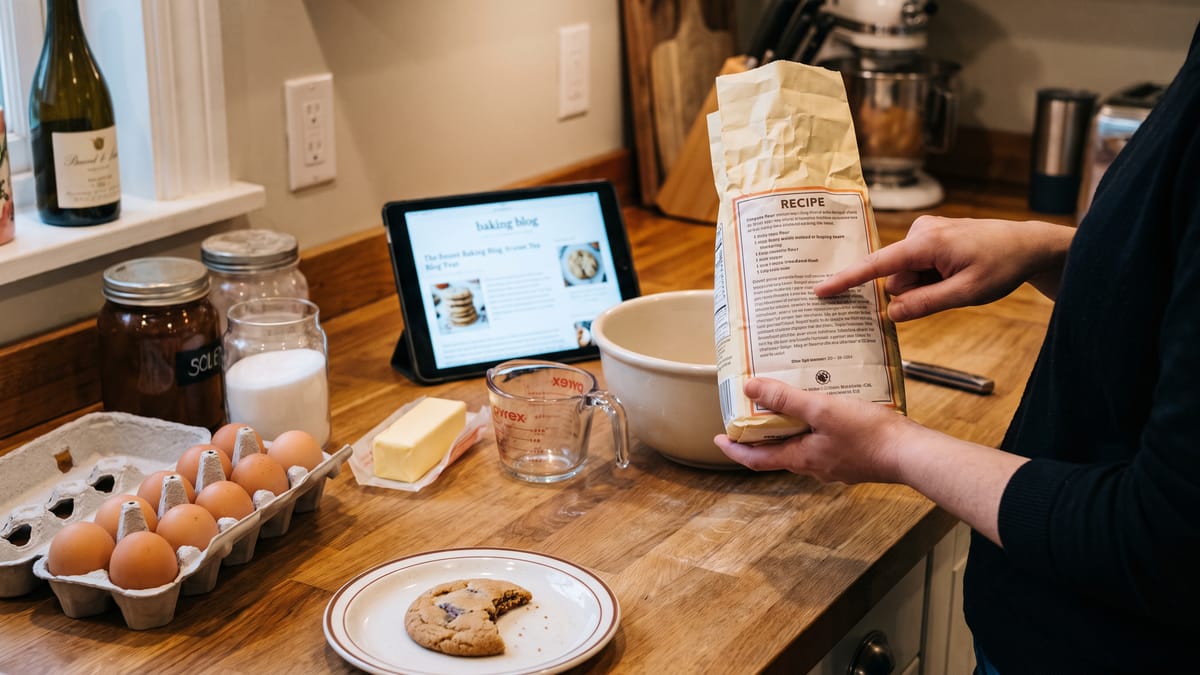
Why the Package Recipe Is Often the Smartest Starting Point for Bakers
Baking, for many, is a delightful dance between science and art, a fragrant journey that often begins with eager anticipation and a clean mixing bowl. Yet, for every triumphant rise of a perfect cake, there's a deflated soufflé or a crumbly cookie, leaving us wondering where we went wrong. In our quest for culinary excellence, we're often tempted by the allure of "secret" family recipes, passed down through generations, or the latest viral sensation promising unimaginable deliciousness. But what if the smartest starting point, especially for those finding their baking feet, isn't hidden in an ancient cookbook or a social media feed, but right there, on the back of a flour bag or a chocolate chip package? We're talking about the humble, often overlooked, package recipe.
The Unsung Heroes of the Test Kitchen
It might sound counterintuitive to suggest that a recipe printed on a cardboard box holds more weight than a cherished family heirloom. However, there's a fundamental difference in how these recipes come into being. Major food manufacturers, such as King Arthur Baking and Betty Crocker, invest immense resources into their test kitchens. These aren't just home kitchens writ large; they are meticulously controlled environments staffed by professionally trained cooks and bakers. Their mission is singular: to develop recipes that are not only delicious but also remarkably consistent and reliable for the average home baker.
Consider the rigorous process involved. Recipes from these established test kitchens undergo systematic, multi-stage development. They refine flavors, ingredients, and methods through a vigorous testing process, often involving teams of bakers. This isn't a one-and-done affair; recipes are tested multiple times to ensure consistent results across different kitchens and skill levels. For instance, King Arthur Baking develops recipes using exact weight measurements and tests them repeatedly with various bakers. This meticulous approach ensures that the steps are understandable and the end product is consistently delicious. They even document the entire cooking process, including precise measurements of every ingredient, a level of detail rarely found in informal home recipes.
The Science of Consistency: Why Weight Matters
One of the cornerstones of professional baking, and a key factor in the reliability of package recipes, is the emphasis on precision. While many home recipes, and indeed many "secret" family recipes, rely on volume measurements like cups and spoons, professional bakers and test kitchens often prioritize weight measurements. This isn't just a preference; it's a critical element for consistency. As King Arthur Baking emphasizes, one cup of flour can vary greatly depending on how it's measured, leading to unpredictable results.
Professional bakers use what's known as baker's percentage, a weight-based formula, to achieve unparalleled consistency. This method allows them to control absorption rates, scale yields accurately, and check the overall balance of a formula, effectively removing the variability inherent in volume measurements. While package recipes might still offer volume measurements for convenience, many from reputable sources will also include weight measurements in grams, explicitly stating that these are the best way to replicate their test kitchen results. This commitment to precision is a significant advantage for beginners, who may not yet have the intuitive feel for ingredients that comes with years of experience.
Beyond the Ingredients: Clarity in Instructions
Another often-underestimated aspect of package recipes is the clarity of their instructions. Informal recipes, particularly those passed down orally or scribbled on note cards, can sometimes be vague. We've all encountered directions like "mix until combined" or "bake until done." While an experienced baker might instinctively know what "until combined" truly means for a particular dough, a beginner can be left guessing, leading to overmixing or undermixing.
Recipes from established test kitchens, however, prioritize unambiguous guidance. They include specific technique details, such as "beat at high speed until very light and fluffy," rather than general directions. This level of detail reduces ambiguity, empowering beginners to execute steps correctly and achieve the intended outcome. This isn't just about making the recipe easier; it's about minimizing the chances of error and building confidence in new bakers.
The Allure of "Secret" Recipes and the Reality Check
It's easy to be captivated by the romantic notion of a "secret" family recipe, whispered through generations, promising a taste that no other recipe can replicate. We imagine hidden ingredients, mystical techniques, and a jealously guarded formula. Yet, a closer look often reveals a surprising truth: many of these cherished recipes are, at their core, variations of widely published formulas, sometimes even directly inspired by or adapted from the very package recipes we're discussing.
The "secret" often lies not in a unique ingredient, but in the love and care with which it's made, or perhaps a slight tweak that has become a personal signature. While these recipes hold immense sentimental value, their reliability for a beginner can be hit-or-miss. They often lack the detailed instructions, precise measurements, and rigorous testing that package recipes offer. Without this foundation, a beginner might struggle to replicate the desired results, even if the original baker consistently achieved perfection.
When to Trust and When to Adapt
So, when should you wholeheartedly trust the package recipe, and when might you consider adapting it? For beginners, the answer is almost always to trust the package recipe implicitly. Deviating from a tested recipe, even in small ways, can compromise success. Baking is a precise science, and even minor substitutions or changes in technique can have significant ripple effects on the final product.
However, as you gain experience and a deeper understanding of baking principles, you can begin to experiment. Experienced bakers are better equipped to make substitutions, understanding how different flours behave, how fats interact with leavening agents, or how to adjust for altitude. Food manufacturers themselves must continually adjust their recipes to account for inherent variability in natural ingredients, such as the age of flour, vendor practices, growing conditions, harvest time, and storage. They use simulation and analysis tools to manage this complexity. This highlights that even professionals are constantly adapting, but they do so from a foundation of deep knowledge.
A good practice, even when you start feeling more confident, is to bake a few test cookies first when trying a new recipe. As King Arthur recommends, this allows you to assess spread, size, taste, and texture before committing to a full batch. This is a practice their own test kitchen bakers follow, demonstrating the value of small-scale testing.
Putting It All Together
For the budding baker, the package recipe is not a concession; it's a strategic advantage. It offers a meticulously tested, reliable, and clearly articulated pathway to success, built on the foundations of professional test kitchens and scientific precision. While the allure of the "secret" recipe is strong, its inherent variability can be a stumbling block for those still learning the ropes.
Embrace the package recipe as your trusted mentor. Follow its instructions precisely, measure carefully, ideally by weight when provided, and allow yourself to build a solid foundation of baking knowledge and confidence. As your skills grow, you'll develop the intuition and understanding needed to gracefully adapt, innovate, and eventually, perhaps even create your own cherished recipes. But for now, let the unsung heroes of the test kitchen guide your way to consistent, delicious baking triumphs.
Sources
- • The unofficially official King Arthur recipe rules
- • Betty Crocker's Kitchen-Tested Process
- • All About Recipes Part I
- • Bakers' Percentage
- • Managing Risks Due to Ingredient Variability in Food Production
- • Why I always bake a few test cookies first
- • Food services: why use the standard recipe? - PubMed