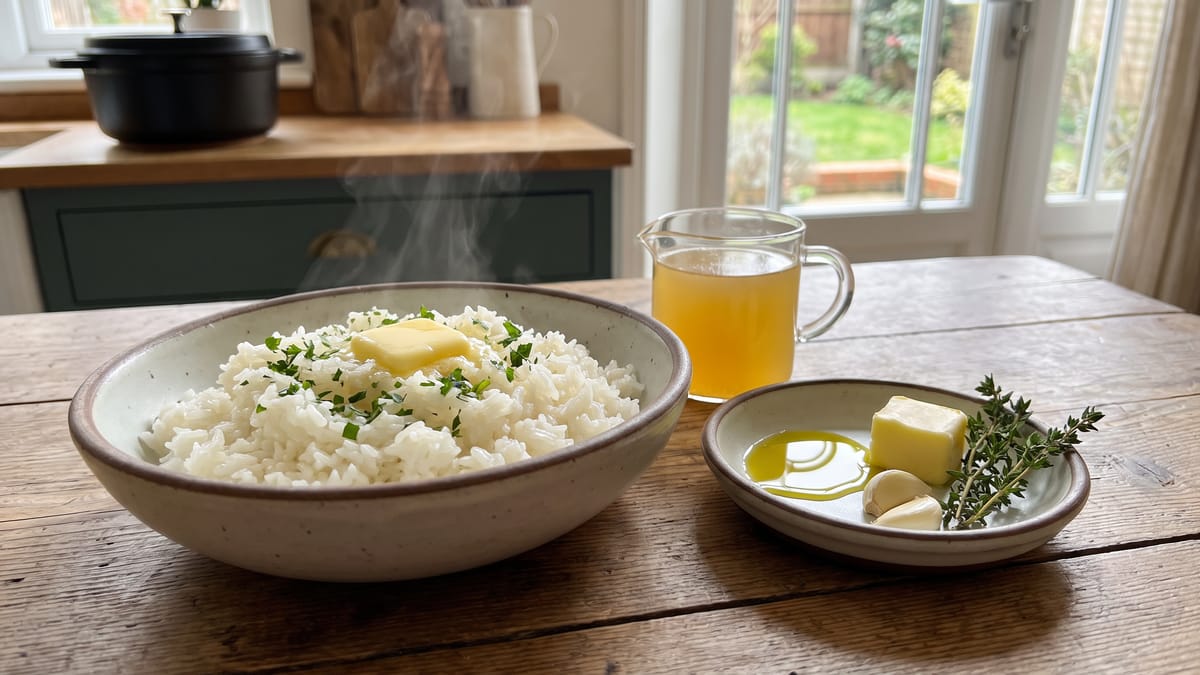
Why Restaurant Rice Tastes Better—and the Simple Technique You Can Use at Home
Why Restaurant Rice Tastes Better, and the Simple Technique You Can Use at Home
We've all been there, haven't we? Sitting in a bustling restaurant, perhaps a cozy Thai eatery or a vibrant Mexican cantina, and a steaming bowl of rice arrives. It's often perfectly cooked, each grain distinct yet tender, subtly fragrant, and utterly delicious. Then, we return home, eager to replicate that culinary magic, only to find our own rice turning out a bit, well, pedestrian. Clumpy, mushy, or perhaps a tad too dry, it rarely achieves that restaurant-quality perfection. This disparity can be a source of quiet frustration for many home cooks, leading us to believe that restaurants possess some secret, esoteric knowledge inaccessible to the likes of us. But what if we told you that the secret isn't some mystical ingredient or an impossibly complex technique? What if it's a combination of meticulous attention to detail and a few surprisingly simple, yet often overlooked, practices?
For years, we've dedicated ourselves to unraveling these culinary mysteries, and when it comes to rice, we've discovered that the restaurant advantage boils down to a handful of fundamental principles. They understand the nuances of different rice varieties, the critical importance of proper washing, the precise water-to-rice ratios, and the art of patience. Today, we're going to demystify this seemingly elusive art, sharing with you not only the "why" behind restaurant rice's superiority but also the "how" so you can consistently achieve that same sublime texture and flavor in your own kitchen. Prepare to elevate your rice game from merely edible to truly exceptional.
The Allure of Restaurant Rice: A Deeper Dive
Before we delve into the practicalities, let's take a moment to appreciate what exactly makes restaurant rice so captivating. It's more than just being "not mushy." There's a certain je ne sais quoi, a confluence of sensory experiences that elevates it beyond mere sustenance.
First, consider the texture. Each grain stands proudly on its own, plump and hydrated, yet never sticky or gummy. There's a gentle bite, a slight resistance that gives way to a tender, yielding interior. This isn't just about avoiding clumps; it's about achieving an ideal balance of firmness and softness that is incredibly satisfying to the palate.
Then, there's the aroma. Often, restaurant rice carries a subtle fragrance, perhaps nutty, earthy, or even faintly sweet, depending on the variety. This isn't usually due to added spices, but rather the natural perfume of the rice itself, allowed to flourish through careful cooking. It's a testament to the quality of the grain and the method of preparation.
Finally, the flavor. While rice might seem like a blank canvas, perfectly cooked rice possesses a delicate, nuanced flavor profile. It's clean, slightly sweet, and provides the perfect complement to whatever saucy, savory, or spicy dish it accompanies. It enhances, rather than detracts from, the main event. Achieving this trifecta of texture, aroma, and flavor consistently is the hallmark of a skilled cook, and it's a skill we believe is entirely within your reach.
Understanding Your Grains: The Foundation of Good Rice
One of the first mistakes many of us make at home is treating all rice as interchangeable. Just as you wouldn't use arborio for sushi or basmati for risotto, understanding the characteristics of different rice varieties is paramount. Restaurants, particularly those specializing in specific cuisines, are meticulous about selecting the right grain for the job.
- • Long-Grain Rice (e.g., Basmati, Jasmine): These varieties are typically slender and remain separate and fluffy when cooked. Basmati, with its distinctive nutty aroma, is a staple in Indian and Middle Eastern cuisine. Jasmine, slightly stickier and with a floral fragrance, is preferred in Southeast Asian dishes. Their lower starch content contributes to their non-clumping nature.
- • Medium-Grain Rice (e.g., Arborio, Valencia): These grains are shorter and plumper than long-grain varieties. They become moist, tender, and somewhat chewy when cooked, often clumping together due to their higher starch content. Arborio is famous for risotto, while Valencia is ideal for paella.
- • Short-Grain Rice (e.g., Sushi Rice, Calrose): These are the shortest and plumpest grains, characterized by their high starch content, which makes them very sticky when cooked. This stickiness is desirable for dishes like sushi, where the grains need to bind together.
The Unsung Hero: Proper Rinsing and Soaking
This is arguably the most critical step that many home cooks either skip entirely or perform inadequately. Restaurants understand that rice, especially white rice, comes coated in excess starch from the milling process. This powdery residue is the primary culprit behind mushy, gummy rice.
- • Rinsing: Our goal here is to wash away that surface starch. Place your desired amount of rice in a fine-mesh sieve or a bowl. Rinse it under cold running water, agitating the grains gently with your hand. You'll notice the water turning cloudy. Continue rinsing, changing the water several times if using a bowl, until the water runs mostly clear. This might take anywhere from 3 to 7 rinses. Don't be shy; this step is non-negotiable for fluffy rice.
- • Soaking: While rinsing removes surface starch, soaking goes a step further. It allows the rice grains to absorb water before cooking, leading to more even cooking and a firmer, more distinct texture. For long-grain varieties like Basmati, soaking for 20-30 minutes can make a remarkable difference. Jasmine rice typically doesn't require soaking, but a brief 10-15 minute soak won't hurt. Soaking also helps to reduce cooking time and can even enhance the aroma of certain rice types. After soaking, drain the rice thoroughly. We mean thoroughly. Any excess water will throw off your water-to-rice ratio.
The Golden Ratio: Water and Rice
This is where precision truly matters. While many rice packages offer general guidelines, restaurants often have their own calibrated ratios, perfected over countless batches. The standard 2:1 water-to-rice ratio is a common starting point, but it's often too much for achieving truly fluffy rice, especially after rinsing and soaking.
For most long-grain white rice (like Basmati or Jasmine) that has been thoroughly rinsed and, ideally, soaked:
- • A good starting point is a 1.25:1 or 1.5:1 water-to-rice ratio. This means for every 1 cup of rice, you'd use 1.25 to 1.5 cups of water.
- • Consider your equipment: If you're using a heavy-bottomed pot with a tight-fitting lid, you might lean towards the lower end of the ratio. If your pot has a looser lid or you're cooking a very small quantity, you might need slightly more water to account for steam loss.
- • Personal preference: Some prefer their rice slightly firmer, others a touch softer. Experiment within this range to find your ideal consistency.
The Cooking Vessel: More Than Just a Pot
While a dedicated rice cooker can be a fantastic investment for consistent results, you absolutely can achieve restaurant-quality rice on the stovetop with the right pot.
- • Heavy-Bottomed Pot: This is crucial. A heavy-bottomed pot distributes heat more evenly, preventing scorching at the bottom and ensuring the rice cooks uniformly. Thin-bottomed pots are prone to hot spots and burning.
- • Tight-Fitting Lid: This is equally important. Once the rice begins to cook, we want to trap all that steam inside the pot. Steam is what cooks the rice, and any escape means less efficient cooking and a higher chance of undercooked or unevenly cooked grains. If your lid isn't perfectly snug, you can place a clean kitchen towel between the pot and the lid to create a better seal.
The Simple Technique: Step-by-Step to Perfection
Now, let's put all these elements together into a foolproof method that will transform your home-cooked rice.
- 1. Measure and Rinse Meticulously: Measure your desired amount of rice. For every cup of rice, remember our new water ratio. Place the rice in a fine-mesh sieve and rinse thoroughly under cold running water until the water runs clear. This might take several minutes.
- 2. Soak (Optional, but Recommended for Basmati): If using Basmati, transfer the rinsed rice to a bowl and cover with fresh cold water. Let it soak for 20-30 minutes. Drain very thoroughly afterwards. For Jasmine rice, you can skip the soak or do a brief 10-15 minute one.
- 3. Combine and Season: Transfer the drained rice to your heavy-bottomed pot. Add the appropriate amount of water according to your chosen ratio (e.g., 1.25 to 1.5 cups water per 1 cup rice). Now, here's a subtle but important restaurant trick: salt your rice. A pinch of salt, roughly 1/4 to 1/2 teaspoon per cup of rice, makes a world of difference in flavor. Some restaurants also add a small amount of fat, like a teaspoon of butter or a neutral oil, which can help separate the grains and add a subtle richness. We recommend experimenting with this.
- 4. Bring to a Boil: Place the pot, uncovered, over medium-high heat. Bring the water to a rolling boil. This is not a gentle simmer, but a vigorous boil.
- 5. Reduce Heat and Cover Tightly: As soon as the water reaches a full boil and you see bubbles breaking the surface, immediately reduce the heat to the absolute lowest setting. We're talking barely a flicker. Then, cover the pot with its tight-fitting lid. Resist the urge to peek!
- 6. The Cooking Time: Let the rice cook undisturbed for 15-18 minutes for most long-grain white rice. The exact time can vary slightly depending on your stove and pot, but this is a reliable range. This low, slow cook allows the rice to gently absorb all the water and steam cook without scorching or becoming mushy.
- 7. The Sacred Rest: Once the cooking time is up, do not remove the lid. Turn off the heat entirely and let the pot sit, still covered, for another 10 minutes. This resting period is absolutely crucial. It allows the residual steam to finish cooking the rice evenly, re-distributes moisture, and firms up the grains, preventing stickiness. This is a step often overlooked at home, but religiously adhered to in professional kitchens.
- 8. Fluff and Serve: Finally, remove the lid. Use a fork to gently fluff the rice. You'll notice each grain is distinct, plump, and perfectly cooked. Serve immediately.
Troubleshooting Common Rice Woes
Even with the best intentions, things can sometimes go awry. Here are solutions to common problems:
- • Mushy Rice:
- • Dry or Undercooked Rice:
- • Burnt Bottom:
- • Clumpy Rice:
Beyond the Basics: Elevating Your Rice Further
Once you've mastered the fundamental technique, you can start to incorporate other restaurant-inspired touches.
- • Toasting the Rice: For a deeper, nuttier flavor, especially with Basmati, you can lightly toast the dry, rinsed rice in a little oil or butter in the pot before adding the water. Stir constantly for 2-3 minutes until fragrant. This adds another layer of complexity.
- • Aromatic Infusions: Many restaurants add aromatics directly to the cooking water. Think a bay leaf, a few cardamom pods, a cinnamon stick, a strip of orange peel (for certain dishes), or a small piece of ginger. These infuse the rice with subtle, complementary flavors.
- • Broth Instead of Water: For an even richer flavor, substitute vegetable or chicken broth for some or all of the water. This is a common practice in many professional kitchens. Just be mindful of the salt content in your broth and adjust accordingly.
- • The Power of the Rice Cooker: While our stovetop method is excellent, a good quality rice cooker simplifies the process immensely. Many high-end rice cookers, especially those with fuzzy logic technology, precisely control temperature and cooking time, producing consistently perfect rice with minimal effort. They often have settings for different rice types and can even keep rice warm for extended periods without drying it out. If you cook rice frequently, it's a worthwhile investment.
To sum things up
Achieving restaurant-quality rice at home isn't about magic or unattainable culinary prowess. It's about respecting the grain, understanding the science behind its transformation, and executing a few key steps with care and precision. By diligently rinsing your rice, adopting the correct water-to-rice ratio, utilizing a heavy-bottomed pot with a tight lid, and most importantly, allowing for that crucial resting period, you will unlock the secret to perfectly cooked rice. No longer will your rice be an afterthought; it will become a star in its own right, a testament to your newfound culinary finesse. So go forth, experiment with these techniques, and prepare to impress yourself and your dining companions with every fluffy, fragrant grain. Your journey to rice perfection begins now.