What Happens When You Substitute Dried Thyme for Fresh, and When Expired Herbs Are Safe to Use
The aromatic world of herbs is a cornerstone of delicious cooking, transforming simple ingredients into memorable meals. Among the most versatile and beloved, thyme holds a special place, gracing everything from hearty stews to delicate roasted vegetables. But what happens when your recipe calls for fresh thyme, and all you have is the dried variety tucked away in the spice rack? Or perhaps you stumble upon an old jar of dried thyme and wonder if it's still worth its salt, so to speak. These are common kitchen dilemmas we all face, and understanding the nuances of thyme, both fresh and dried, is key to culinary success.
Today, we're diving deep into the fragrant world of thyme, exploring the art of substitution, the impact on flavor, and how to discern whether your aged dried herbs are still capable of lending their magic to your dishes. We'll unravel the mystery of conversion ratios, dissect the flavor transformation in a Moroccan-style roll, and equip you with the knowledge to confidently assess the potency of your dried herbs, ensuring every dish you create is imbued with the vibrant flavors it deserves.
The Great Thyme Swap: Fresh Versus Dried
Imagine you're halfway through preparing a recipe, and it suddenly calls for a sprig of fresh thyme. A quick peek in the fridge reveals none, but your trusty spice rack offers a jar of dried thyme. Is it a suitable stand-in? Absolutely, but with a crucial understanding of the differences and the correct conversion.
Fresh thyme, with its delicate green leaves clinging to slender stems, offers a brighter, more herbaceous, and often subtly floral or citrusy aroma. It brings a vibrancy that can truly elevate a dish, especially when added towards the end of cooking or used in raw applications like salads or garnishes. The essential oils are more volatile, meaning their fragrant compounds dissipate more readily with heat.
Dried thyme, on the other hand, is the concentrated essence of its fresh counterpart. The drying process removes water, intensifying the flavor compounds that remain. It becomes more earthy, resinous, and can even possess stronger, almost medicinal notes. While it loses some of the fresh brightness, its core flavor, driven by compounds like thymol and carvacrol, becomes more pronounced and resilient. These particular phenolic compounds are nonvolatile, meaning they are quite stable and survive the drying process and prolonged exposure to heat remarkably well. This makes dried thyme an excellent choice for dishes that require longer cooking times.
The Conversion Conundrum: Getting the Ratio Right
When making the switch from fresh to dried thyme, or vice versa, the key is to adjust the quantity. Because dried herbs are more concentrated, you'll need less of them compared to their fresh counterparts. The accepted culinary conversion ratio is quite straightforward and easy to remember:
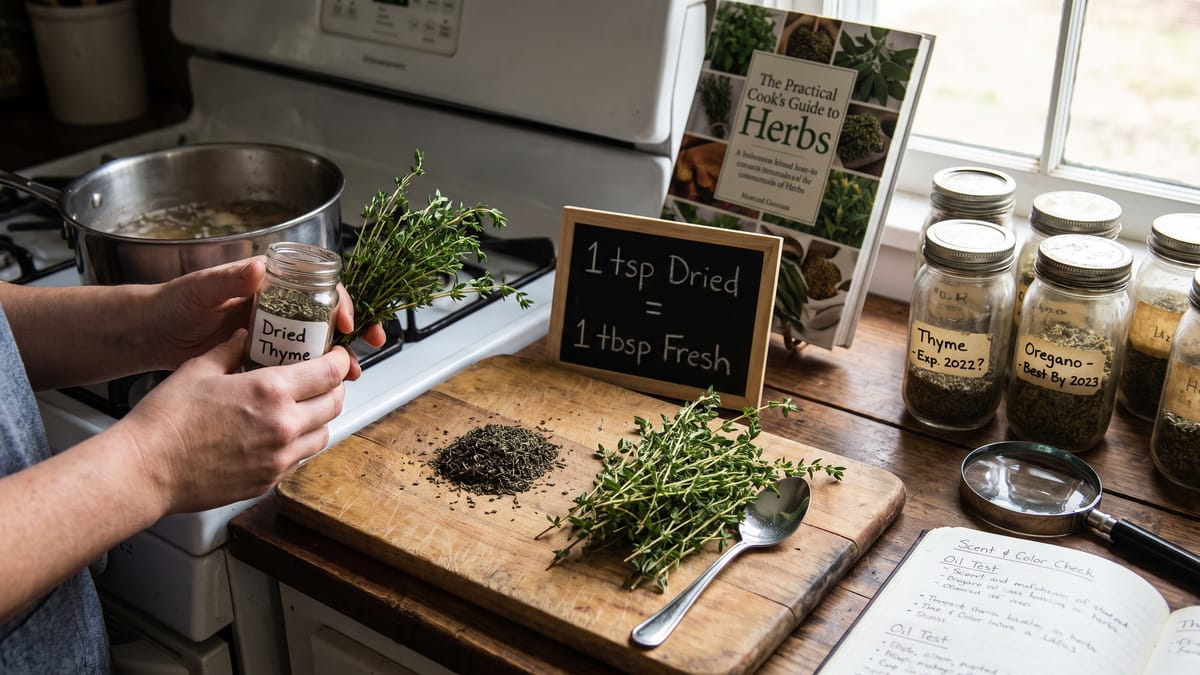
For every 1 tablespoon of fresh thyme a recipe calls for, you should use 1 teaspoon of dried thyme.
This represents a 3:1 ratio by volume. So, if a recipe asks for three tablespoons of fresh thyme, you would use three teaspoons (or one tablespoon) of dried thyme. Conversely, if you only have fresh thyme and a recipe specifies one teaspoon of dried, you would use three teaspoons (or one tablespoon) of fresh.
It's also helpful to know that one average fresh thyme sprig, typically about four inches long, yields approximately one-quarter teaspoon of dried thyme leaves once stripped from the stem. This can be a useful mental benchmark when estimating quantities.
Flavor Transformation in a Moroccan-Style Roll: A Culinary Case Study
Let's consider a practical example of how this substitution plays out in a cooked dish, specifically a Moroccan-style roll. Imagine a savory filling, perhaps ground lamb or a hearty lentil mixture, seasoned with an array of spices and herbs, then encased in a pastry or bread. Thyme, with its earthy warmth, is a natural fit for such a robust flavor profile.
When you use fresh thyme in a Moroccan-style roll, especially if you add it towards the end or as a garnish, you'll experience its vibrant, slightly peppery, and herbaceous notes. It offers a lift, a fresh counterpoint to the richness of the meat or legumes and the deeper spices. Its aroma will be more pronounced, almost perfumed, and it might contribute a subtle citrusy undertone that brightens the overall flavor profile. If incorporated early in the cooking, some of these volatile, brighter notes will diminish, but a lovely, nuanced herbaceousness will remain.
Now, let's substitute with dried thyme. When incorporated into the filling for a Moroccan-style roll, particularly when added at the beginning of the cooking process, dried thyme undergoes a beautiful transformation. Its concentrated, earthy, and slightly resinous character comes to the fore. The long, slow cooking allows the dried leaves to fully rehydrate and release their robust flavor compounds, thymol and carvacrol, into the other ingredients. This results in a deeper, more integrated flavor that melds seamlessly with the other spices like cumin, coriander, and paprika often found in Moroccan cuisine.
The initial bright, almost "green" notes of fresh thyme will be absent, replaced by a more grounded, savory warmth. Dried thyme contributes a foundational, enduring herbal note that anchors the entire dish. It won't stand out as much as a fresh sprig might, but rather become an integral part of the overall aromatic tapestry, adding layers of complexity and a comforting earthiness. In controlled testing, tasters have often preferred fresh herbs overall, but dried thyme, alongside rosemary, oregano, and sage, has consistently proven to be a perfectly passable substitute in recipes with long cooking times, typically over 20 minutes, and ample liquid to aid rehydration.
The key to successfully using dried thyme in such a dish is to add it early in the cooking process. This allows ample time for the dried leaves to absorb moisture, soften, and fully release their potent flavors, infusing the entire roll with their aromatic essence. If you were to add dried thyme at the very end, it might remain somewhat gritty and its flavor wouldn't be as well-integrated.
When Expired Herbs Are Safe to Use: A Potency Predicament
We've all been there. You're rummaging through the spice cabinet, pulling out a jar of dried thyme, and notice the "best by" date has long passed. Does this mean it's destined for the bin? Not necessarily. The good news is that dried herbs, including thyme, do not pose a food safety hazard even if they are well past their expiration date. Unlike perishable foods that can harbor harmful bacteria, dried herbs simply lose their potency over time. They won't make you sick, but they might not make your food taste very good either.
The "expiration date" on a jar of dried herbs is more accurately a "best by" or "best used by" date, indicating when the herb is expected to be at its peak flavor and aroma. Beyond this date, the quality gradually diminishes. This loss of potency is primarily due to the oxidation of the volatile compounds that give herbs their distinctive taste and smell. Exposure to air, light, and heat accelerates this process.
The Sensory Evaluation: A Three-Pronged Approach
So, how do you determine if your "expired" dried thyme is still worth using? We rely on our senses. It's a simple yet effective three-pronged approach focusing on aroma, color, and flavor.
The Aroma Test: Your Nose Knows Best
This is arguably the most crucial test. Take a small pinch of the dried thyme and rub it vigorously between your fingers. This action helps to release any remaining volatile oils. Now, bring it close to your nose and take a good sniff.
- • Potent Thyme: You should detect a distinct, pungent, earthy, and herbaceous aroma. It should smell like thyme, strong and clear.
- • Weak Thyme: If the scent is faint, barely there, or you have to really concentrate to smell anything, its potency is significantly diminished.
- • Discard Thyme: If it smells dusty, like old hay, or has absolutely no discernible aroma, it's time to say goodbye. It simply won't contribute any meaningful flavor to your dish.
The Visual Cue: Color Me Unimpressed
Next, observe the color of the dried thyme.
- • Potent Thyme: It should have a relatively vibrant green or greenish-brown hue. While not as bright as fresh thyme, it shouldn't look dull or washed out.
- • Weak Thyme: If the leaves look faded, dull brown, or have lost their intensity of color, it's a visual indicator that its flavor has likely diminished as well. Faded color suggests prolonged exposure to light and air, which degrade flavor compounds.
The Taste Test: The Final Verdict
If your dried thyme passes the aroma and color tests, a small taste test can confirm its viability.
- • Potent Thyme: Chew on a tiny pinch. You should experience a recognizable, earthy, and slightly peppery thyme flavor that lingers on your tongue.
- • Weak Thyme: If it tastes bland, woody, or merely dusty, with little to no actual thyme flavor, then it's past its prime. It might add texture, but it won't add the desired herbaceous depth.
Maximizing the Life of Your Dried Herbs
To ensure your dried thyme and other herbs remain potent for as long as possible, proper storage is paramount.
- • Airtight Containers: Always store dried herbs in airtight containers. Glass jars with tight-fitting lids are ideal, as they prevent air from reaching the herbs and causing oxidation.
- • Cool, Dark Place: Keep your spice containers in a cool, dark pantry or cabinet, away from direct sunlight, heat sources (like the stove or oven), and excessive humidity. Heat and light are major enemies of herb potency.
- • Whole Over Ground: Whenever possible, purchase whole dried leaves or seeds and grind them yourself just before use. This significantly extends their shelf life, as the flavor compounds are better protected within the whole structure.
Putting It All Together
Navigating the world of fresh versus dried herbs, and understanding the longevity of your spice collection, is a fundamental skill for any home cook. We've learned that substituting dried thyme for fresh is not only possible but often desirable in specific culinary contexts, especially long-cooked dishes like our Moroccan-style roll. The key lies in understanding the 3:1 conversion ratio (1 teaspoon dried for 1 tablespoon fresh) and appreciating how the flavor profile shifts from bright and floral to concentrated and earthy.
Crucially, we've demystified the "expiration date" on dried herbs, recognizing that it's a measure of potency, not safety. Armed with your senses, you can confidently evaluate the aroma, color, and taste of your dried thyme to determine if it still has the power to elevate your cooking. By applying these practical tips and techniques, you'll ensure that every dish you create is infused with the vibrant, authentic flavors that only high-quality herbs can provide, making you a more confident and capable cook in your own kitchen. So go forth, experiment, and let the aromatic magic of thyme transform your culinary creations!
Sources
- • Dried thyme
- • Science: Substituting Dried Herbs for Fresh
- • Thyme
- • Fresh to Dried Herb Conversion Chart & Calculator
- • Thyme: Strip the Stems or Drop In the Whole Sprig?
- • Converting Fresh Thyme To Dry: Measurement Guide
- • Converting 1 Teaspoon Dried Thyme To Fresh Equivalent
- • The Everything Guide To Cooking With Thyme - Chowhound