Understanding Flavor Profiles: The Art of Balancing Sweet, Salty, Sour, and Bitter
Introduction Great cooking isn’t just about following a recipe—it’s about _balancing taste_. Before umami and heat enter the picture, four core taste pillars shape how we perceive food: sweet, salty, sour, and bitter. Learning how they contrast, amplify, or neutralize each other gives you control. This post breaks down how each taste functions, how imbalance happens, and how to fix a dish on the fly.
1. The Four Core Tastes (Plus Two Wildcards)
| Taste | Primary Sources | Perception Role | Overuse Symptom |
|---|---|---|---|
| Sweet | Sugars, honey, caramelized veggies | Softens harshness; rounds edges | Cloying, flat, one‑note |
| Salty | Salt, cured meats, cheeses, soy | Enhances aroma, sharpens flavors | Harsh, stinging finish |
| Sour | Citrus, vinegars, yogurt, tamarind | Brightens; cuts richness/sweetness | Acrid, puckering |
| Bitter | Coffee, cacao, greens, hops | Adds complexity; balance to sweet | Lingering harshness |
| Umami | Mushrooms, tomatoes, soy, parmesan | Depth, savoriness, fullness | Muddy, dull if excessive |
| Heat | Chili compounds (capsaicin), pepper | Perceived intensity, excitement | Numbs palate |
2. How Tastes Interact
- • Sweet tempers bitter + sour. A touch of honey mellows grapefruit or espresso.
- • Salt amplifies sweetness & suppresses bitterness. That’s why salted caramel works.
- • Sour cuts richness + sweetness. Lemon over fried fish “lifts” the dish.
- • Bitter adds sophistication. Char on broccoli or cocoa in mole counters sweetness/fat.
- • Fat lengthens flavor; acid shortens the finish. Use them strategically.
- • Heat magnifies perceived salt + sour. Reduce salt slightly in spicy dishes to avoid harshness.
3. Building a Balanced Dish: A Practical Framework
- 1. Base (Neutral + Structure): Grains, proteins, mild veg.
- 2. Primary Flavor: Sweet (roasted carrot), savory (umami broth), acidic (citrus dressing).
- 3. Contrast Element: If base is rich/sweet → add acid or bitter (lemon zest, radicchio).
- 4. Lift + Definition: Salt _after_ tasting; layer early (brine) + finish (flake).
- 5. Adjustment Round: Taste warm (aromas release). Identify what’s missing (see diagnostics below).
- 6. Finalize Texture: Crunch (nuts), freshness (herbs), aromatic oils.
4. On-the-Fly Diagnostics Cheat Sheet
| If It Tastes… | Add | Why It Works |
|---|---|---|
| Dull / Flat | Pinch of salt or acid | Salt wakes aromatics; acid sharpens |
| Too Salty | Acid + mild sweet (citrus + pinch sugar) OR dilution | Distracts + balances |
| Too Sweet | Acid (lemon, vinegar) or bitter greens | Restores structure |
| Too Sour | Sweet (honey), fat (butter), or salt (tiny) | Rounds edges |
| Too Bitter | Sweet + salt; roast longer to caramelize | Masks + counterbalances |
| Rich / Heavy | Acid (pickles), bitter (arugula), heat | Cuts fat film |
5. Salt Strategy: Layer, Don’t Dump
- • Early: Brine or dry‑brine proteins for diffusion.
- • Mid: Season cooking liquids to “tasted broth” level.
- • Late: Finish with flake salt for pops (perceived complexity).
6. Harnessing Sweetness (Beyond Sugar)
Natural sweet sources: roasted squash, caramelized onions, corn, miso, balsamic reduction. Use them to soften aggressive acid or bitterness. Avoid stacking _multiple_ dense sweets (e.g., honey + brown sugar + reduced balsamic) without acid relief.
7. The Power of Acid
Acid drives salivation, making flavors feel brighter. Keep three acid types handy:
- • Sharp: Distilled / white wine vinegar – instant edge.
- • Rounded: Rice vinegar, sherry vinegar – subtle lift.
- • Fragrant: Citrus, yuzu, verjus – aroma + brightness.
8. Embracing Bitterness (Not Avoiding It)
Bitterness adds adult complexity. Use: charred brassicas, cocoa nibs, chicories, extra‑virgin olive oil, dark caramel. Pair with: salt + slight sweet + acid (e.g., grapefruit + honey + olive oil on endive). Source: NCBI – Bitterness Perception.
9. Worked Examples
A. Roasted Carrot Soup
Problem: Sweet + flat. Fix: Add salt (unlock aroma), then lemon juice (brightness), then toasted pumpkin seed oil (nutty bitter). Optional: yogurt swirl (tangy contrast).
B. Grilled Chicken Bowl
Problem: Savory but bland. Fix: Add quick pickle (sour), sprinkle flake salt, drizzle honey‑chili sauce (sweet + heat), handful arugula (peppery bitter). Balanced.
C. Over‑Reduced Tomato Sauce
Problem: Salty + bitter edge. Fix: Add pinch sugar + splash milk (sweet + fat), then a little water to dilute, finish with basil + olive oil (aroma smoothing).
10. Mini Tasting Exercise (5 Minutes)
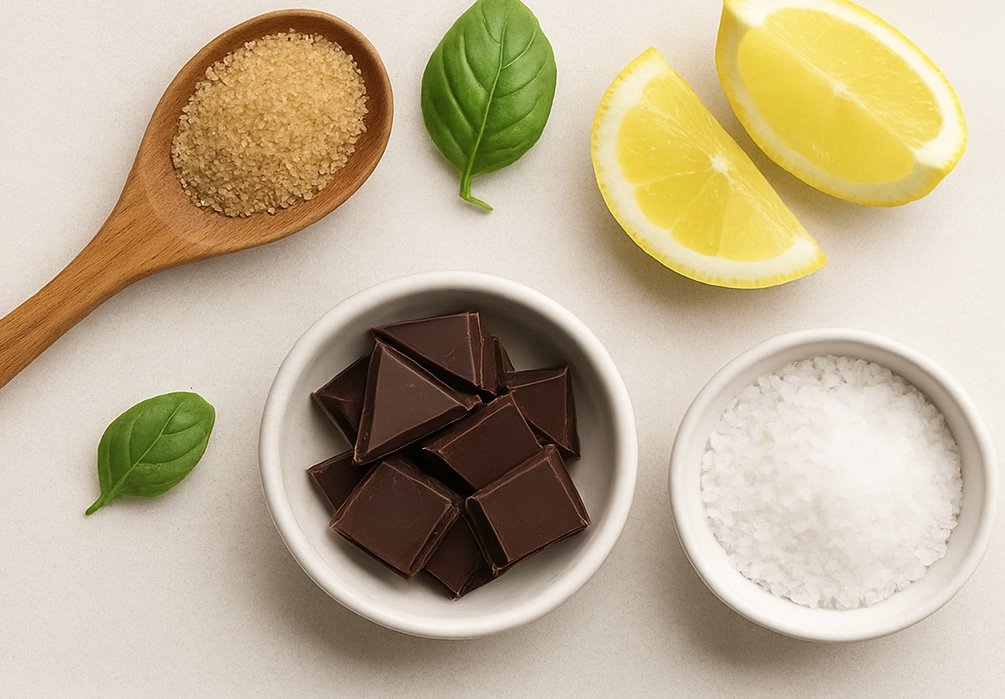
Set out: lemon wedge, honey, arugula leaf, kosher salt, dark chocolate.
- 1. Taste each alone; note mouthfeel.
- 2. Combine sweet + bitter (chocolate + honey) – sweetness rounds.
- 3. Add salt to chocolate—flavor intensifies.
- 4. Taste arugula, then a drop of lemon—perceived bitterness shifts.
- 5. Finish with honey after lemon—sweet neutralizes sour impression.
11. Quick Reference Ratios (Guidelines, Not Laws)
- • Vinaigrette baseline: 3 parts oil : 1 part acid (adjust: richer dish → more acid).
- • Glaze (savory-sweet): 4 parts stock : 1 part reduction sweet (mirin, maple).
- • Balance syrup (for cocktails / dressings): Equal parts sour (citrus) + sweet (simple), then salt to a _whisper_.
12. Summary & Mindset
Balancing flavor isn’t a formula—it’s iterative sensing. Start under‑seasoned, taste warm, adjust one variable at a time. Keep a mental model:
- • Sweet softens bitter/sour.
- • Salt amplifies + integrates.
- • Sour brightens + cuts weight.
- • Bitter deepens + grounds.
13. 60‑Second Rescue Flow
- 1. Ask: Too sweet / salty / sour / bitter / dull / heavy?
- 2. Apply single counter element (see diagnostics).
- 3. Stir, rest 30 seconds, re‑taste.
- 4. Fine‑tune with salt or acid last.
- 5. Add texture + freshness just before serving.
Conclusion
Master these four pillars and every other layer—herbs, spices, umami, aroma, heat—falls into place. Flavor balance turns “good” cooking into memorable cooking. Taste constantly, adjust deliberately, and you’ll train a chef’s palate at home.
Happy tasting!