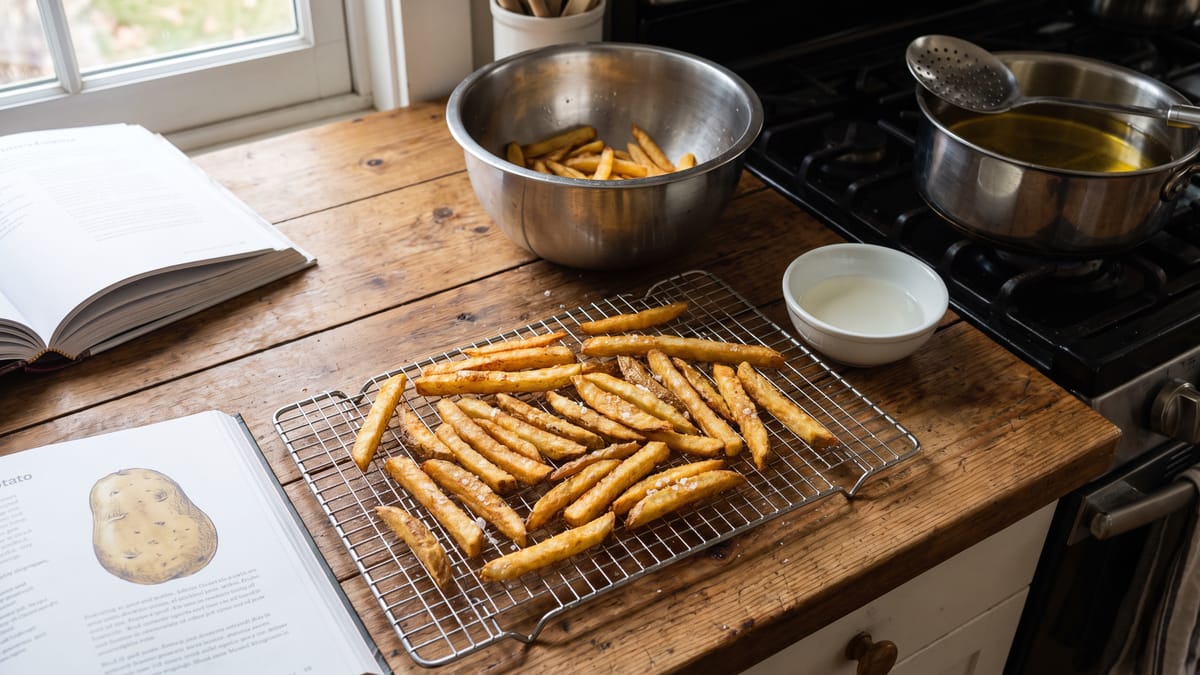
This Simple Trick Makes Homemade French Fries Stay Crispy Much Longer
Ah, the humble French fry. A culinary icon, a universal comfort food, and a source of both immense pleasure and occasional frustration for the home cook. We've all been there: eagerly pulling a batch of golden, crispy fries from the oil, only to watch them succumb to a tragic, limp fate mere minutes later. That initial crunch, that glorious textural contrast, seems to vanish into thin air, leaving us with a soggy, disappointing shadow of their former glory. But what if we told you there's a simple, yet profoundly effective, trick that can revolutionize your homemade French fry game, ensuring they remain delightfully crisp for much, much longer? Prepare yourselves, fellow food enthusiasts, because today we're delving deep into the science and art of the perfect, enduringly crispy French fry.
The Quest for Crispy Perfection: A Culinary Conundrum
For centuries, cooks have grappled with the ephemeral nature of fried potatoes. From the bustling streets of Paris, where legend has it the French fry was born, to the countless home kitchens around the globe, the pursuit of that elusive, lasting crispness has been a culinary holy grail. We’ve experimented with different potato varieties, adjusted oil temperatures, tried various frying methods, and even pondered the mysteries of double-frying. While these techniques certainly play their part, there's often still a missing piece of the puzzle, a subtle detail that separates a good fry from a truly exceptional, long-lasting one. It's a detail that, once understood, will transform your perception of homemade fries forever.
Understanding the Enemy: What Makes Fries Go Limp?
Before we unveil our secret weapon, let's first understand the adversary: moisture. The primary culprit behind soggy fries is the migration of moisture from the potato's interior to its surface. When you fry potatoes, the intense heat rapidly dehydrates the exterior, forming that coveted crispy crust. However, the interior remains moist and starchy. As the fries cool, this internal moisture slowly works its way to the surface, rehydrating the crust and inevitably leading to that dreaded limpness. It’s a battle against the laws of thermodynamics, but one we can cleverly manipulate to our advantage. We need a way to create a more robust barrier, a sort of invisible shield, that actively resists this moisture migration.
The Secret Weapon: A Starchy Solution
Are you ready for it? The simple trick, the game-changer, the culinary revelation, is this: a brief soak in cold, starchy water. Yes, you read that correctly. It sounds counterintuitive, perhaps even a little bizarre, to introduce more water to potatoes you’re trying to make crispy. But bear with us, because the magic lies in the type of water and the timing. This isn't just any cold water; it's water that has been specifically prepared to enhance the potato's surface starch, creating a protective layer that locks in crispness.
Why Starchy Water Works: The Science Behind the Crisp
Let's break down the science, because understanding the "why" often deepens our appreciation for the "how." Potatoes are naturally rich in starch. When we cut them, we expose these starch molecules. Traditionally, many recipes advise soaking cut potatoes in plain cold water to remove excess surface starch, which can prevent them from clumping and burning. While this is a valid technique for some applications, for long-lasting crispy fries, we want to leverage that starch, not wash it all away.
By soaking the cut potatoes in cold water that has already been imbued with starch, we’re essentially creating a thin, almost invisible, starchy film on the surface of each fry. Think of it like a very subtle, natural coating. When these starchy-coated fries hit the hot oil, that thin layer of starch rapidly gelatinizes and then dehydrates, forming an extra-crisp, almost glass-like shell. This shell acts as a superior barrier, significantly slowing down the rate at which internal moisture can reach the surface and rehydrate the crust. The result? Fries that stay gloriously crispy for a remarkably extended period.
Preparing Your Starchy Solution: The How-To
This isn’t rocket science, but there are a few nuances to get it just right.
Choosing Your Potatoes Wisely
The foundation of any great fry begins with the potato itself. For optimal crispness and flavor, we highly recommend using high-starch, low-moisture potato varieties. Russet Burbank potatoes, often simply called "baking potatoes" in many regions, are our top choice. Their dry, floury texture and high starch content make them ideal for frying, yielding a fluffy interior and a super-crisp exterior. Avoid waxy potatoes, like new potatoes or red potatoes, as their higher moisture content and lower starch will lead to a denser, less crispy fry.
The Art of the Cut
Uniformity is key. Whether you prefer thin, shoestring fries or thicker, steak-cut wedges, strive for consistency in your cuts. Irregularly sized fries will cook unevenly, leading to some being overcooked and others undercooked. A mandoline slicer can be a fantastic tool for achieving perfect uniformity, but a sharp chef's knife and a steady hand will also do the trick. Aim for a thickness that you enjoy, but remember that thinner fries will generally be crisper, while thicker fries offer a more substantial, fluffy interior.
Creating the Starchy Bath
Here’s where the magic truly begins.
First, you'll need a bowl large enough to comfortably submerge all your cut potatoes.
Next, add a few tablespoons of cornstarch or potato starch to a small amount of cold water in a separate bowl and whisk until dissolved. This creates a concentrated starch slurry.
Now, fill your large bowl with plenty of very cold water, ideally with some ice cubes to keep the temperature low. The cold temperature is crucial as it helps to prevent the potatoes from oxidizing and turning brown, and it also slows down enzymatic activity.
Pour the cornstarch slurry into the cold water in the large bowl and stir well to distribute the starch evenly. You want the water to be slightly cloudy, but not thick. The goal is a subtle starchy presence, not a batter.
Finally, submerge your freshly cut potatoes into this starchy, ice-cold bath. Ensure they are fully covered.
The Soaking Period: Patience is a Virtue
Allow the potatoes to soak in this starchy, icy bath for at least 30 minutes, but ideally an hour or even up to two hours. For even better results, you can prepare them in the morning and let them soak in the refrigerator until you're ready to fry them in the evening. The longer soak time allows the starch to thoroughly adhere to the potato's surface, building that crucial protective layer.
The Next Crucial Step: Drying, Drying, Drying!
This step cannot be overstated. After their refreshing starchy bath, the potatoes must be absolutely, thoroughly dry before they hit the hot oil. Any residual surface moisture will cause the oil to splatter violently, lower the oil temperature, and lead to steamed, rather than crispy, fries.
Drain the potatoes extremely well in a colander. Then, spread them out in a single layer on clean kitchen towels or a few layers of paper towels. Pat them vigorously and repeatedly until they are bone dry. You can even let them air dry for an additional 10-15 minutes to ensure every last drop of moisture has evaporated. This meticulous drying is just as important as the starchy soak itself.
The Double-Fry Method: A Time-Honored Technique
While the starchy soak is our primary secret weapon, combining it with the classic double-fry method elevates your fries to an unparalleled level of crispness and flavor. The double-fry technique involves frying the potatoes twice, each time at a different temperature.
First Fry: The Blanching Stage
Heat your frying oil to a lower temperature, typically around 300-325°F (150-160°C). Vegetable oil, canola oil, or peanut oil are excellent choices due to their high smoke points.
Fry the potatoes in batches, making sure not to overcrowd the pot. Overcrowding will drastically lower the oil temperature, leading to greasy, soggy fries. Fry them for 5-7 minutes, or until they are cooked through, tender in the center, and slightly pale. They shouldn't be browned at this stage.
Remove the blanched fries from the oil with a slotted spoon or spider and place them on a wire rack set over a baking sheet. This allows excess oil to drain and prevents them from steaming. At this point, the fries will be soft and pliable. This first fry cooks the interior and begins to dehydrate the surface.
Cooling Down: The Intermission
Allow the blanched fries to cool completely, ideally for at least 15-30 minutes, or even longer. You can even refrigerate them for several hours or overnight. This cooling period is crucial. As the fries cool, the starch molecules on their surface continue to firm up, and any remaining internal moisture has a chance to dissipate slightly. This prepares them perfectly for the final crisping.
Second Fry: The Crisping Stage
Increase your oil temperature to a higher heat, typically 350-375°F (175-190°C). This higher temperature is what will create that golden-brown, shatteringly crisp exterior.
Carefully return the cooled, blanched fries to the hot oil, again in batches. Fry them for another 2-5 minutes, or until they are beautifully golden brown and incredibly crispy. Listen for the distinct sound of sizzling and bubbling, indicating rapid dehydration and crisping.
Remove the perfectly fried potatoes from the oil and immediately transfer them to a fresh wire rack set over a baking sheet. This allows any remaining surface oil to drain away, preventing them from becoming greasy.
The Final Touch: Seasoning and Serving
Season your fries immediately after they come out of the oil. The hot surface allows the salt and any other seasonings to adhere beautifully. A simple sprinkle of fine sea salt is often all you need, but don't hesitate to experiment with garlic powder, onion powder, paprika, or even a homemade spice blend.
Serve your magnificent, long-lasting crispy fries immediately. While they will stay crisp for an impressive amount of time compared to conventionally fried fries, they are always best enjoyed fresh from the fryer.
Troubleshooting Common Fry Fails
Even with the best techniques, sometimes things go awry. Here are a few common issues and how to address them:
Soggy Fries Despite the Soak
This usually points to insufficient drying after the soak, overcrowding the fryer, or not allowing the oil to return to temperature between batches. Remember, dry potatoes and consistent oil temperature are paramount.
Greasy Fries
Greasy fries are almost always a sign that your oil temperature was too low. When the oil isn't hot enough, the potatoes absorb more oil rather than forming a quick, crisp crust. Ensure your oil thermometer is accurate.
Unevenly Cooked Fries
This is typically due to inconsistent potato cuts. Strive for uniformity to ensure every fry cooks at the same rate.
Burnt Exterior, Raw Interior
Your oil temperature is likely too high. The outside is crisping and burning before the inside has a chance to cook through. Lower the temperature for the first fry.
Beyond the Basic Fry: Culinary Explorations
Once you've mastered the art of the enduringly crispy French fry, the culinary possibilities are endless.
Flavor Infusions
Consider infusing your frying oil with aromatics. A few cloves of garlic, a sprig of rosemary, or even a dried chili pepper can impart subtle, delicious flavors to your fries. Just be sure to remove them before they burn.
Creative Seasonings
Elevate your seasoning game. Truffle salt, smoked paprika, za'atar, or a sprinkle of Parmesan cheese and fresh parsley can transform a simple fry into a gourmet experience.
Dipping Delights
While ketchup is a classic, don't limit yourself. Homemade aioli, a spicy sriracha mayo, a tangy barbecue sauce, or a cooling yogurt dip can all complement your crispy creations beautifully.
Putting it All Together
Achieving perfectly crispy, long-lasting homemade French fries is not an insurmountable challenge, but rather a delightful culinary journey. It requires a bit of understanding, a dash of patience, and the strategic application of a simple, yet powerful, technique: the cold, starchy water soak. By embracing this method, meticulously drying your potatoes, and employing the time-tested double-fry technique, you will unlock a world of textural bliss. No longer will you lament the swift demise of your freshly fried potatoes. Instead, you'll savor each golden, crunchy bite, knowing that your efforts have yielded a fry that stands the test of time, a testament to your newfound mastery of this beloved culinary staple. So, gather your potatoes, prepare your starchy bath, and embark on your own quest for the ultimate crispy fry. Your taste buds, and your guests, will thank you.