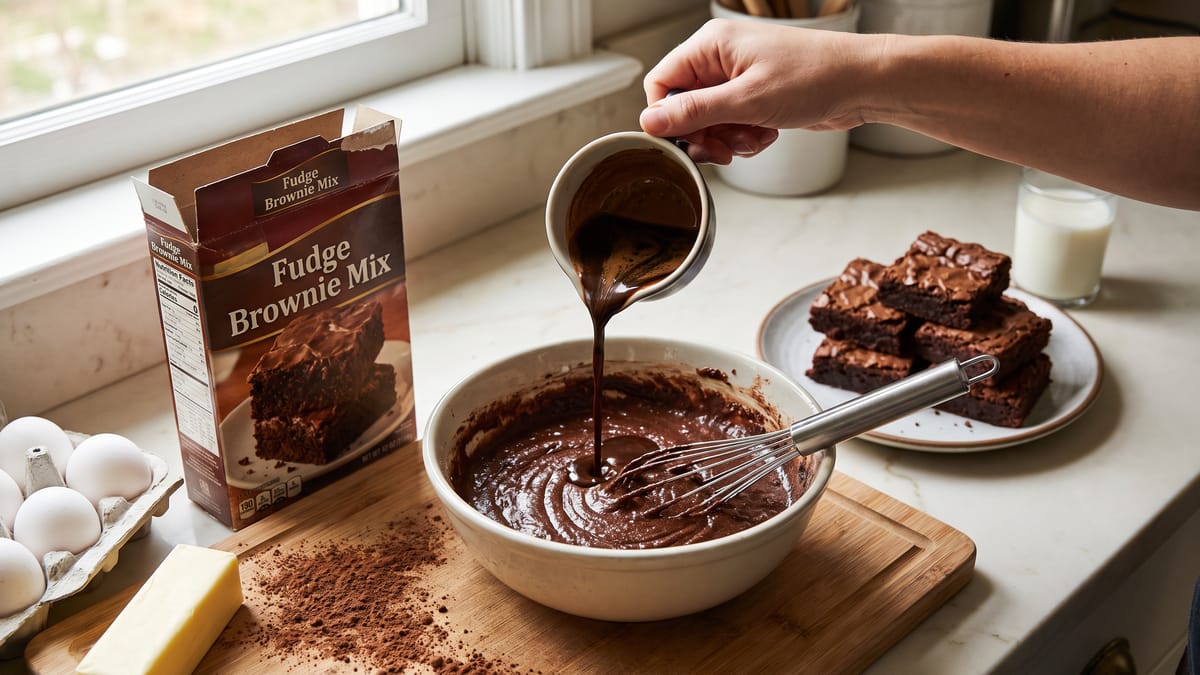
This One Change Makes Boxed Brownies Taste Almost Homemade
We’ve all been there. That sudden, insatiable craving for a warm, fudgy brownie. The kind that melts in your mouth, leaving a lingering whisper of chocolate bliss. Sometimes, the muse strikes when time is abundant and our pantry is stocked with artisanal cocoa, farm-fresh eggs, and rich, unsalted butter. We can embark on a glorious journey of scratch-baking, meticulously sifting, creaming, and folding our way to confectionary perfection. But let’s be honest, more often than not, life intervenes. The kids are clamoring, dinner needs to be made, or perhaps we simply lack the mental fortitude for a multi-step baking endeavor. This is where the humble boxed brownie mix heroically enters the scene.
Now, before any culinary purists scoff, let us acknowledge a fundamental truth: boxed brownie mixes are a godsend. They offer convenience, consistency, and a surprisingly delicious base. However, for those of us who appreciate the nuanced complexities of truly exceptional baked goods, that "surprisingly delicious base" often leaves a little something to be desired. It's good, yes, but it rarely achieves the transcendent, homemade quality we yearn for. It’s the difference between a perfectly serviceable pop song and a symphonic masterpiece. We want the symphony, even if we're starting with a pop song's framework.
For years, we experimented, tweaked, and pondered. We added chocolate chips, swirled in peanut butter, and even tried a dash of espresso powder. These additions certainly elevated the experience, transforming a good brownie into a very good one. But they were enhancements, not fundamental shifts. We were still building upon the inherent limitations of the mix. We sought a singular alteration, a foundational change that would unlock the true potential lurking within those unassuming cardboard boxes. And after countless batches, a few minor baking disasters, and many triumphant taste tests, we discovered it. This one, seemingly simple adjustment, has consistently transformed our boxed brownies from merely good to gloriously, almost unbelievably, homemade.
The Secret Ingredient: Unveiling the Game-Changer
What is this magical, transformative ingredient, you ask? Is it some obscure, exotic spice? A rare, artisanal chocolate? Perhaps a complicated technique involving inverted baking sheets or specific atmospheric pressure? No, dear readers, the answer is far more accessible, yet profoundly impactful. The single most effective change you can make to your boxed brownie mix to elevate it to near-homemade status is this: substituting melted butter for the oil called for in the instructions.
Yes, it sounds almost too simple, doesn't it? Many of us have likely considered it, perhaps even tried it once or twice. But the true power lies not just in the substitution itself, but in understanding why it works so remarkably well and how to execute it perfectly. This isn't just a minor tweak; it's a paradigm shift in the texture, flavor, and overall mouthfeel of your brownies.
Why Butter Trumps Oil: A Deep Dive into Culinary Chemistry
To truly appreciate the profound impact of this substitution, we need to delve a little into the culinary science at play. It's not just about a subjective preference for butter's taste; there are fundamental structural and flavor differences that butter introduces.
Flavor Profile: The Unmistakable Richness
Let’s start with the most obvious difference: flavor. Vegetable oils, such as canola, sunflower, or soybean oil, are often chosen for their neutral flavor. This neutrality is a double-edged sword. While it allows the chocolate flavor to shine through unimpeded, it also means the brownies lack a certain depth, a foundational richness that butter inherently provides. Butter, especially good quality unsalted butter, brings a complex, slightly nutty, and undeniably creamy flavor to the party. This flavor isn't just an additive; it integrates with the chocolate, creating a more harmonious and sophisticated taste experience. It's the difference between a one-note melody and a rich, resonant chord. The dairy solids in butter, which are absent in oil, undergo a Maillard reaction during baking, contributing to a more developed, toasted flavor that complements and enhances the chocolate.
Texture Transformation: From Chewy to Fudgy Perfection
This is where the magic truly unfolds. Oil, being 100% fat, contributes to a very moist, often chewy brownie. While chewiness is certainly desirable for some, it can sometimes lean towards a slightly rubbery or overly uniform texture. Butter, on the other hand, is an emulsion of fat, water, and milk solids. This composition is crucial. When butter melts, the water evaporates during baking, and the milk solids toast, contributing to a tender, yet incredibly fudgy texture.
The fat in butter also crystallizes differently than oil, leading to a more structured yet yielding crumb. This translates to brownies that are dense and moist, but also possess that coveted melt-in-your-mouth quality. The edges become delightfully crisp, while the center remains gooey and rich. It’s the hallmark of a truly exceptional brownie, a texture that is notoriously difficult to achieve with oil alone. We're talking about that perfect balance of chewiness and fudginess that defines the ideal brownie experience.
Structure and Crumb: A More Refined Experience
Beyond flavor and overall texture, butter also influences the internal structure and crumb of the brownie. Oil-based brownies can sometimes have a slightly open, almost cake-like crumb. While not inherently bad, it detracts from the dense, compact structure we associate with a truly fudgy brownie. Butter, with its unique composition, helps create a tighter, more cohesive crumb. This results in a brownie that feels more substantial, more luxurious, and less like a cake imposter. It's the difference between a finely woven tapestry and a loosely knitted blanket.
The Science of Crystallization and Moisture
Another fascinating aspect is how fats interact with sugar and flour. The fat in butter, when melted and incorporated, coats the flour particles differently than oil. This coating inhibits gluten development to a certain extent, preventing the brownies from becoming tough or overly chewy. Furthermore, the water content in butter, though small, contributes to steam during baking, which helps create a delicate lift and a more tender crumb. Oil, lacking this water, relies solely on leavening agents for lift, which can sometimes result in a less nuanced texture.
Beyond the Basic Swap: Elevating Your Butter Game
Simply swapping oil for butter is a fantastic start, but we can take this a step further. Not all butter is created equal, and understanding the nuances can further refine your brownie masterpiece.
Unsalted Butter is Your Best Friend
Always, always opt for unsalted butter for baking. This gives you complete control over the salt content in your recipe. Different brands of salted butter have varying levels of sodium, which can lead to unpredictable results. With unsalted butter, you can add a precise amount of salt to enhance the chocolate flavor without making your brownies overly salty. A pinch of good quality sea salt, by the way, is another fantastic, albeit secondary, enhancer for chocolate.
High-Quality Butter Makes a Difference
Just as with any ingredient, the quality of your butter matters. European-style butters, often with a higher fat content (around 82% compared to standard American butter's 80%), can yield even richer, more tender, and more flavorful brownies. Brands like Kerrygold, Plugrá, or Président are excellent choices. While not strictly necessary, if you're aiming for absolute perfection, this is a detail worth considering. The higher fat content contributes to a more luxurious mouthfeel and deeper flavor.
Clarified Butter or Brown Butter: Advanced Techniques for the Adventurous Baker
For those who want to truly push the boundaries, consider using clarified butter or even brown butter. Clarified butter, or ghee, is pure butterfat with the water and milk solids removed. While it will still provide the rich flavor of butter, it behaves more like oil in terms of fat content, leading to a slightly different texture profile. It can produce a very dense, almost candy-like fudginess.
Brown butter, however, is a game-changer. By gently melting and cooking butter until the milk solids turn a beautiful amber color and release a nutty aroma, you introduce an entirely new layer of sophisticated flavor. This nutty, caramelized note pairs exquisitely with chocolate, adding an unparalleled depth and complexity to your brownies. The process takes a little extra time and attention, but the reward is immense. We'll delve into how to make brown butter in a moment.
The How-To: Executing the Butter Swap Flawlessly
So, you're convinced. You're ready to embrace the butter revolution. Here's a step-by-step guide to making this simple swap a resounding success.
Step 1: Melt the Butter
The boxed mix will typically call for a specific amount of oil. For example, if it calls for 1/2 cup of vegetable oil, you will use 1/2 cup of melted butter. It's crucial to measure the butter after it's melted, not before. A stick of butter (1/2 cup) will yield slightly less than 1/2 cup of melted butter due to the water content, so you might need a little extra. Melt the butter gently in a small saucepan over low heat or in the microwave in short bursts, stirring frequently, until fully liquid. Avoid browning it at this stage unless you're intentionally making brown butter.
Step 2: Cool the Melted Butter Slightly
This is a critical, often overlooked step. Adding hot melted butter directly to your brownie mix can start to cook the eggs prematurely, leading to a less desirable texture. Allow the melted butter to cool for about 5-10 minutes, or until it's warm to the touch but not hot. We want it to be liquid enough to incorporate easily, but cool enough not to scramble anything.
Step 3: Incorporate as Directed
Once the butter is melted and slightly cooled, simply proceed with the boxed brownie mix instructions as usual. Add the melted butter along with the eggs, water (or milk, which is another excellent substitution for water, adding even more richness), and any other ingredients the mix calls for. Mix until just combined; overmixing develops gluten and can lead to tough brownies.
Step 4: Consider the Additions
While the butter swap is the primary focus, don't shy away from other thoughtful additions. A teaspoon of vanilla extract, a pinch of sea salt, or a teaspoon of espresso powder will further enhance the chocolate flavor. High-quality chocolate chips or chunks, swirled in before baking, will provide delightful pockets of molten chocolate.
Mastering Brown Butter: A Step-by-Step Guide
If you're ready for the next level, browning your butter is a truly transformative technique.
Ingredients and Equipment
You'll need your unsalted butter, a light-colored saucepan (this helps you see the color change), and a heat-proof bowl.
The Process
- 1. Melt: Place your measured amount of unsalted butter in the light-colored saucepan over medium-low heat. Let it melt completely.
- 2. Foam: As the butter melts, it will start to foam. This is the water evaporating.
- 3. Sizzle and Silence: The foam will subside, and you'll hear a gentle sizzling sound. This is the water continuing to cook off.
- 4. Browning: After a few minutes, the sizzling will quiet down. Keep watching closely. The milk solids at the bottom of the pan will start to turn golden brown, then a rich, nutty amber. You'll smell a distinct, delicious nutty aroma.
- 5. Remove from Heat: As soon as you see those amber bits and smell the nutty fragrance, immediately remove the pan from the heat. The butter can go from perfectly browned to burnt very quickly.
- 6. Transfer and Cool: Pour the browned butter, including all the delightful browned bits, into a heat-proof bowl. Allow it to cool slightly before incorporating it into your brownie mix. The browned butter will still be liquid, but we want it to be warm, not scorching hot, when it meets the other ingredients.
Beyond the Mix: Other Subtle Enhancements
While butter is our star, a few supporting actors can further refine your boxed brownie experience.
Milk Instead of Water
If your boxed mix calls for water, consider substituting it with an equal amount of whole milk or even half-and-half. The added fat and milk solids will contribute to a richer, more tender crumb and a more luxurious mouthfeel. It's a small change with a noticeable impact.
Extra Egg Yolk
For an even fudgier, more decadent brownie, consider adding an extra egg yolk to the mix. The yolk adds fat and emulsifiers, contributing to a denser, moister, and more intensely fudgy texture. This is a trick often employed in scratch brownie recipes for ultimate chewiness and richness.
A Pinch of Salt
Even if your mix contains salt, adding a small pinch of flaky sea salt (about 1/4 teaspoon) to the batter can dramatically enhance the chocolate flavor. Salt is a flavor enhancer, and it beautifully balances the sweetness of the brownies, making the chocolate taste more pronounced and complex.
High-Quality Chocolate Chips or Chunks
This one is less about the base and more about the embellishment, but it's worth reiterating. While many mixes come with chocolate chips, adding a handful of good quality chocolate chips or chopped chocolate bars (dark chocolate, milk chocolate, or a mix) will elevate the experience. The melty pockets of superior chocolate will provide bursts of intense flavor and a delightful textural contrast.
Don't Overbake
This is perhaps the most common mistake in brownie baking, whether from scratch or a box. Brownies are meant to be fudgy, and slightly underbaked is always better than overbaked. A good rule of thumb is to remove them from the oven when a toothpick inserted into the center comes out with moist crumbs, but no wet batter. The residual heat will continue to cook them as they cool, achieving that perfect fudgy consistency. Overbaked brownies become dry and cakey, losing their essential charm.
Patience is a Virtue
Resist the urge to cut into those warm, fragrant brownies immediately. While a warm brownie is certainly a treat, allowing them to cool completely, or at least until just barely warm, allows the flavors to meld and the texture to set properly. This results in cleaner cuts and a more satisfying eating experience. For ultimate fudginess, refrigerate them for an hour or two after cooling completely.
Putting it all together
There you have it. The secret, no longer so secret, to transforming your boxed brownie mix into a confectionary marvel that rivals many homemade versions. It’s a testament to the power of understanding ingredients and their interactions. By simply swapping the oil for melted butter, you unlock a world of richer flavor, superior texture, and a more refined eating experience.
We've explored the scientific rationale behind butter's supremacy, delved into techniques for enhancing its impact, and offered a few complementary tips to further elevate your baking game. This isn't about shaming the convenience of a boxed mix; it's about empowering you to take that convenience and infuse it with a touch of culinary magic. So, the next time that brownie craving strikes, reach for that box, but remember to reach for the butter too. Your taste buds will thank you, and your guests will be utterly convinced you spent hours slaving away in the kitchen. Happy baking, and may your brownies always be fudgy, rich, and utterly divine!