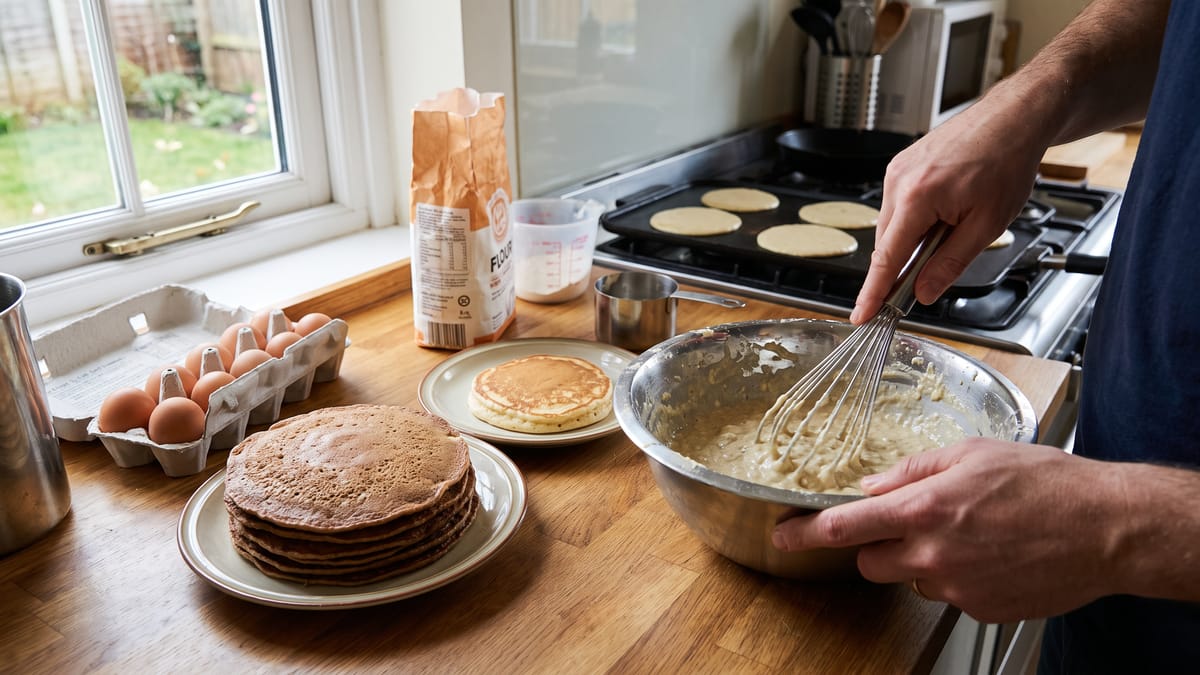
The Simple Pancake Mistake That Could Be Making Your Breakfast Flat and Dense
The Simple Pancake Mistake That Could Be Making Your Breakfast Flat and Dense
There are few culinary delights quite as universally cherished as the humble pancake. That golden, fluffy disc, a canvas for butter, syrup, fruit, or even savory toppings, conjures images of cozy weekend mornings and leisurely brunches. We’ve all been there, though, haven't we? The anticipation, the sizzle of butter in the pan, the aroma filling the kitchen, only to be met with a pancake that, while edible, is a far cry from the light, airy perfection we envisioned. Instead, it's flat, dense, and disappointingly un-pancake-like. We've tried different recipes, varied our flipping techniques, and even changed brands of flour, yet that elusive fluffiness remains just out of reach. What if we told you that the culprit behind your breakfast woes isn't some complex culinary secret, but rather a remarkably simple, yet profoundly impactful, mistake many of us make without even realizing it? Prepare yourselves, fellow breakfast enthusiasts, because we are about to unravel the mystery of the flat pancake and reveal the one crucial error that, once corrected, will revolutionize your pancake game forever.
The Unspoken Truth: Overmixing is the Enemy of Fluffiness
Yes, you read that correctly. The single most common and detrimental mistake we make when preparing pancake batter is overmixing. It sounds counterintuitive, doesn't it? We're taught in so many culinary contexts that thorough mixing ensures even distribution of ingredients and a smooth consistency. For cakes, cookies, and many other baked goods, this holds true. But pancakes, oh, pancakes are a different beast entirely. Their ethereal texture relies on a delicate balance, and overzealous stirring upsets that equilibrium, leading to a breakfast experience that falls flat, both literally and figuratively.
The Science Behind the Flop: Why Overmixing Spells Disaster
To truly understand why overmixing is such a pancake killer, we need to delve a little into the fascinating world of flour and its primary protein, gluten. Gluten, in its simplest form, is a network of proteins that develops when flour is hydrated and agitated. Think of it like tiny elastic bands. When we mix flour with liquid, these proteins start to bond and form long, stretchy strands. In bread making, this gluten development is highly desirable, as it provides the structure and chewiness we love in a good loaf. However, for pancakes, excess gluten development is precisely what we want to avoid.
When we overmix pancake batter, we are essentially encouraging the gluten to form robust, extensive networks. These strong gluten strands create a tough, rubbery structure. Instead of trapping the gases produced by our leavening agents (baking powder or baking soda), the overdeveloped gluten holds them captive in a rigid matrix, preventing them from expanding and creating those delightful air pockets that define a fluffy pancake. The result? A pancake that is dense, chewy, and heavy, lacking that characteristic light and tender crumb. It’s like trying to inflate a balloon made of thick leather instead of thin rubber, the air just can’t expand freely.
The Leavening Lament: How Overmixing Sabotages Your Rise
Our leavening agents, typically baking powder and sometimes baking soda, are the unsung heroes of pancake fluffiness. They are responsible for producing the carbon dioxide gas that creates those airy bubbles. Baking powder is a double-acting leavener, meaning it produces gas in two stages: once when it comes into contact with liquid, and again when exposed to heat. Baking soda, on the other hand, requires an acid to activate and release its gas.
When we overmix, we don't just develop gluten; we also work the leavening agents excessively. The initial burst of gas released when the wet and dry ingredients combine can be dissipated or "mixed out" if we stir too vigorously or for too long. By the time the batter hits the hot griddle, much of the leavening power has already been expended, leaving little left to create that final, glorious rise. It's like letting the fizz out of a soda before you even take a sip, the effervescence is lost.
The Visual Cues: What Overmixed Batter Looks Like
So, how do we know if we're overmixing? Our batter will give us some tell-tale signs. Properly mixed pancake batter should be lumpy. Yes, lumpy. We’re not aiming for a perfectly smooth, silky consistency here. If your batter is completely smooth, resembling a thin cream or paint, chances are you've gone too far. The lumps are actually a good thing; they indicate that the gluten hasn't been overdeveloped and that there are still pockets of dry flour waiting to be hydrated during cooking, contributing to a tender texture.
Another indicator is the thickness. Overmixed batter often becomes thinner and more elastic due to the developed gluten. It might even have a slightly "stretchy" quality when you lift the whisk. This is a clear signal that the gluten has had too much of a workout. We want a batter that is thick enough to hold its shape when poured, but still flows easily.
The Golden Rule: Mix Just Until Combined
Now for the actionable advice, the secret sauce, if you will. The golden rule of pancake making is to mix your batter just until combined. What does this mean in practical terms? It means combining your dry ingredients thoroughly in one bowl, and your wet ingredients in another. Then, pour the wet into the dry, and stir with a whisk or a spoon only until there are no visible streaks of dry flour. A few lumps are not just acceptable, they are desirable. Think of it as a gentle coaxing, not a vigorous beating. We're aiming for a barely cohesive mixture, not a perfectly uniform one.
The Technique Breakdown: Achieving Pancake Perfection
Let's walk through the ideal pancake mixing process, step by step, to ensure you nail that perfect fluffy stack every time.
Separate the Wet and Dry
This is a foundational step. In one large bowl, whisk together all your dry ingredients: flour, sugar (if using), baking powder, baking soda (if using), and salt. Whisking them together ensures even distribution of the leavening agents, so you don't end up with pockets of unactivated baking powder. In a separate bowl, whisk together your wet ingredients: milk or buttermilk, eggs, melted butter or oil, and any extracts like vanilla.
The Gentle Marriage
Now, the crucial moment. Pour the wet ingredients into the bowl with the dry ingredients. Do not dump them in all at once; a steady pour is fine.
The Minimalist Mix
Using a whisk or a large spoon, begin to gently fold and stir the ingredients together. Your goal is to hydrate the flour and combine the components. Stir only until the dry ingredients are just incorporated into the wet. There should still be lumps. Resist the urge to smooth out every last one. We are aiming for a shaggy, slightly uneven batter. Typically, this takes no more than 10-15 gentle stirs. Stop as soon as you no longer see significant patches of dry flour.
The Power of Patience: Resting Your Batter
While not strictly about mixing, allowing your batter to rest for 5-10 minutes after mixing can further enhance its fluffiness. This short rest period allows the flour to fully hydrate without additional mixing, and it gives the gluten a chance to relax. It also allows the leavening agents to begin their work, setting the stage for a superior rise. Think of it as a brief meditation for your batter, preparing it for its grand performance on the griddle.
Beyond Mixing: Other Factors for Fluffy Pancakes
While overmixing is undoubtedly the primary culprit, a few other elements can contribute to pancake perfection. Consider these additional tips to elevate your breakfast game.
The Right Flour Makes a Difference
All-purpose flour is standard, but some swear by cake flour for an even more tender crumb due to its lower protein content. Conversely, using a high-protein bread flour would be detrimental to pancake fluffiness. Stick to all-purpose or cake flour for best results.
The Magic of Buttermilk
If your recipe calls for buttermilk, embrace it. The acidity in buttermilk reacts with baking soda to produce extra carbon dioxide, leading to a wonderfully light and tangy pancake. If you don't have buttermilk, you can make a substitute by adding a tablespoon of lemon juice or white vinegar to regular milk and letting it sit for 5 minutes before using.
Fresh Leavening Agents
Baking powder and baking soda lose their potency over time. If your leavening agents are old, they simply won't produce enough gas to make your pancakes rise, regardless of how perfectly you mix the batter. Check the expiration dates and, if in doubt, replace them. A simple test for baking powder: mix a teaspoon with a quarter cup of hot water, it should fizz vigorously. For baking soda: mix a teaspoon with a tablespoon of vinegar, it should also fizz strongly.
The Perfect Pan Temperature
A properly heated griddle is crucial. Too cold, and your pancakes will spread too much and won't brown properly. Too hot, and they'll burn on the outside before cooking through, leaving you with a raw center and a charred exterior. Aim for medium heat. A good test is to drop a few drops of water onto the griddle; they should sizzle and evaporate quickly but not immediately disappear.
Don't Overcrowd the Pan
Give your pancakes space to breathe and cook evenly. Overcrowding the pan lowers the temperature and can lead to uneven cooking and less desirable browning. Cook them in batches, if necessary.
The Art of the Flip
Wait for the right moment to flip. Look for bubbles forming on the surface of the pancake and the edges starting to look set and slightly dry. The underside should be golden brown. A single, confident flip is all it takes. Resist the urge to press down on the pancakes with your spatula after flipping; this expels precious air and can make them dense.
Our Pancake Journey: A Personal Revelation
We remember a time when our pancakes were consistently disappointing. They were edible, certainly, but they lacked that joyous springiness, that almost cloud-like quality we craved. We blamed the recipe, the pan, even the weather. It wasn't until a seasoned baker, a true maestro of the griddle, observed our frantic whisking that the light bulb finally flickered on. "Easy there, tiger," she chuckled, gently stopping our arm. "You're making them tough before they even hit the pan." That simple observation, delivered with a knowing smile, was a revelation. We scaled back our mixing, embraced the lumps, and lo and behold, our pancakes transformed. They rose majestically, their interiors light and tender, their exteriors a perfect golden hue. It was a game-changer, a testament to how often the simplest adjustments yield the most profound results in the kitchen.
Putting It All Together
So, there you have it, the secret to truly fluffy pancakes, unveiled. It's not a fancy ingredient, a complex technique, or an expensive piece of equipment. It's the mindful act of not overmixing. By understanding the science behind gluten development and respecting the delicate nature of our leavening agents, we can transform our breakfast experience from dense and flat to gloriously light and airy. Embrace the lumps, mix gently, and be patient. Your taste buds, and your breakfast companions, will thank you. Now go forth, armed with this newfound knowledge, and conquer the griddle. May your mornings be filled with stacks of perfectly puffed, golden pancakes, a testament to the power of a simple, yet profound, culinary adjustment. Happy flipping!