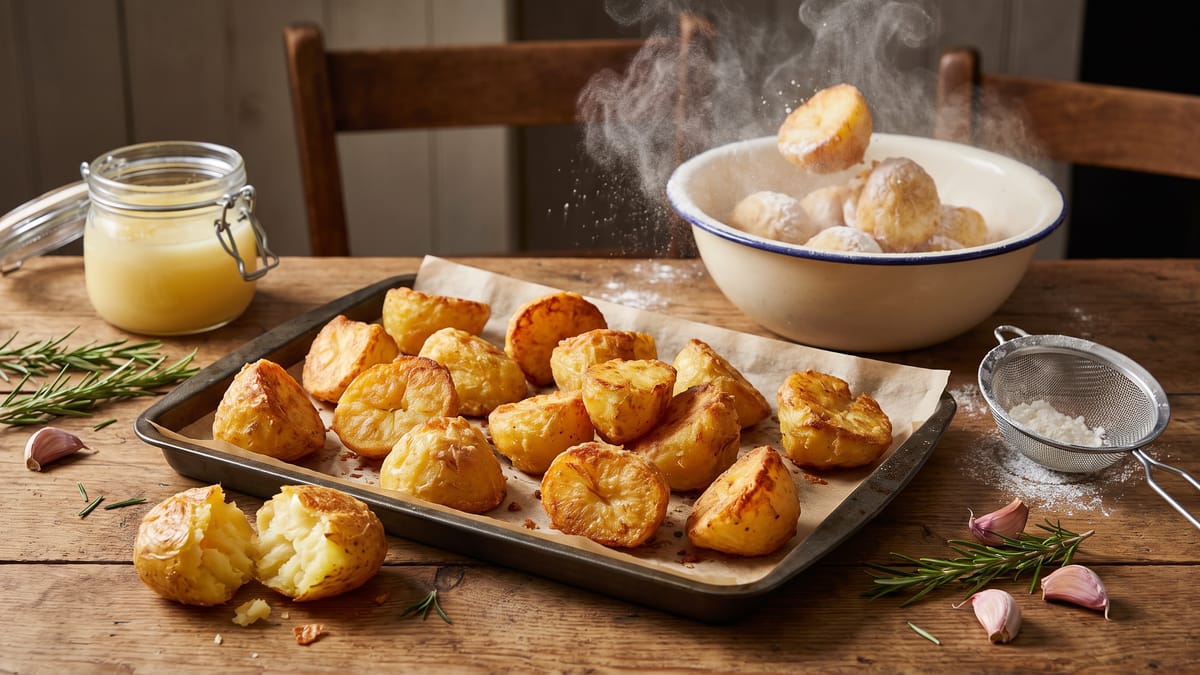
The One Trick That Makes Roast Potatoes Crispy on the Outside and Fluffy Inside
Ah, the humble roast potato. A culinary cornerstone, a steadfast companion to countless Sunday roasts, and a dish that, when perfected, can elevate a meal from good to truly sublime. We've all been there, haven't we? Dreaming of those golden, shatteringly crisp exteriors giving way to a cloud-like, fluffy interior, only to be met with something... well, less than stellar. Perhaps a bit soggy, a tad too firm, or just lacking that quintessential "oomph." Fear not, fellow food enthusiasts, for today we embark on a journey to unlock the secrets of the perfect roast potato. We're not talking about a mere tweak or a minor adjustment, but rather the one trick, a game-changer that will forever alter your roast potato destiny.
The Quest for Crispy Perfection: A Culinary Conundrum
For generations, home cooks and professional chefs alike have grappled with the elusive nature of the ideal roast potato. It seems like a simple enough concept, doesn't it? Potatoes, fat, heat. Yet, the devil, as they say, is in the details. Many methods promise crispy exteriors, from par-boiling to roughing up the edges, from using specific fats to cranking up the oven temperature. And while these techniques certainly contribute to a better roast potato, they often fall short of delivering that truly transcendent experience. We've experimented with duck fat, goose fat, olive oil, and even vegetable oil. We've tried high heat, low heat, and a combination of both. We've par-boiled for five minutes, ten minutes, even fifteen minutes. Each attempt yielded varying degrees of success, but none quite hit that sweet spot of ultimate crispiness paired with an almost ethereal fluffiness. It felt like we were constantly chasing a culinary unicorn.
Unveiling the Master Stroke: The Secret Ingredient is Not What You Think
So, what is this magical, transformative trick we speak of? What is the single, most impactful technique that separates the merely good roast potato from the truly exceptional? Prepare yourselves, for it's not a fancy ingredient, nor is it a complicated multi-step process. It's surprisingly simple, yet profoundly effective: baking soda. Yes, you read that correctly. A mere pinch of this unassuming pantry staple, when introduced at a specific stage of the cooking process, will revolutionize your roast potatoes forever. It's a culinary revelation, a stroke of genius that works on a fundamental chemical level to create an unparalleled texture. We were initially skeptical, as many of you might be, but the results speak for themselves. The first time we tried it, the difference was so dramatic, so undeniably superior, that we knew we had stumbled upon something truly special.
The Science Behind the Magic: How Baking Soda Works Its Wonders
To truly appreciate the power of baking soda in this context, let's delve a little into the science. Potatoes contain pectin, a complex carbohydrate that acts as a kind of glue, holding the potato cells together. When potatoes are cooked in plain water, the pectin softens, but not dramatically enough to create that desired surface texture. This is where baking soda comes in. Baking soda, or sodium bicarbonate, is an alkaline compound. When you add a small amount of it to the boiling water with your potatoes, it raises the pH of the water. This alkaline environment helps to break down the pectin on the surface of the potatoes more effectively and rapidly than plain water ever could.
Think of it this way: the baking soda essentially "roughens up" the exterior of the potato at a microscopic level. It creates a multitude of tiny, exposed starch particles on the surface. When these par-boiled, roughened potatoes are then introduced to hot fat in a searingly hot oven, these exposed starch particles crisp up incredibly efficiently, forming a remarkably crunchy crust. Meanwhile, the interior of the potato, protected by its outer layer, continues to steam and soften, becoming wonderfully fluffy. It's a delicate dance of chemistry and heat, all orchestrated by that tiny pinch of baking soda. This isn't just an old wives' tale, it's a scientifically sound method that delivers consistent, outstanding results every single time. We've tested it repeatedly, and the outcome is always the same: superior crispiness and unparalleled fluffiness.
The Step-by-Step Guide to Roast Potato Nirvana
Now that we've unveiled the secret and explained the science, let's get down to the practical application. Follow these steps meticulously, and you, too, will achieve roast potato perfection.
Choosing Your Potatoes Wisely
The journey to an exceptional roast potato begins with the right raw material. We recommend using a floury or starchy potato variety. Think Maris Piper, King Edward, Russet, or Yukon Gold. These varieties have a higher starch content, which is crucial for achieving that fluffy interior. Waxy potatoes, while great for salads, tend to hold their shape too well and won't give you that desirable soft, cloud-like texture inside. We've tried various types, and while waxy potatoes can roast, they simply don't deliver the same "wow" factor as their starchy counterparts.
Preparing Your Potatoes for Their Transformation
First, peel your chosen potatoes. We prefer to peel them, as the skin can sometimes prevent that all-over crispiness we're striving for. Next, cut them into roughly equal-sized pieces. Consistency in size is key here, as it ensures even cooking. Aim for pieces that are about 1.5 to 2 inches in size. If some pieces are too small, they'll burn before the larger ones are cooked through. If they're too large, they'll take an eternity to cook. We often cut larger potatoes into quarters or sixths, depending on their original size.
The Crucial Par-Boil: Where the Magic Begins
Place your cut potatoes into a large pot. Fill the pot with cold water, ensuring the potatoes are fully submerged. Now, for the star of the show: add a generous pinch, about half a teaspoon, of baking soda to the water. Do not be tempted to add more, as too much can impart a slightly soapy taste. Bring the water to a rolling boil over high heat. Once boiling, reduce the heat slightly and let the potatoes simmer for about 8 to 10 minutes. The exact time will depend on the size of your potato pieces, but you want them to be tender on the outside, almost falling apart at the edges, but still firm enough in the center to hold their shape. You should be able to easily pierce them with a fork, but they shouldn't be mushy. This par-boiling step, aided by the baking soda, is paramount. It's where the surface of the potato begins its transformation into a crisp-ready canvas.
The Art of Roughing Them Up
Once par-boiled, carefully drain the potatoes in a colander. Here's another critical step: return the drained potatoes to the empty pot they were cooked in. Now, put the lid back on and give the pot a good, vigorous shake. This is where you "rough up" the potatoes. The friction against the sides of the pot and against each other will create those beautifully fluffy, starchy edges that are essential for maximum crispiness. You'll see them looking a little battered and bruised, and that's exactly what you want. This step, combined with the baking soda, is what creates that incredible surface area for crisping. Don't be shy; really give them a good shake. We've often found that a minute or two of enthusiastic shaking is just right.
The Fat Factor: Choosing Your Flavor Vehicle
While the baking soda is the "one trick," the fat you use plays a significant supporting role in flavor and crispiness. For ultimate indulgence, we highly recommend duck fat or goose fat. These fats have a high smoke point and impart a wonderfully rich, savory flavor. However, if you prefer a vegetarian or vegan option, a good quality olive oil or even a neutral vegetable oil will work well, though the flavor profile will be different. We've even had great success with beef dripping for an extra savory punch. Whatever fat you choose, ensure you have enough to generously coat all the potatoes.
Preheating and Roasting: The Final Act
Preheat your oven to a scorching 200°C (400°F) or even 220°C (425°F) if your oven can handle it. Place your chosen fat in a large roasting pan and put it into the preheating oven. You want the fat to be shimmering hot before the potatoes go in. This is crucial for creating an immediate sear and preventing the potatoes from sticking. Once the fat is piping hot, carefully add the roughed-up potatoes to the roasting pan. Make sure they are in a single layer, giving them plenty of space to breathe. Overcrowding the pan will lead to steaming rather than roasting, resulting in soggy potatoes. If necessary, use two roasting pans.
Roast the potatoes for approximately 45 minutes to an hour, or until they are deeply golden brown and incredibly crispy. Halfway through the cooking time, give the pan a good shake or use a spatula to turn the potatoes, ensuring even browning on all sides. You want to see those glorious, craggy, golden-brown bits forming. Don't be afraid to let them get really dark; that's where the flavor and crunch reside. We often push them right to the edge, until they look almost burnt, but are in fact perfectly caramelized and crisp.
The Finishing Touches: Seasoning and Serving
Once your roast potatoes have reached peak crispiness and are tender on the inside, remove them from the oven. Immediately transfer them to a serving dish and season generously with sea salt. A sprinkle of freshly chopped rosemary or thyme can also add a delightful aromatic touch. Serve them hot, straight from the oven, and prepare for a chorus of appreciative sounds. They are best enjoyed immediately, as their crispness will begin to diminish over time. We've found that the sheer delight of serving these perfect potatoes makes any effort worthwhile.
Beyond the Basics: Tips for Next-Level Roast Potatoes
While the baking soda trick is undeniably the star, there are a few other considerations that can further elevate your roast potato game.
The Importance of Space
As mentioned earlier, overcrowding the roasting pan is a cardinal sin. Potatoes need space for the hot air to circulate around them, promoting even browning and crispiness. Resist the urge to cram them all into one pan if you're cooking for a crowd. It's far better to use two pans and achieve perfection than to compromise on quality.
Don't Skimp on the Fat
While we're not advocating for unhealthy excess, a sufficient amount of fat is essential for truly crispy roast potatoes. The fat acts as a medium for heat transfer, helping to conduct the heat evenly around the potatoes and encouraging that coveted browning. If you're concerned about using too much fat, remember that much of it will drain away after cooking.
The Power of a Good Roasting Pan
A heavy-duty metal roasting pan is your best friend here. It retains heat well and promotes even cooking. Avoid thin, flimsy pans that can warp and lead to uneven results. A good quality pan is an investment that will pay dividends in deliciousness for years to come.
Consider a Little Garlic or Herbs
While not essential for crispiness, adding a few smashed garlic cloves or sprigs of fresh rosemary or thyme to the roasting pan during the last 15-20 minutes of cooking can infuse your potatoes with wonderful aromatics. Be careful not to add them too early, as they can burn.
Reheating Roast Potatoes: A Small Challenge
Reheating roast potatoes can be tricky, as they tend to lose their crispness. However, if you find yourself with leftovers, the best way to revive them is in a hot oven or an air fryer. Avoid the microwave, as it will only make them soggy. Spread them out on a baking sheet and heat at 200°C (400°F) until re-crisped.
To Sum Things Up
So there you have it, our culinary compatriots: the one trick that will forever change your roast potato game. The humble pinch of baking soda, combined with careful preparation and the right roasting techniques, will unlock a world of golden, shatteringly crisp exteriors and impossibly fluffy interiors. No longer will you settle for mediocre spuds. You now possess the knowledge and the power to create roast potatoes that will be the envy of every dinner table. We encourage you to try this method, experiment with your favorite fats and seasonings, and savor the truly remarkable results. Happy roasting, and may your potatoes always be perfectly crisp and fluffy.