The Best Way to Cook Bacon When You Want It Extra Crispy and Evenly Browned
Ah, bacon. Just the word itself conjures images of sizzling strips, fragrant kitchens, and the promise of a truly satisfying meal. For many of us, it's more than just a breakfast staple; it's a culinary cornerstone, a crispy indulgence that elevates everything from a simple sandwich to a gourmet salad. But let's be honest, achieving that elusive perfect bacon, the kind that's uniformly crisp, beautifully browned, and utterly devoid of flabby, chewy bits, can feel like a quest for the Holy Grail. We've all been there, standing over a spluttering pan, meticulously flipping, only to end up with a mixed bag of burnt edges and undercooked centers. Today, we're embarking on a delicious journey to unlock the secrets of truly exceptional bacon. We're talking about the kind that snaps with a delightful crunch, boasts an even, golden-brown hue, and leaves you utterly convinced that you've mastered the art of bacon cookery. Forget everything you thought you knew about cooking this beloved porcine delight, because we're about to unveil the definitive method that will transform your bacon game forever.
The Perils of Pan-Frying: Why Our Traditional Methods Fall Short
Before we dive into the ultimate technique, let's briefly consider why our usual pan-frying endeavors often fall short of perfection. The traditional stovetop method, while seemingly straightforward, presents several inherent challenges.
The most significant hurdle is uneven heat distribution. Unless you possess a professional-grade, perfectly flat, heavy-bottomed pan, hot spots are almost inevitable. These localized areas of intense heat lead to some strips cooking faster than others, resulting in that frustrating mosaic of burnt and raw. We're constantly chasing consistency, moving pieces around, adjusting the heat, and still, the results are rarely uniformly spectacular.
Then there's the fat rendering. When bacon hits a hot pan, the fat begins to melt, and this rendered fat, while delicious, can actually hinder even browning. The strips essentially "fry" in their own fat, and if the temperature isn't carefully controlled, the exterior can brown too quickly while the interior remains pliable and chewy. Furthermore, the sputtering and popping that accompany pan-frying can be a messy affair, leaving grease splatters across your stovetop and countertops. It's a method born of necessity, perhaps, but certainly not one optimized for consistent crispness and aesthetic appeal. We're looking for a more controlled, more gentle, and ultimately, more effective approach.
The Unsung Hero: Why the Oven is Your Bacon's Best Friend
Prepare yourselves, for we are about to reveal the secret weapon in our arsenal against flabby bacon: the oven. Yes, that humble appliance, often relegated to roasting chickens and baking cookies, is the undisputed champion when it comes to achieving consistently crispy, evenly browned bacon. The oven offers a controlled, ambient heat environment that pan-frying simply cannot replicate.
Imagine a world where every strip of bacon cooks at the same pace, where the fat renders slowly and evenly, and where you don't have to stand guard, tongs in hand, constantly flipping and maneuvering. This is the promise of oven-baked bacon. The dry, circulating heat of the oven allows the bacon to gradually crisp up from all sides, promoting uniform rendering of the fat and preventing those frustrating hot spots that plague stovetop cooking. It's a hands-off approach that yields superior results, freeing you to attend to other breakfast preparations or simply savor the intoxicating aroma wafting from your kitchen. We're talking about a paradigm shift in bacon preparation, a method that prioritizes consistency and culinary excellence.
The Essential Tools: Gearing Up for Bacon Brilliance
Before we embark on our oven-baking adventure, let's ensure we have the right equipment. While you don't need a professional chef's arsenal, a few key items will significantly enhance your bacon-cooking experience.
First and foremost, a sturdy baking sheet. We prefer a rimmed baking sheet, often referred to as a half-sheet pan, to contain any rendered fat and prevent it from spilling into your oven. A lighter gauge sheet might warp under high heat, leading to uneven cooking, so invest in a good quality, heavier gauge pan if possible.
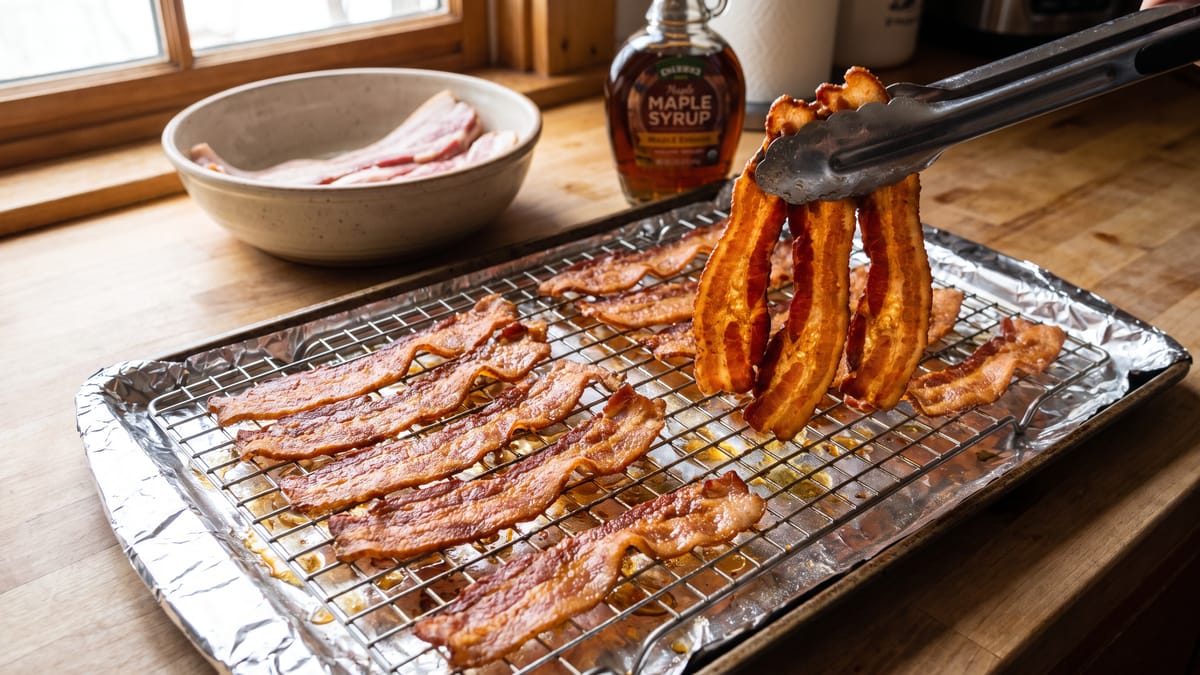
Next, and this is crucial for ultimate crispiness, a wire cooling rack that fits inside your baking sheet. This ingenious addition elevates the bacon, allowing air to circulate completely around each strip. This airflow is paramount for achieving that coveted, all-around crispness, preventing the bottom of the bacon from steaming in its own fat. Without a rack, the bacon will still be good, but it won't reach its full crispy potential.
Finally, parchment paper or aluminum foil. While not strictly mandatory, lining your baking sheet with either of these makes cleanup an absolute breeze. The rendered fat collects on the liner, which can then be easily discarded, saving you from a greasy scrubbing session. We typically opt for parchment paper as it tends to be less prone to sticking and can withstand the heat without leaching any unwanted flavors. These simple tools, when combined with our perfected technique, will elevate your bacon game to unprecedented heights.
The Core Technique: Low and Slow for Crispy Perfection
Now, for the main event: the method itself. The secret to extra crispy, evenly browned bacon lies in a two-pronged approach: a relatively low oven temperature and a patient, gradual cooking process. Forget blasting it with high heat; we're aiming for a gentle, consistent render.
First, preheat your oven to 375°F (190°C). This temperature is the sweet spot, allowing the fat to slowly render and the meat to crisp without scorching. Place your wire rack on your rimmed baking sheet, and if using, line the baking sheet with parchment paper or foil.
Next, arrange the bacon strips in a single layer on the wire rack. It's imperative that the strips do not overlap. Overlapping prevents even cooking and can lead to some pieces remaining chewy while others crisp up. Give each strip its personal space; they'll thank you for it with unparalleled crispness.
Now, here's a crucial tip that many overlook: start with a cold oven. Yes, you read that right. While we just mentioned preheating, for truly exceptional bacon, placing the bacon in a cold oven and then turning it on allows the bacon to slowly come up to temperature with the oven. This gradual heating encourages the fat to render more completely and gently, resulting in more even cooking and less shrinkage. If you're pressed for time, preheating is fine, but for the absolute best results, a cold start is our preferred method.
Once the bacon is in the oven, let the magic happen. The cooking time will vary depending on the thickness of your bacon and your desired level of crispness, but generally, it will take anywhere from 15 to 25 minutes. Keep a close eye on it, especially towards the end. We're looking for a deep, golden-brown color and a firm, crisp texture. Resist the urge to open the oven door too frequently, as this releases heat and can prolong the cooking process.
Once the bacon reaches your desired crispness, carefully remove the baking sheet from the oven. The bacon will continue to crisp slightly as it cools. Immediately transfer the cooked bacon to a plate lined with paper towels to absorb any excess fat. This final step is vital for achieving that dry, snappy crispness we're striving for. Allowing it to cool on the rack or in its own rendered fat will result in a less crisp texture.
Beyond the Basics: Advanced Tips for Bacon Aficionados
While the core technique described above will consistently yield fantastic results, there are a few additional tips and tricks that can elevate your bacon game from great to truly legendary. These are the nuances that differentiate a good cook from a seasoned culinary expert.
Consider the thickness of your bacon. Thinner cut bacon will cook more quickly and become crispier, while thicker cut bacon will require a bit more time and will offer a meatier bite, though still delightfully crisp. Adjust your cooking time accordingly, always keeping a watchful eye. If you're working with a variety of thicknesses, it might be beneficial to cook them on separate sheets to ensure optimal results for each.
Another often-overlooked factor is the type of bacon itself. Smoked bacon, applewood smoked bacon, peppered bacon, and even uncured varieties will all react slightly differently to the cooking process. Experiment to find your personal preference. Some bacon, particularly artisan or dry-cured varieties, might render more fat or cook more quickly due to their composition. Familiarity with your chosen bacon will lead to more consistent success.
For an extra layer of flavor and unparalleled crispness, some chefs advocate for a sprinkle of black pepper before baking. The heat of the oven coaxes out the aromatic oils of the pepper, infusing the bacon with a subtle, peppery kick that complements its savory richness beautifully. We also find that a tiny pinch of brown sugar or maple syrup, brushed lightly on the bacon strips during the last five minutes of cooking, can create a delightful caramelized glaze, adding another dimension of flavor and an irresistible sheen. This technique requires careful monitoring to prevent burning, but the results are truly sublime.
Finally, don't discard that rendered bacon fat! It's liquid gold, brimming with savory flavor. Strain it through a fine-mesh sieve or cheesecloth into a heatproof jar and store it in the refrigerator. It's perfect for sautéing vegetables, frying eggs, or adding depth to gravies and dressings. We consider it a culinary bonus, a delicious byproduct of our pursuit of perfect bacon.
Troubleshooting Common Bacon Blunders
Even with the best techniques, sometimes things can go awry. Let's address some common issues you might encounter and how to rectify them, ensuring your bacon journey is always a successful one.
If your bacon isn't getting crispy enough, the most likely culprit is either insufficient cooking time or an oven that's not hot enough. Double-check your oven temperature with an oven thermometer, as appliance thermostats can sometimes be inaccurate. If the bacon still seems pliable after the recommended cooking time, simply extend the baking by a few minutes, checking frequently until it reaches your desired crispness. Remember, it's easier to add more cooking time than to reverse overcooked bacon.
Conversely, if your bacon is burning at the edges while the center remains undercooked, the oven temperature might be too high, or your bacon strips might be too thin for the chosen temperature. Try reducing the oven temperature by 25 degrees Fahrenheit (around 15 degrees Celsius) on your next attempt. Also, ensure your strips are not overlapping, as this can create areas where the bacon cooks unevenly.
Another common complaint is excessive shrinkage. While some shrinkage is inevitable with bacon, starting with a cold oven can help minimize this. The gradual heating allows the fat to render more slowly, which can result in less dramatic shrinkage compared to shocking cold bacon in a hot pan or oven. Also, consider the quality of your bacon. Bacon with a higher meat-to-fat ratio will generally shrink less than very fatty cuts.
Finally, if your bacon is sticking to the rack, ensure your rack is clean and lightly oiled, or consider lining it with a thin layer of parchment paper if you're not already using it. While parchment is usually reserved for the baking sheet itself, a thin strip placed directly on the rack can prevent sticking without hindering airflow too much. However, the best defense against sticking is ensuring the bacon is cooked to optimal crispness, as properly rendered bacon tends to release easily.
The Versatility of Perfect Bacon: Beyond Breakfast
Once you've mastered the art of crispy, evenly browned bacon, a world of culinary possibilities opens up before you. This isn't just for breakfast anymore; perfect bacon is a game-changer across a myriad of dishes.
Think about crumbling it over a vibrant salad, adding a salty, smoky crunch that elevates even the simplest greens. A classic Cobb salad, for instance, is immeasurably improved with perfectly rendered, crisp bacon bits. Consider incorporating it into sandwiches, where its structural integrity and satisfying texture stand up beautifully against other fillings. A BLT, for example, transforms from a good sandwich to an extraordinary one when the bacon is truly exceptional.
Beyond savory applications, crispy bacon can even venture into the realm of sweet. Imagine candied bacon, baked with a touch of brown sugar or maple syrup, offering a delightful salty-sweet counterpoint to desserts. It can be crumbled over ice cream, incorporated into cookies, or even served as an unexpected garnish for a decadent chocolate cake. The possibilities are truly boundless.
We've even found success incorporating perfectly cooked bacon into unexpected dishes like pasta carbonara, where its consistent texture and rich flavor provide the ideal foundation. Or consider a simple baked potato, elevated to gourmet status with a generous sprinkle of crispy bacon. The key is to leverage the unique attributes of perfectly cooked bacon: its consistent crispness, its deep savory flavor, and its ability to add textural interest to almost any dish.
Putting it all together
We've journeyed through the intricacies of bacon cookery, debunking myths and unveiling techniques that promise a revolution in your kitchen. From understanding the pitfalls of traditional pan-frying to embracing the gentle, consistent heat of the oven, we've laid out a roadmap to bacon perfection. We've emphasized the crucial role of a wire rack for optimal airflow, the convenience of parchment paper for effortless cleanup, and the transformative power of a low and slow cooking approach.
Remember, the goal isn't just cooked bacon; it's extra crispy, evenly browned bacon, a culinary delight that delights the senses and elevates every meal it graces. We've explored the nuances of starting with a cold oven, the importance of single-layer arrangement, and the art of knowing when your bacon has reached its peak. We've also armed you with troubleshooting tips for those inevitable learning curves and encouraged you to explore the vast culinary applications of your newfound bacon mastery.
So, the next time the craving for that irresistible sizzle strikes, step away from the stovetop. Preheat your oven, arrange those glorious strips, and prepare to be amazed. You're not just cooking bacon; you're crafting a culinary masterpiece, one perfectly crisp, golden-brown strip at a time. Go forth and conquer the world of bacon, one delicious bite after another. Your taste buds, and your family, will undoubtedly thank you for it.