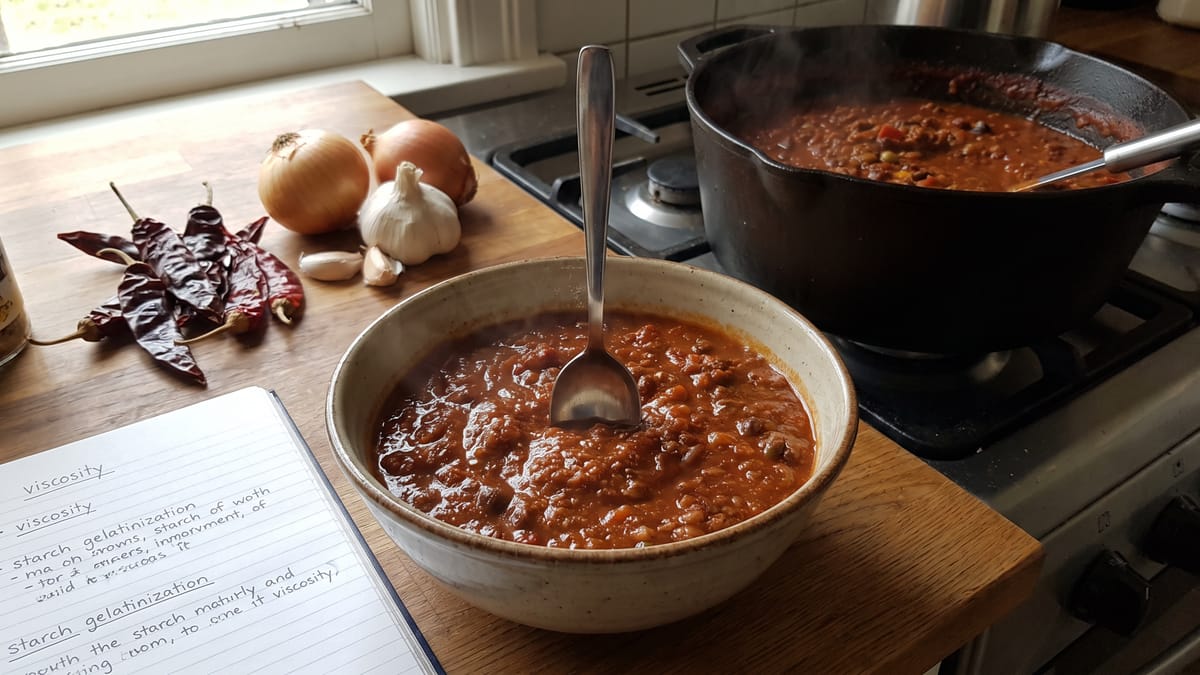
Should Chili Be Thick Enough to Stand a Spoon? The Science Behind the Perfect Consistency
Should Chili Be Thick Enough to Stand a Spoon? The Science Behind the Perfect Consistency
Ah, chili. Just uttering the word conjures images of robust flavor, comforting warmth, and a meal that truly sticks to your ribs. It’s a dish steeped in tradition, fiercely debated in cook-offs, and a staple in countless homes. But amidst the passionate discussions about beans or no beans, beef or venison, one question consistently simmers to the surface: How thick should chili be? Should it be a hearty, spoon-defying concoction, or does a looser, more soup-like consistency have its place? This isn't just a matter of personal preference, though that certainly plays a role. Beneath the surface of this culinary quandary lies a fascinating interplay of food science, tradition, and the very definition of what makes chili, well, chili.
We've all encountered chili in its various guises, from the watery abyss of a cafeteria line to the glorious, almost solid brick served at a championship event. The spectrum is vast, but for many, the ideal chili occupies a specific textural sweet spot. Today, we're diving deep into the science that dictates chili consistency, exploring the arguments for both sides, and ultimately, settling the debate with the wisdom of culinary experts and the unwavering logic of the kitchen laboratory. Prepare to unlock the secrets to achieving that perfect, spoon-standing consistency every time.
The Great Divide: Thick vs. Soupy
Let's lay out the battle lines. On one side, we have the staunch advocates for a chili so robust, so substantial, that a spoon plunged into its depths remains upright, a testament to its density and richness. This camp often champions the idea of chili as a meal in itself, something that you eat with a fork as much as a spoon, a dish that feels hearty and satisfying. They argue that this thickness allows the complex flavors to cling to each bite, preventing them from dissipating into a watery base. For them, a soupy chili is an affront, a dilution of a classic.
On the other side, a smaller but equally vocal contingent prefers a looser, more fluid chili. They might argue that a slightly thinner consistency allows for easier serving, particularly when ladling over rice or hot dogs. Perhaps they appreciate a texture that's closer to a hearty stew, where the liquid component is just as integral as the solids. For some, a very thick chili can feel heavy or overwhelming, and a lighter touch is preferred. This camp often emphasizes the "stew" aspect of chili, where a generous amount of flavorful broth is part of the appeal.
However, when we turn to culinary tradition and the practices of chili experts, the verdict leans heavily towards the former. Chili con carne, in its most revered forms, is overwhelmingly expected to be thick enough to hold a spoon upright, not soupy. This isn't merely an arbitrary rule; it's a characteristic deeply embedded in the culinary identity of the dish. Indeed, when we consider stew-like dishes generally, they are typically defined by a ratio of approximately 30% liquid to 70% solids, whereas soups lean towards the opposite, with roughly 70% liquid and 30% solids. This distinction alone offers a strong clue as to where chili traditionally falls.
The Science of Viscosity: Starch, Collagen, and Evaporation
To truly understand how chili achieves its desired consistency, we must don our metaphorical lab coats and delve into the fascinating world of food science. The thickness of your chili is not magic; it's the result of several key scientific processes working in harmony.
The Power of Starch Gelatinization
One of the primary drivers of chili's thickness comes from starch. Starch is a carbohydrate found in many plant-based ingredients, and when heated in the presence of liquid, it undergoes a process called gelatinization.
Think about it this way: starch granules are like tiny, tightly packed sponges. When exposed to hot liquid, they begin to absorb water, swelling and softening. As they swell, they eventually burst, releasing their amylose and amylopectin molecules into the surrounding liquid. These molecules then form a network, trapping water and increasing the viscosity of the liquid. This is precisely how we thicken gravies, sauces, and, yes, chili.
In chili, several ingredients contribute starch:
- • Beans: If your chili includes beans, they are a significant source of starch. As beans simmer, their starches slowly release into the broth. Mashing some of the beans against the side of the pot is a classic technique to accelerate this process. Within just 1 to 2 minutes of mashing, you'll notice the chili beginning to thicken as the released starch does its work.
- • Masa Harina or Cornmeal: These finely ground corn products are superstars when it comes to thickening chili. Masa harina, in particular, is a traditional ingredient in many chili recipes, especially Texas-style chili which often eschews tomatoes. It not only contributes a distinctive corn flavor but also acts as a powerful thickener. When 1 to 2 tablespoons of masa harina (or cornmeal) are stirred into chili, they rapidly absorb liquid and create a creamy, thickened texture within minutes. For an even more reliable and lump-free thickening, a masa harina slurry, made by mixing equal parts masa and cold water, can be stirred into boiling chili. It will achieve a spoon-standing consistency in about 2 minutes.
- • Cornstarch: For a quick and effective thickening solution, cornstarch is your friend. A slurry made with 1 tablespoon of cornstarch mixed with 2 tablespoons of cold water, stirred into the chili and simmered for 5 to 10 minutes, will reliably achieve that desired thickness. It's a neutral-tasting thickener that won't alter the flavor profile of your chili.
- • Dried Chile Powder: In recipes like Texas-style chili, which often forgo tomatoes, large amounts of dried chile powder are crucial not just for flavor and color, but also for thickness. Dried chile powder contributes to the chili's body through its fiber and solids as it hydrates and breaks down during simmering.
The Magic of Collagen Breakdown
Another unsung hero in the quest for thick chili is collagen. This protein is abundant in connective tissues found in tougher cuts of meat, like chuck or brisket, which are often used for chili. When these cuts are subjected to long, slow simmering, the collagen gradually breaks down into gelatin.
Gelatin, like starch, is a hydrocolloid, meaning it has the ability to absorb and hold a significant amount of water. As collagen transforms into gelatin, it dissolves into the liquid, contributing a velvety mouthfeel and a discernible body to the chili. This is why chili often tastes and feels richer and thicker after a long simmer, even before any starches are explicitly added. The gelatin creates a more viscous, almost lip-coating texture that enhances the overall eating experience. This slow transformation is a key reason why chili often tastes even better the next day, as the collagen has had ample time to break down and enrich the sauce.
The Art of Evaporation and Reduction
Sometimes, the simplest solutions are the most effective. Evaporation is a fundamental principle in cooking, and it plays a crucial role in concentrating flavors and thickening sauces. If your chili is tasting a little too soupy, simply simmering it uncovered for 15 to 30 minutes will work wonders. As steam escapes from the pot, excess liquid reduces, leaving behind a more concentrated, flavorful, and naturally thicker chili. This process is often referred to as "reduction," and it's a cornerstone of good sauce-making. It not only thickens but also intensifies the existing flavors, making the chili more robust and complex.
The "Spoon Test" and Beyond
So, we return to our central question: Should chili be thick enough to stand a spoon? Based on culinary tradition, expert practice, and the objective rheological measurements that confirm thickened soups and stews have higher viscosity and distinct sensory properties (making them easier to swallow and more creamy), the answer is a resounding yes. The "spoon test" isn't just a quirky benchmark; it's a widely accepted indicator of proper chili consistency.
It's important to remember that chili thickens further as it cools because starch from beans and other ingredients sets up. Therefore, it's always best to judge the final consistency after letting it rest for a few minutes off the heat. What might seem slightly loose when piping hot often achieves that perfect spoon-standing texture as it settles.
Practical Guidelines for Adjusting Thickness
Now that we understand the science, let's put it into practice. Here are clear, actionable guidelines for achieving and adjusting the perfect chili consistency in your own kitchen.
Building Thickness from the Start
- • Choose the Right Meat: Using tougher cuts of meat with more connective tissue, like chuck or short ribs, will inherently contribute more collagen and thus more gelatin to your chili as it simmers.
- • Embrace Beans (If You Do): If your chili recipe includes beans, don't underestimate their thickening power. A good ratio of beans to liquid will naturally lead to a thicker chili.
- • Don't Skimp on Chile Powder: For chilis that rely heavily on dried chiles, ensure you're using a generous amount. The dried chile powder will contribute to the body of the sauce.
- • Consider Masa Harina Early On: Many traditional chili recipes call for adding masa harina towards the end of the cooking process. Incorporating it from the start, perhaps with the spices, can help build a robust foundation of thickness.
Adjusting Thickness Mid-Cook
- • The Masa Harina Method: If your chili is looking a bit thin, whisk 1 to 2 tablespoons of masa harina into a small amount of cold water to create a slurry. Stir this into your simmering chili and let it boil for about 2 minutes. Watch as it transforms before your eyes.
- • The Cornstarch Slurry: For a quick and neutral thickening, mix 1 tablespoon of cornstarch with 2 tablespoons of cold water. Stir this slurry into your chili and let it simmer for 5 to 10 minutes, allowing the starches to gelatinize.
- • Mashing Beans: If you're using beans, grab a potato masher or the back of a spoon and mash about a quarter to a third of the beans against the side of the pot. Stir well and let it simmer for 1 to 2 minutes. This releases their starches and provides a lovely, creamy thickness.
- • Reduction by Simmering Uncovered: If you have time and your chili is still too thin, simply remove the lid and let it simmer gently, uncovered, for 15 to 30 minutes. The excess liquid will evaporate, concentrating both flavor and thickness. Stir occasionally to prevent sticking.
Avoiding Common Pitfalls
- • Don't Over-Thicken: It's easier to add more thickener than to thin out an overly thick chili. Start with a small amount and add more if needed.
- • Avoid Lumps: Always make a slurry with cornstarch or masa harina before adding it to hot liquid. Adding dry thickeners directly can lead to stubborn lumps.
- • Be Patient: Starch gelatinization and collagen breakdown take time. Don't expect instant results. Give your chili a few minutes to react after adding thickeners or reducing.
- • Consider the Cool-Down: Remember that chili will thicken further as it cools. Take this into account when judging its consistency straight off the stove.
Putting It All Together
The journey to perfect chili consistency is a delightful blend of culinary tradition and scientific understanding. While personal preference always holds a special place in our kitchens, the prevailing wisdom and the very essence of what defines chili point towards a hearty, spoon-standing texture. This isn't just about aesthetics; it's about optimizing flavor delivery, mouthfeel, and the overall satisfaction of a truly substantial meal.
By understanding the roles of starch gelatinization, collagen breakdown, and evaporation, we empower ourselves to control the destiny of our chili. Whether you're mashing beans, stirring in masa harina, or simply letting your pot simmer uncovered, you're harnessing fundamental food science principles to create a dish that is both delicious and texturally perfect. So, the next time you're stirring a pot of simmering chili, pause, consider the science, and aim for that glorious moment when your spoon stands tall, a proud sentinel in a sea of rich, flavorful goodness. Your taste buds, and your guests, will thank you.
Sources
- • How to Thicken Chili (9 Easy Ways) - Recipefairy.com
- • How to Thicken Chili - Martha Stewart
- • Chili for Chili Burgers, Chili Dogs, or Chili Fries Recipe
- • Chili question re: thickness/consistency - Cafe Society
- • Is Chili a Soup? A Stew? Or Something Else Entirely? - Jow
- • Objective and quantitative definitions of modified food textures based on sensory and rheological methodology - PubMed