Knife Skills 101: How to Chop, Dice, and Mince Like a Pro
Recipe2Kitchen Team
Knife Skills 101: How to Chop, Dice, and Mince Like a Pro
🧠 Why Knife Skills Matter
Knife skills are fundamental to cooking—it’s about speed, safety, consistency, and presentation. Uniform cuts ensure even cooking and enhance flavor distribution. Whether you’re chopping, dicing, or mincing, using proper technique transforms your prep work into a professional kitchen routine Epicurious Better Homes & Gardens Real Simple.
🔪 Choosing & Caring for Your Knife
- • Knife selection: A sharp chef’s knife (8–10″) is essential for versatility. Paring knives suit small tasks, serrated blades for delicate foods Food & Wine.
- • Handle grip vs blade grip: Beginners often prefer the handle grip, but the blade grip (pinching near the bolster) gives more precision and control Serious Eats.
- • Knife maintenance: Dull blades are more dangerous. Hone before each use and sharpen regularly.
- • Stable cutting board: Use a damp towel underneath to prevent slipping.
✋ Safe Cutting Posture & Grip
- • Claw grip: Curl your fingertips inward and guide with your knuckles to protect fingers while slicing Serious Eats.
- • Flat base: For round ingredients (onions, potatoes), create a flat side for stability.
⚙️ The Essential Knife Cuts
Chopping
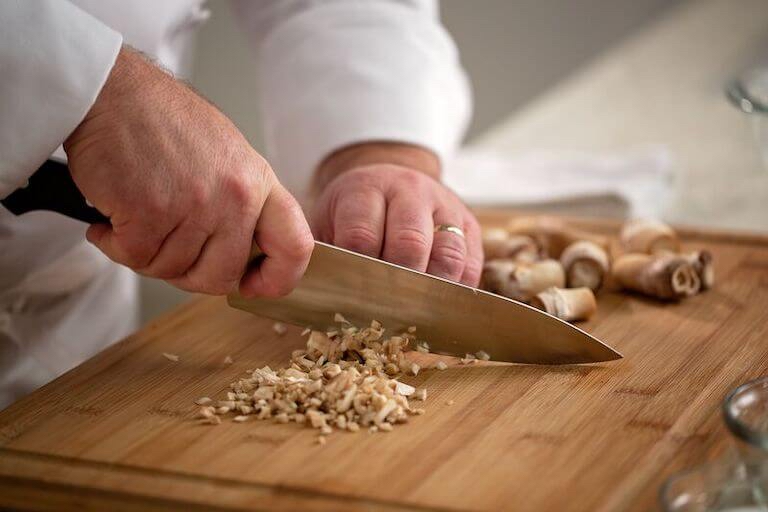
- • Description: Rough, coarse pieces (¼–1″) that don’t need uniformity—used in soups, stews, rustic dishes Real Simple Eat Move Save.
- • Technique: Use a rocking motion, tip anchored lightly, slicing downward and forward Forks Over Knives Eat Move Save.
- • Visual:
Dicing
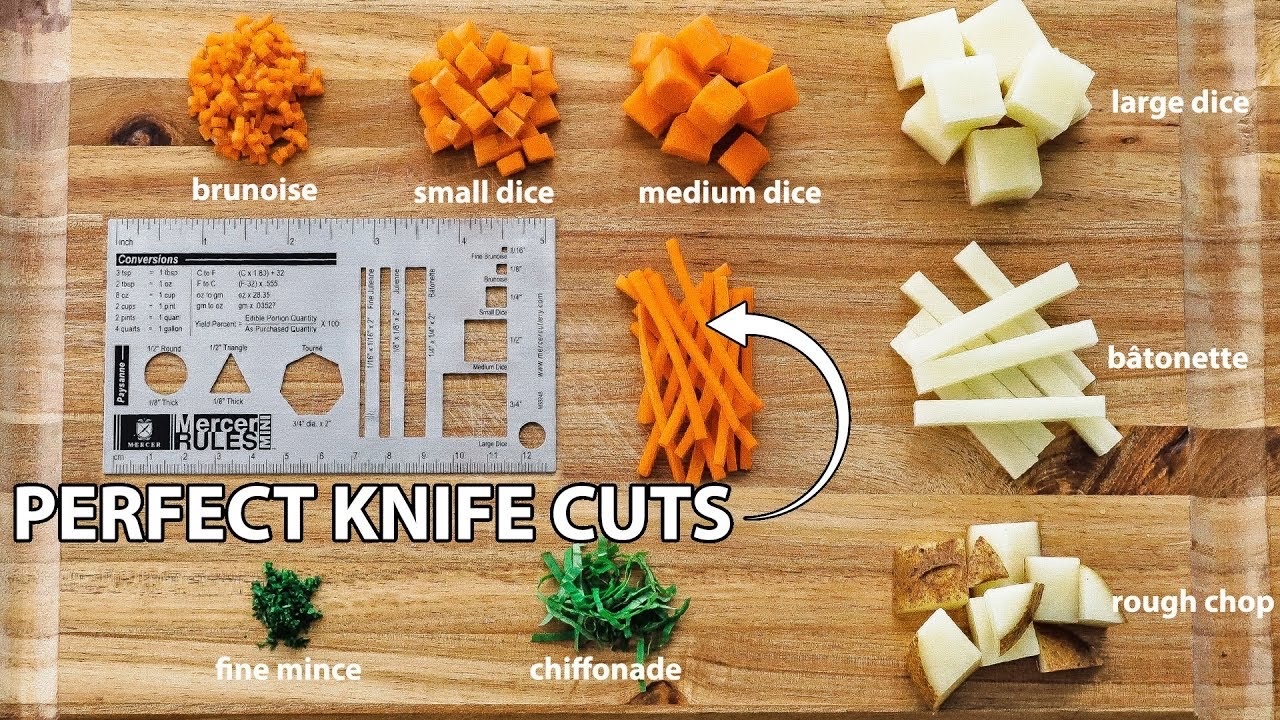
- • Definition: Uniform cube cuts.
- • Steps:
- • Common uses: Salads, stir-fries, soups.
- • Real-life visual:
Mincing
- • Definition: Very fine cuts (~⅛″ or smaller); ideal for garlic, herbs, ginger Ronzoni® Pasta The Spruce Eats.
- • Technique: Anchor the knife tip and use a rocking motion over the pile until fine consistency Serious Eats The Spruce Eats.
- • Best for flavor release—minced garlic or onion infuse more aroma than chunky cuts.
🍽️ Step‑by‑Step Examples
Onion Chop 🧅
- 1. Trim root and stem ends, then halve.
- 2. Peel and place flat side down.
- 3. Apply vertical cuts (avoid slicing through root).
- 4. Rock chop for coarser texture.
Bell Pepper or Carrot Dice
- 1. Slice into slabs.
- 2. Cut into julienne sticks.
- 3. Cross-cut into consistent cubes (~¼″ for small dice).
Garlic/Herb Mince
- 1. Smash garlic clove, peel skin.
- 2. Roughly chop, then rock knife over pile for fine result.
- 3. Repeat if needed for uniformity.
✂️ Advanced Techniques
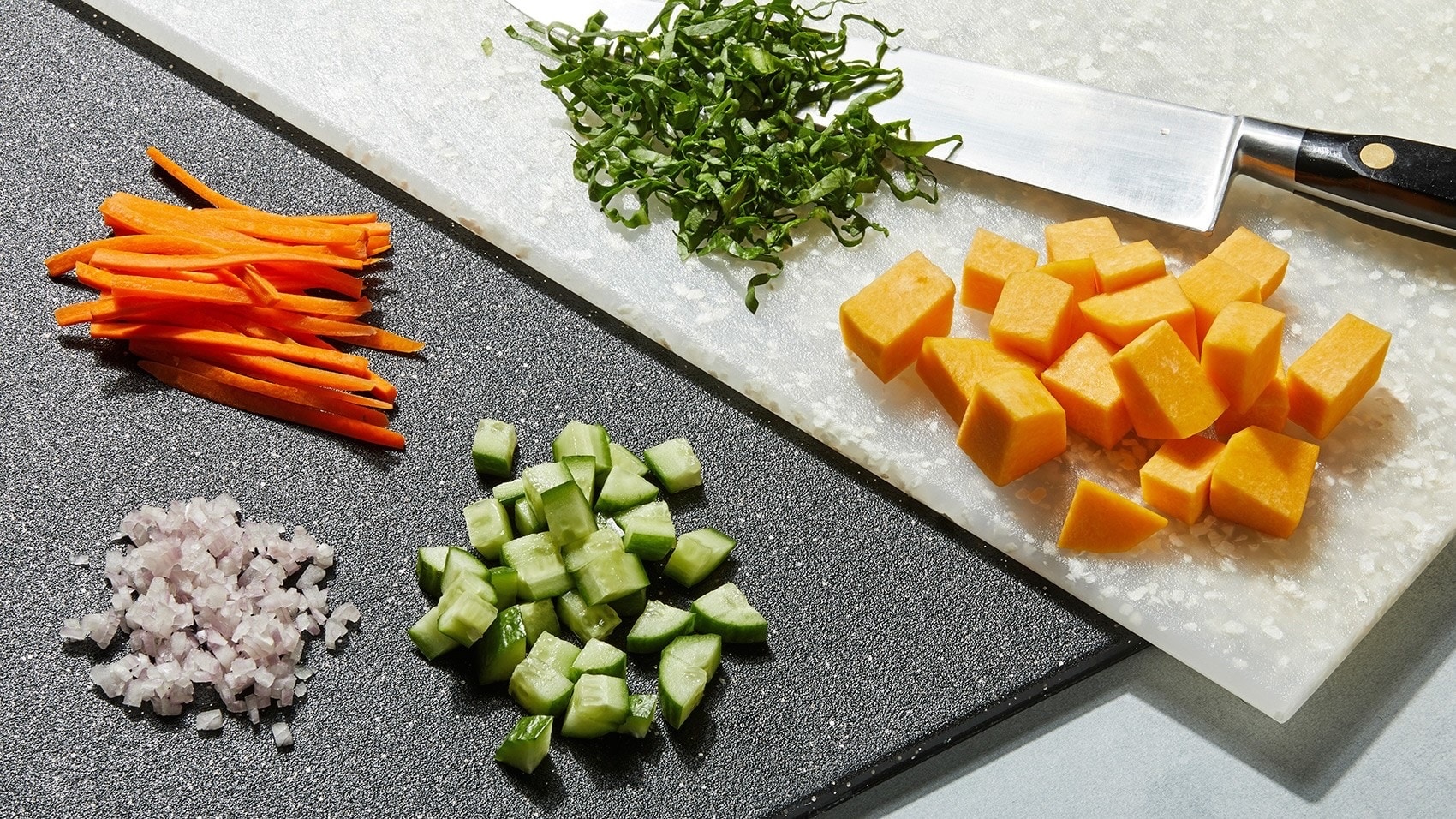
- • Julienne → Brunoise: Thin matchsticks that turn into tiny fine cubes (~⅛″).
- • Chiffonade: Stack leafy greens/herbs, roll into cylinder, slice into ribbons What's for Dinner? The Spruce Eats.
- • Bias & Roll cuts: Diagonally sliced or oblique pieces, great for stir‑fries or garnishes Epicurious Escoffier College.
🧾 Uniformity: Why It Matters
- • Even cooking: All pieces cook at the same rate.
- • Flavor: Smaller cuts like mince release more aromas.
- • Presentation: Uniform cuts give a professional appearance.
🏋️ Practice Drills & Prep Tips
- • Drill ideas:
- • Prep hacks:
🥕 Sample Prep Routine
For a Stir‑Fry:
- • Dice peppers and zucchini (~¼″)
- • Chop onions (~½″)
- • Mince garlic & ginger finely
- • Keep piles separate for cooking order: aromatics first, veggies next.
For a Soup:
- • Large dice onions, carrots, celery (~½″)
- • Coarsely chop herbs
- • Uniform dice for even cooking and texture.
⚠️ Troubleshooting Common Issues
- • Slipping knife: Fix dull blade and stabilize board.
- • Uneven cuts: Practice slicing slabs evenly; stack sticks carefully.
- • Flawed mince: Maintain consistent rocking motion and sharpen blade.
- • Hand soreness: Use pinch grip, reposition regularly, take breaks.
📊 Quick‑Reference Table
| Cut Type | Approx. Size | Common Use | Technique Highlight |
|---|---|---|---|
| Chop | ¼–1″ (coarse) | Stews, soups, rustic dishes | Rocking motion, loose consistency |
| Dice | ¼″ / ½″ / ¾″ | Salads, stir‑fries, garnish | Slice → Stick → Cross‑cut |
| Brunoise | ⅛″ (micro cubes) | Garnish, stocks, sauces | Julienne then fine dicing |
| Mince | ⅛″ or smaller | Aromatics, herbs, garlic | Rocking over pile, tip anchored |
| Julienne | ⅛″ × ⅛″ × 2″ | Stir-fries, salads | Uniform matchsticks, precise cuts |
| Chiffonade | Thin ribbons | Herbs, leafy greens | Roll and slice into strips |
✅ Final Thoughts
Mastering chopping, dicing, and mincing elevates your cooking prep: faster, safer, more flavorful, and visually refined. Start with the basics and build speed without sacrificing precision. With regular practice and mindful technique, you'll soon prep like a seasoned chef. Enjoy the journey—and happy chopping!
📚 Further Reading
- • Better Homes & Gardens: 7 Knife Skills Every Home Cook Should Know Better Homes & Gardens
- • Serious Eats: How to Hold a Knife and Use the Claw Grip Serious Eats
- • Epicurious and The Spruce Eats: Visual guides to knife cuts and techniques Epicurious The Spruce Eats