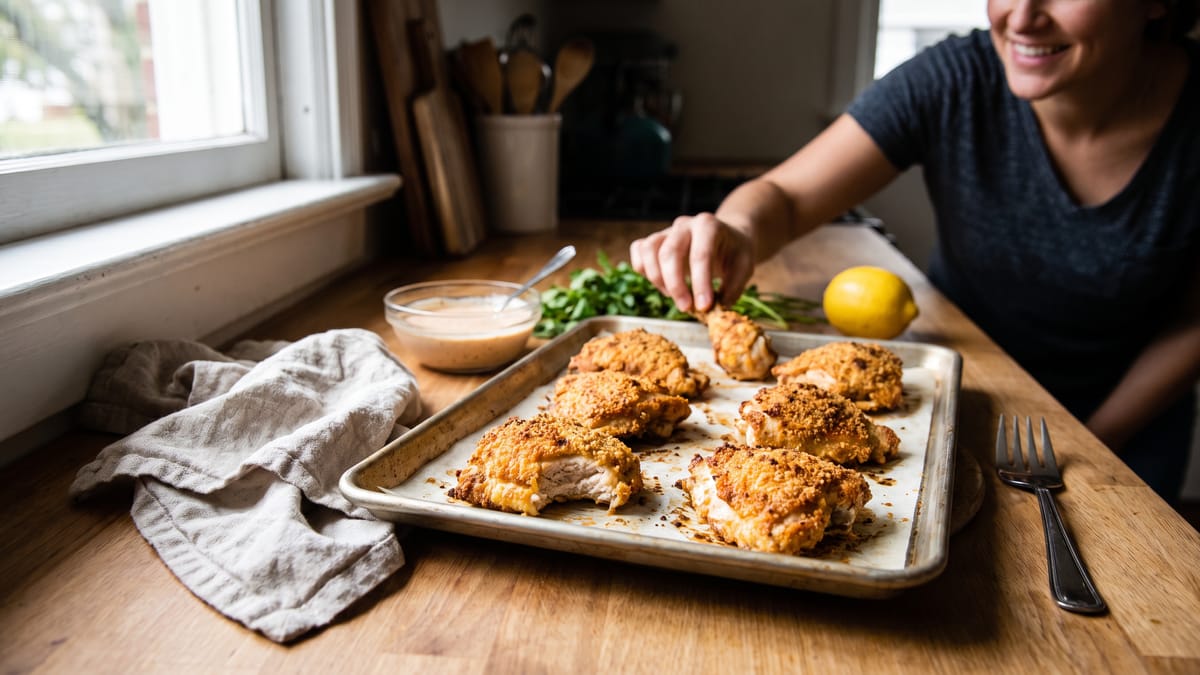
I Tried Making Crispy Chicken in the Oven and Couldn’t Believe How Good It Was
We've all been there, right? The incessant craving for that perfectly crispy, golden-brown piece of chicken, the kind that yields with a satisfying crunch before revealing succulent, juicy meat within. For years, we chased this culinary elusive dream, often resorting to deep-frying, a method we love for its undeniable results but dread for its mess, oil consumption, and the lingering scent of a fry shop in our homes. We tried pan-frying, air-frying, and even those "shake and bake" concoctions, all with varying degrees of success, but never quite hitting that sweet spot of oven-baked perfection. The oven, our trusted workhorse for roasting vegetables and baking casseroles, always seemed to fall short when it came to achieving true crispness in chicken. It often delivered a tender interior, yes, but the skin, oh the skin, would remain stubbornly flabby, a pale imitation of its deep-fried counterpart.
Then, a few weeks ago, a spark of inspiration, fueled by countless hours of culinary research and a persistent desire to crack the code, ignited. We decided to embark on a dedicated mission: to create truly crispy chicken in the oven, without a single drop of excess oil, using techniques that were both accessible and repeatable for the home cook. What followed was a series of culinary experiments, a journey of trial and error, of subtle adjustments and profound revelations. And let us tell you, the results were nothing short of astonishing. We truly couldn't believe how good it was. The chicken emerged from the oven, resplendent in its golden armor, crackling with every touch, and utterly delicious. It was a game-changer, a revelation that has forever altered our approach to cooking chicken. We are here to share our journey, our discoveries, and the precise methodology that allowed us to achieve this culinary triumph, so you too can experience the sheer joy of oven-baked crispy chicken.
The Quest for Crispy: Understanding the Science
Before we dive into the "how-to," it's crucial to understand the "why." Why is it so challenging to achieve crispiness in the oven, and what are the scientific principles at play? The primary culprit is moisture. Chicken skin, when raw, contains a significant amount of water. When subjected to heat, this water slowly evaporates. However, in a conventional oven, especially when the chicken is simply placed on a baking sheet, the moisture released from the skin often gets trapped, creating a steamy environment that prevents true crisping. Think of it like trying to toast bread in a humid bathroom; it just won't work.
Deep-frying, on the other hand, works by rapidly dehydrating the outer layer of the chicken. The high temperature of the oil quickly evaporates the surface moisture, creating a dry, brittle crust. The fat then infiltrates this dehydrated layer, contributing to its crunch and flavor. Our challenge was to replicate this dehydration process in the oven, without the aid of a hot oil bath. We needed to create an environment where moisture could escape efficiently, allowing the skin to dry out and crisp up. This understanding became the bedrock of our experimental approach.
The Initial Missteps: Learning from Our Failures
Our first attempts were, predictably, met with limited success. We tried simply increasing the oven temperature, hoping that more heat would magically solve the problem. It didn't. The chicken cooked faster, but the skin remained largely rubbery, sometimes even burning before it had a chance to crisp. We experimented with different marinades, believing that perhaps an acidic or oil-based marinade would somehow aid in the crisping process. While the flavors were enjoyable, the skin remained stubbornly soft.
We also tried patting the chicken completely dry with paper towels, a common piece of advice for achieving crispy skin. While this helped marginally, it wasn't the silver bullet we were seeking. The internal moisture of the chicken would inevitably migrate to the surface during cooking, re-wetting the skin and hindering crisping. These initial failures, while frustrating, were invaluable. They taught us what didn't work and refined our focus on the true obstacles to oven-baked crispiness. We realized that simply drying the surface wasn't enough; we needed a sustained drying mechanism throughout the cooking process.
The Breakthrough: Unveiling the Key Techniques
Our breakthrough came when we started thinking about airflow and surface area. If moisture was the enemy, then maximizing its escape was the solution. This led us to a few critical techniques that, when combined, transformed our oven-baked chicken experience.
First, and perhaps most importantly, was the drying of the chicken skin itself. We're not just talking about a quick pat-down with a paper towel. We're talking about a serious, prolonged drying. After patting the chicken as dry as possible, we placed it uncovered on a wire rack set over a baking sheet, then refrigerated it for at least 8 hours, and ideally, overnight. This might sound like an extra step, but it is absolutely non-negotiable for achieving truly crispy skin. The cold, dry air in the refrigerator works wonders, drawing out moisture from the skin's surface, essentially pre-dehydrating it before it even hits the oven. This initial drying creates a head start, setting the stage for superior crisping.
Second, we realized the importance of elevating the chicken. Placing chicken directly on a baking sheet, even a non-stick one, traps moisture underneath, leading to a soggy bottom. A wire rack, placed over a baking sheet, allows air to circulate completely around the chicken, ensuring even cooking and, crucially, allowing moisture to escape from all sides. This simple piece of equipment, often overlooked, is a game-changer. The baking sheet below catches any drips, keeping our oven clean.
Third, we experimented with baking powder. This might seem counterintuitive, but a small amount of aluminum-free baking powder, mixed with salt and pepper, creates a slightly alkaline environment on the chicken skin. This alkalinity helps to break down proteins in the skin, allowing for more efficient moisture release and promoting browning. The baking powder also creates tiny air bubbles on the surface, which contribute to that delightful crispy texture. A word of caution here: use aluminum-free baking powder to avoid any metallic aftertaste.
Fourth, the oven temperature and cooking method. We found that a two-stage cooking process yielded the best results. We started with a relatively lower temperature, around 375°F (190°C), for the initial phase. This allowed the chicken to cook through gently without immediately burning the skin. Then, for the final 15-20 minutes, we cranked the temperature up to 425°F (220°C) or even 450°F (230°C). This high heat blast at the end is what truly renders the fat in the skin and achieves that deep, golden crispness. Some recipes even suggest starting at a high temperature and then lowering it, but we found the reverse approach more effective for achieving both cooked-through chicken and exceptional crispness.
Finally, leaving the chicken undisturbed. Resist the urge to constantly peek, poke, or flip the chicken. Every time you open the oven door, you lose precious heat, extending the cooking time and hindering the crisping process. Let the oven do its work. Once the chicken is in, leave it be until it's time for the temperature increase.
Our Step-by-Step Guide to Oven-Baked Crispy Chicken
Now that we've laid out the principles, let's get down to the practical application. This is the precise method we now employ, and it consistently delivers fantastic results.
Choosing Your Chicken
We've had great success with various cuts, including bone-in, skin-on thighs, drumsticks, and even whole chicken pieces. Thighs and drumsticks are particularly forgiving and tend to stay juicy. If using a whole chicken, we recommend spatchcocking it (butterflying it by removing the backbone) to ensure more even cooking and greater surface area for crisping.
The Overnight Dehydration Ritual
This is where the magic begins. After patting your chicken pieces thoroughly dry with paper towels, arrange them in a single layer on a wire rack set over a baking sheet. Ensure there's ample space between each piece for air circulation. Place the entire setup, uncovered, in the refrigerator for at least 8 hours, and ideally, overnight. We've even gone for 24 hours with exceptional results. Don't skip this step; it's a foundational element of success.
The Baking Powder, Salt, and Pepper Rub
Before baking, remove the chicken from the refrigerator and let it sit at room temperature for about 30 minutes to an hour. This helps it cook more evenly. In a small bowl, combine 1 teaspoon of aluminum-free baking powder with 1 tablespoon of kosher salt and 1/2 teaspoon of freshly ground black pepper for every 2-3 pounds of chicken. Adjust the seasoning to your preference. Gently pat this mixture all over the chicken skin. The baking powder should be evenly distributed but not caked on.
Preheat Your Oven and Prepare Your Setup
Preheat your oven to 375°F (190°C). Make sure your wire rack is still positioned over a sturdy baking sheet. We often line our baking sheet with aluminum foil for easier cleanup.
The Initial Bake: Gentle Cooking
Place the seasoned chicken pieces on the wire rack, ensuring they are not touching each other. Bake at 375°F (190°C) for 30-40 minutes, depending on the size of your chicken pieces. During this phase, the chicken will begin to cook through, and some of the fat will render, but the skin won't be fully crisp yet.
The High-Heat Blast: Crisping to Perfection
After the initial bake, increase your oven temperature to 425°F (220°C) or even 450°F (230°C). Continue to bake for another 15-25 minutes, or until the chicken skin is deeply golden brown and incredibly crispy. The internal temperature of the thickest part of the chicken should reach 165°F (74°C). We use an instant-read thermometer to verify doneness, as visual cues alone can sometimes be misleading.
Resting for Juiciness
Once the chicken reaches the desired crispness and internal temperature, remove it from the oven. Transfer the chicken to a clean cutting board or serving platter and let it rest for 5-10 minutes before serving. This allows the juices to redistribute throughout the meat, ensuring a tender and succulent interior. Cutting into the chicken too soon will cause the juices to run out, resulting in drier meat.
Tips for Even Greater Success
We've refined this method through numerous iterations, and along the way, we've gathered a few extra pearls of wisdom to ensure your crispy chicken is always a triumph.
- • Don't overcrowd the pan: This is a cardinal rule for crispy anything. If the chicken pieces are too close together, they will steam rather than crisp. Give them space to breathe.
- • Rotate the baking sheet: If your oven has hot spots, rotating the baking sheet halfway through the cooking process can help ensure even browning and crisping.
- • Consider a convection setting: If your oven has a convection setting, use it! Convection ovens circulate hot air, which is ideal for promoting crispiness. Reduce the temperature by 25°F (15°C) and keep a close eye on the chicken, as it will cook faster.
- • Experiment with seasonings: While salt, pepper, and baking powder are the essentials, feel free to experiment with other spices. Paprika, garlic powder, onion powder, cayenne pepper, or your favorite herb blends can add wonderful depth of flavor. Just be mindful that some spices, especially those with sugar, can burn more easily at high temperatures.
- • Check internal temperature: An instant-read thermometer is your best friend. It takes the guesswork out of knowing when your chicken is perfectly cooked.
- • Leftovers (if any): To reheat crispy chicken and maintain its crunch, avoid the microwave. Reheat it in a preheated oven at 350°F (175°C) until warmed through and the skin has re-crisped. An air fryer also works wonderfully for reheating.
At the End of the Day: A Culinary Revelation
We began this journey with a simple craving and a healthy dose of skepticism. Could the oven truly deliver on the promise of crispy chicken, rivaling its deep-fried brethren? We are here to unequivocally declare, with a satisfied sigh and a lingering taste of perfection, that it absolutely can. This method, born from careful observation, scientific understanding, and a willingness to experiment, has become a staple in our kitchen.
The joy of pulling that golden, crackling chicken from the oven, the satisfying crunch with every bite, and the sheer delight of knowing we achieved it without the mess and guilt of deep-frying, is truly immeasurable. This isn't just about cooking chicken; it's about empowering ourselves in the kitchen, understanding the principles behind the techniques, and ultimately, creating incredibly delicious food that brings joy to our tables. We encourage you to try this method, embrace the process, and prepare to be amazed. Your oven, once a humble baker of roasts, will transform into a crispy chicken champion, and your taste buds will thank you. Happy cooking!