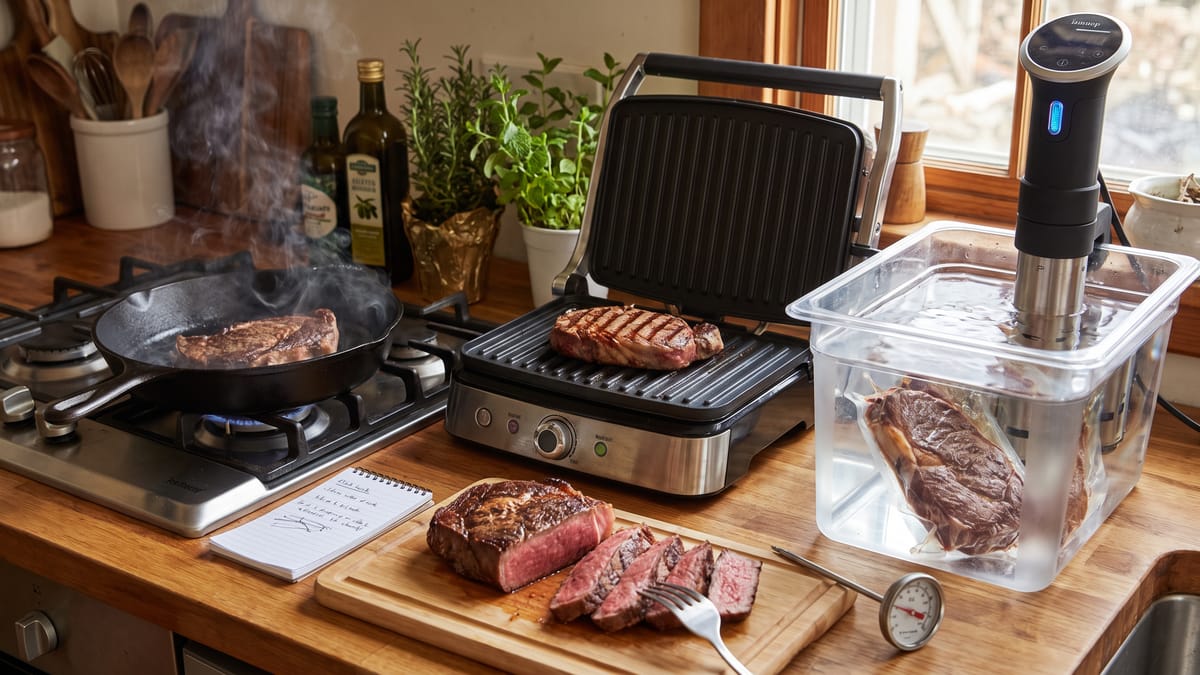
I Tried 3 Ways to Cook Steak and the Winner Was Not What I Expected
I Tried 3 Ways to Cook Steak and the Winner Was Not What I Expected
Steak. The mere mention of the word conjures images of sizzling perfection, a crusty exterior giving way to a tender, juicy interior, a culinary masterpiece that can elevate any meal from mundane to magnificent. For many home cooks, myself included, mastering the art of cooking steak feels like a rite of passage, a summit to conquer in the vast landscape of gastronomic endeavors. We've all been there, standing in front of a beautiful cut of beef, a mixture of anticipation and trepidation bubbling within us. Will it be perfectly seared, or will it resemble a hockey puck? Will that elusive medium-rare grace our plates, or will we be left with a gray, lifeless slab?
Our journey to steak nirvana has been a long and winding one, punctuated by both triumphs and tribulations. Over the years, we've experimented with various techniques, gleaned wisdom from countless chefs, and absorbed every tip and trick we could find. Yet, a nagging question always lingered: which method truly reigns supreme? Is there one definitive way to achieve steak perfection consistently, or is it a more nuanced pursuit, dependent on a myriad of factors? To answer this burning question, and to finally settle the debate in our own kitchen, we embarked on a delicious adventure. We decided to put three popular steak-cooking methods to the ultimate test, side by side, with the same cut of meat, the same seasoning, and the same desired doneness. Our goal was not just to find a "winner," but to understand the nuances of each technique, to appreciate their strengths and weaknesses, and to empower our readers with the knowledge to confidently cook their own exceptional steaks. What we discovered, surprisingly, challenged some of our long-held beliefs and ultimately led us to an unexpected victor.
The Contenders: Our Chosen Steak-Cooking Methods
Before we delve into the gritty, delicious details of our experiment, let's introduce our formidable contenders. We carefully selected three methods that are widely celebrated and commonly employed by home cooks and professional chefs alike. Each promises a unique pathway to steak enlightenment, and each has its fervent advocates.
First up, we have the venerable Reverse Sear. This method, a darling of the internet and professional kitchens, involves cooking the steak slowly at a low temperature in the oven before finishing it with a blistering hot sear on the stovetop. The theory here is that the slow cooking allows for a more even doneness throughout the steak, minimizing the dreaded "gray band" often associated with traditional searing, while the final high-heat blast creates that coveted, flavorful crust. Many steak aficionados swear by this technique for its precision and ability to deliver consistently perfect results.
Our second contender is the classic Pan Sear. This is arguably the most common and accessible method for home cooks. It involves cooking the steak entirely on the stovetop in a screaming hot pan, often with butter and aromatics, relying on direct heat to create a crust and cook the interior simultaneously. The allure of the pan sear lies in its simplicity and the immediate gratification it offers, transforming a raw piece of meat into a delectable meal in a matter of minutes. It's a technique that demands attention and a keen eye, as the line between perfectly seared and overcooked can be remarkably thin.
Finally, we ventured into the realm of modern culinary technology with the Sous Vide method. For those unfamiliar, sous vide, which translates to "under vacuum" in French, involves vacuum-sealing food and cooking it in a precisely temperature-controlled water bath. After reaching the desired internal temperature, the food is then seared to develop a crust. This method is lauded for its unparalleled precision, ensuring perfectly even cooking from edge to edge, eliminating any guesswork regarding doneness. It's often considered the gold standard for achieving consistently tender and perfectly cooked proteins.
The Steak: Our Unifying Canvas
To ensure a fair and equitable comparison, selecting the right steak was paramount. We opted for a beautiful, thick-cut bone-in ribeye, approximately 1.5 inches thick and weighing around 1.5 pounds. The ribeye, with its generous marbling and rich flavor, is a fantastic canvas for showcasing different cooking techniques. The bone, while adding a touch of aesthetic appeal, also contributes to flavor and helps regulate heat during cooking. Consistency was key, so we purchased three identical ribeyes from the same butcher, all cut from the same primal.
The Seasoning: A Simple Foundation
With such magnificent cuts of beef, we believed in letting the natural flavors shine. Therefore, our seasoning approach was deliberately minimalist. Each steak was generously seasoned with nothing more than kosher salt and freshly cracked black pepper on all sides. This simple yet effective combination enhances the inherent deliciousness of the beef without overpowering it. We seasoned the steaks approximately 30 minutes before cooking, allowing the salt to penetrate the surface and begin to tenderize the meat, a process often referred to as dry brining.
The Doneness: A Medium-Rare Manifesto
Our preferred doneness for steak is a glorious medium-rare, characterized by a warm red center and a tender, yielding texture. This level of doneness allows the steak's natural juices to remain intact, contributing to a truly succulent experience. We aimed for an internal temperature of 130-135°F (54-57°C) for all three steaks, understanding that carryover cooking would slightly elevate the temperature after resting. To ensure accuracy, we relied on a reliable instant-read thermometer, a non-negotiable tool for any serious steak cook.
The Experiment Unfolds: Method by Method
Now, let's dive into the nitty-gritty of how each steak fared under our scrutiny. We meticulously followed established best practices for each method, striving for optimal results in every instance.
The Reverse Sear: A Slow and Steady Approach
Our reverse-seared ribeye began its journey in a preheated oven set to a relatively low temperature, 275°F (135°C). We placed the seasoned steak on a wire rack set inside a baking sheet, allowing for even air circulation around the meat. We baked it until its internal temperature reached approximately 120°F (49°C), which took about 45 minutes to an hour. This slow cooking phase is crucial for achieving that uniform doneness.
Once the desired internal temperature was reached, we removed the steak from the oven and allowed it to rest for about 10-15 minutes. This resting period is vital for redistributing the juices within the meat. While the steak rested, we heated a heavy-bottomed cast iron skillet over high heat until it was smoking hot. We added a tablespoon of high-smoke-point oil, such as avocado or grapeseed oil, to the pan, ensuring it shimmered before carefully placing the steak in. We seared each side for about 2-3 minutes, aiming for a deep, dark brown crust. During the last minute of searing, we added a tablespoon of butter, a few cloves of smashed garlic, and a sprig of fresh rosemary to the pan, basting the steak continuously with the fragrant, foaming butter. After searing, we allowed the steak to rest again for another 5-10 minutes before slicing.
The reverse-seared steak presented a beautiful appearance. The crust was indeed impressive, a rich mahogany hue, and when we sliced into it, the interior revealed a remarkably even medium-rare from edge to edge, with minimal gray banding. The texture was undeniably tender, and the flavor was rich and beefy. It was, by all accounts, an excellent steak.
The Pan Sear: The Classic Contender
For our pan-seared ribeye, we went straight for the heat. We preheated our trusty cast iron skillet over high heat until it was screaming hot, almost smoking. We added a tablespoon of high-smoke-point oil and, once again, waited for it to shimmer. We carefully placed the seasoned steak in the hot pan, ensuring a good sizzle. We seared the first side for 3-4 minutes, resisting the urge to move it, allowing that beautiful crust to form.
After the initial sear, we flipped the steak and continued to cook, checking the internal temperature frequently with our instant-read thermometer. When the steak reached about 120°F (49°C), we added a tablespoon of butter, a few smashed garlic cloves, and a sprig of fresh thyme to the pan. We tilted the pan and began basting the steak continuously with the melted, aromatic butter, ensuring all surfaces were coated. This basting not only adds incredible flavor but also helps to cook the steak evenly and contributes to the crust. We continued to baste and cook until the internal temperature reached our desired 130-135°F (54-57°C). Once cooked, the steak was removed from the pan and allowed to rest for 10-15 minutes before slicing.
The pan-seared steak also boasted a fantastic crust, perhaps even a bit more aggressive and deeply caramelized than the reverse-seared one in some areas. The interior was a beautiful medium-rare, though there was a slightly more pronounced gray band around the edges compared to the reverse sear. The flavor was robust, with a wonderful depth from the direct contact with the hot pan and the butter basting. It was a truly delicious and satisfying steak.
The Sous Vide: The Precision Player
Our sous vide experiment began by vacuum-sealing the seasoned ribeye in a food-safe bag. We then immersed the sealed steak in a precisely controlled water bath set to 130°F (54°C), our target medium-rare temperature. We cooked the steak for two hours, allowing ample time for the heat to penetrate the thick cut and bring it to a perfectly even temperature throughout. The beauty of sous vide is that you can cook it for a longer period without fear of overcooking, as the water bath maintains a constant temperature.
Once the two hours were up, we removed the steak from the water bath and, crucially, dried it thoroughly with paper towels. This step is absolutely essential for achieving a good sear, as any surface moisture will prevent browning. We then heated our cast iron skillet over high heat, adding a tablespoon of high-smoke-point oil. Once the pan was smoking, we placed the dried steak in and seared each side for about 1-2 minutes, just long enough to develop a beautiful crust. As with the other methods, we added butter, garlic, and rosemary during the final minute of searing, basting vigorously. After searing, the steak was allowed to rest for 5-10 minutes before slicing.
The sous vide steak, upon slicing, was a sight to behold. The internal doneness was absolutely flawless, a uniform medium-rare from edge to edge, with virtually no gray band whatsoever. The texture was incredibly tender, almost melting in the mouth. The crust, while present and flavorful, was perhaps slightly less intense than the pan-seared or reverse-seared options, likely due to the shorter searing time required after the precise internal cooking. However, the overall tenderness and consistent doneness were truly remarkable.
The Verdict: An Unexpected Turn
After meticulously cooking, resting, and tasting all three steaks, the moment of truth arrived. We gathered our tasting panel, armed with discerning palates and a shared love for perfectly cooked beef. Each steak was sliced and presented anonymously, ensuring an unbiased assessment. We evaluated them based on crust, internal doneness, tenderness, juiciness, and overall flavor.
The results were, to put it mildly, surprising.
The Reverse Sear delivered an undeniably excellent steak. Its even doneness was impressive, and the crust was wonderfully crispy. It was a strong contender, a consistently reliable method that produces fantastic results.
The Pan Sear, our old faithful, also performed admirably. The crust was perhaps the most aggressive and flavorful of the three, and the overall beefy taste was incredibly satisfying. While there was a slightly more noticeable gray band, it was still a superbly cooked steak.
But the winner, the method that ultimately captivated our taste buds and earned the highest accolades, was The Sous Vide.
Yes, we were genuinely surprised. While we appreciated the precision of sous vide, we had always harbored a slight skepticism that it could truly replicate the depth of flavor and crust development achieved by direct-heat methods. We were wrong.
The sous vide steak's unparalleled tenderness and perfectly even doneness were its undeniable superpowers. Every single bite was consistently tender and juicy, without a hint of dryness or chewiness. The texture was simply sublime, a testament to the gentle, precise cooking in the water bath. While the crust was perhaps not as aggressively developed as the pan-seared version, it was still present, flavorful, and contributed to the overall sensory experience. The combination of that incredibly tender interior with a respectable sear made it a truly transcendent steak-eating experience.
Why Sous Vide Emerged Victorious
Our experiment illuminated several key reasons why sous vide ultimately triumphed in our steak showdown.
First and foremost is the precision of temperature control. With sous vide, you set the exact temperature you want your steak to reach, and the water bath maintains that temperature with remarkable accuracy. This eliminates any guesswork and ensures that your steak cooks evenly from edge to edge, preventing the dreaded overcooked exterior and undercooked interior. This precision is simply unmatched by other methods.
Secondly, the tenderness achieved through sous vide is exceptional. The slow, gentle cooking at a consistent temperature allows the muscle fibers to relax and break down without contracting excessively, resulting in a remarkably tender and succulent steak. We found the sous vide steak to be noticeably more tender than both the reverse-seared and pan-seared options, even when those methods produced excellent results.
Finally, the "set it and forget it" aspect of sous vide offers a level of convenience and stress reduction that is invaluable in the kitchen. While other methods demand constant attention and precise timing, sous vide allows you to cook your steak to perfection and then sear it at your leisure, freeing you up to focus on side dishes or simply relax. This makes it an ideal method for entertaining or for those times when you want a perfectly cooked steak without the constant vigilance.
Practical Takeaways for Your Kitchen
While sous vide emerged as our unexpected winner, it's important to acknowledge that all three methods can produce truly delicious steaks. The "best" method often depends on your priorities, your equipment, and your personal preferences.
- • If precision and unparalleled tenderness are your top priorities, and you're willing to invest in the equipment, sous vide is undoubtedly the way to go. It offers a foolproof path to perfectly cooked steak every single time.
- • If you value a deep, aggressive crust and a more traditional steak-cooking experience, and you're comfortable with a bit more hands-on attention, the pan sear remains an excellent choice. It's quick, efficient, and delivers fantastic flavor.
- • If you want a balance of even doneness and a great crust without the need for specialized equipment, the reverse sear is a fantastic hybrid method. It takes a bit more time, but the results are consistently impressive.
- • Start with a good quality steak: This is paramount. No cooking method, however sophisticated, can transform a mediocre piece of meat into an extraordinary one.
- • Bring your steak to room temperature: Allowing your steak to sit out for 30-60 minutes before cooking helps it cook more evenly.
- • Season generously: Don't be shy with the salt and pepper. They are crucial for flavor development.
- • Use a high-smoke-point oil for searing: Oils like avocado, grapeseed, or canola can withstand high heat without breaking down and imparting off-flavors.
- • Get your pan screaming hot: A hot pan is essential for developing a beautiful, flavorful crust.
- • Use an instant-read thermometer: This is your best friend for ensuring accurate doneness and preventing overcooking.
- • Rest your steak: This step is non-negotiable. Resting allows the juices to redistribute throughout the meat, resulting in a more tender and juicy steak.
- • Slice against the grain: This shortens the muscle fibers, making the steak more tender and easier to chew.
Putting it all together
Our culinary expedition into the world of steak cooking has been an enlightening and incredibly delicious one. We embarked on this journey with certain expectations, perhaps even some biases, but we emerged with a renewed appreciation for the diverse techniques available to us. The sous vide method, while initially viewed with a healthy dose of skepticism, ultimately proved its mettle, delivering a steak that was, in our collective opinion, the most consistently tender and perfectly cooked. It's a testament to the power of precision and how modern technology can elevate even the most traditional of dishes.
However, this is not to say that the reverse sear or the pan sear are any less valid or capable of producing magnificent results. Each method has its own charm, its own unique set of advantages, and its own dedicated following. The true beauty lies in understanding these differences and choosing the method that best suits your needs, your equipment, and your desired outcome. So, the next time you find yourself staring at a beautiful cut of beef, consider these insights, embrace the culinary adventure, and perhaps, just perhaps, give sous vide a try. You might just find yourself as pleasantly surprised as we were. Happy cooking, and may your steaks always be perfectly medium-rare.