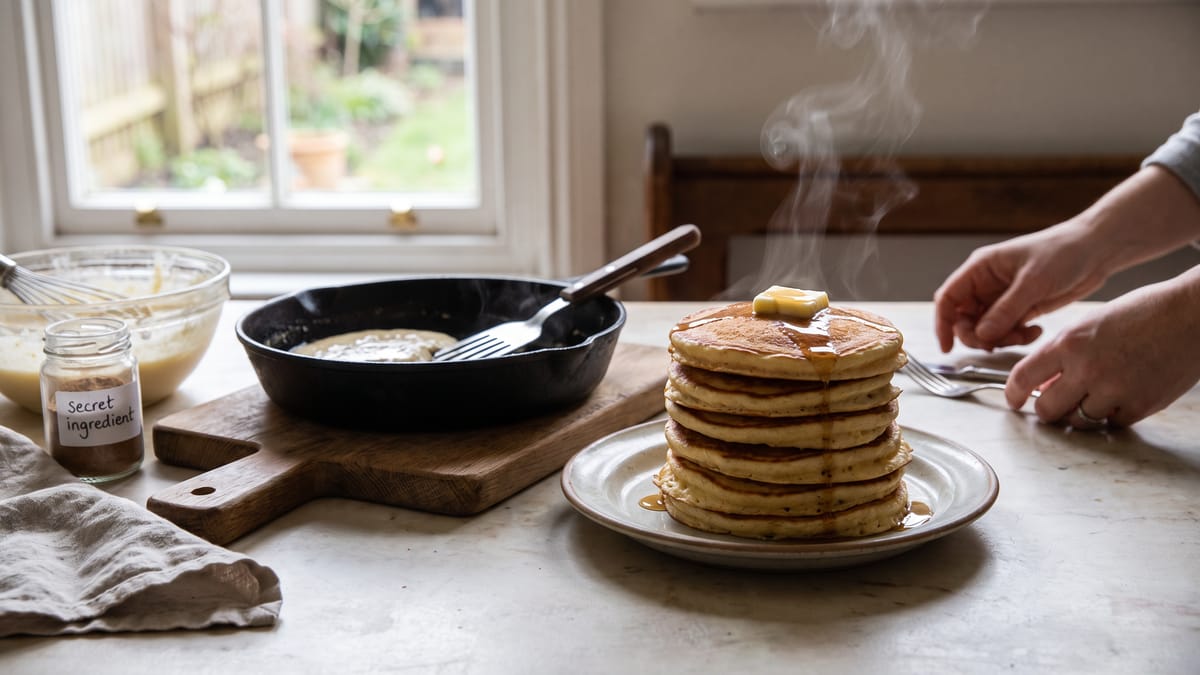
I Finally Found the Secret to Fluffy, Golden Homemade Pancakes
I Finally Found the Secret to Fluffy, Golden Homemade Pancakes
For years, the quest for the perfect homemade pancake remained an elusive culinary Everest for us. We’ve all been there, haven't we? The morning sun streams into the kitchen, the aroma of coffee brews, and the griddle sizzles with the promise of golden, fluffy discs of pure breakfast joy. Yet, so often, that promise crumbles into disappointment. Our pancakes, despite our best efforts, would emerge dense, rubbery, or worse, pale and insipid. They were edible, certainly, but they lacked that ethereal lightness, that slightly crisp exterior, and that rich, golden hue that defines a truly exceptional pancake. We yearned for the kind of pancake that makes you close your eyes in blissful satisfaction with every bite, the kind that transports you back to childhood breakfasts or idyllic diner experiences. We experimented, we tweaked, we scoured countless recipes, each promising the "secret" to pancake perfection. We tried buttermilk, we tried baking powder, we tried baking soda, sometimes all three. We adjusted cooking temperatures, batter consistencies, and even the type of flour. The results, while occasionally passable, never quite hit that elusive sweet spot. Until now. After countless culinary adventures, a few minor kitchen mishaps, and a healthy dose of persistence, we believe we’ve finally cracked the code. We’ve uncovered a constellation of small, seemingly insignificant details that, when brought together, culminate in a pancake experience that is nothing short of transcendent. This isn't just about a recipe, though we will share our go-to formula. This is about understanding the science, the subtle art, and the patient craft behind creating pancakes that will make your mornings, and those of your loved ones, truly extraordinary.
The Foundation: Quality Ingredients Matter More Than You Think
Before we even consider technique, let's talk about the building blocks. Just as a magnificent edifice requires robust materials, a truly exceptional pancake demands high-quality ingredients. This isn't about snobbery; it's about flavor and performance.
Flour Power: All-Purpose is Your Friend, But Not All are Equal
We’ve found that a good quality unbleached all-purpose flour is the cornerstone of a fluffy pancake. While whole wheat flours offer nutritional benefits, their higher protein content and coarser texture can lead to a denser pancake. If you absolutely must use whole wheat, consider combining it with all-purpose in a 50/50 ratio. The "unbleached" part is crucial; bleached flour can sometimes have a slightly off-flavor and its chemical treatment can affect gluten development. We also recommend sifting your flour, even if it says "pre-sifted." This simple step aerates the flour, preventing lumps and ensuring a lighter batter. It's an extra minute of effort that pays dividends in the final product.
The Magic of Buttermilk: A Tangy Secret Weapon
If there's one ingredient we would champion above all others for superior pancakes, it's buttermilk. Its acidity reacts beautifully with baking soda, creating a powerful leavening action that results in an incredibly tender crumb. Beyond its leavening prowess, buttermilk imparts a subtle tang that balances the sweetness of the pancake, adding a layer of complex flavor that plain milk simply cannot achieve. If you don't have buttermilk on hand, don't despair. You can easily make a passable substitute by adding a tablespoon of lemon juice or white vinegar to a cup of regular milk and letting it sit for five to ten minutes until it curdles slightly. While not identical, it will provide the necessary acidity for the reaction.
The Freshness Factor: Leavening Agents and Eggs
Baking powder and baking soda are the unsung heroes of fluffiness. But they have a shelf life. Old leavening agents simply won't perform. We recommend checking the expiration dates and, if in doubt, testing them. For baking soda, drop a little into a bowl of vinegar; it should fizz vigorously. For baking powder, do the same with hot water. If there's no enthusiastic bubbling, it's time for a fresh container. As for eggs, fresh, large eggs are always our preference. They contribute to the structure, richness, and golden hue of the pancakes. Room temperature eggs also incorporate more smoothly into the batter, leading to a more homogenous mixture.
The Art of Mixing: Less is More
This is perhaps the most critical step, and where many aspiring pancake makers go astray. Overmixing is the enemy of fluffiness.
The Wet and Dry Divide: A Tale of Two Bowls
Our approach is always to separate the wet and dry ingredients initially. In one bowl, whisk together the flour, sugar, baking powder, baking soda, and salt. Ensure they are thoroughly combined; this pre-mix ensures even distribution of the leavening agents. In another, larger bowl, whisk the buttermilk, eggs, and melted butter (or oil). The melted fat adds moisture and richness, and also contributes to that beautiful golden-brown crust.
The Gentle Embrace: Combining the Mixtures
Now for the crucial part: combining them. Pour the wet ingredients into the dry ingredients. And here's the golden rule: mix just until combined. We're talking about a mere 10 to 15 gentle stirs, just enough to moisten the flour. The batter will be lumpy. Gloriously, wonderfully lumpy. Do not, under any circumstances, try to whisk out all the lumps. Those lumps are your friends; they contain pockets of unactivated gluten and air, both contributing to a tender crumb. Overmixing develops the gluten too much, leading to tough, chewy pancakes. Think of it like a delicate dance, not a vigorous workout.
The Resting Period: Patience is a Virtue
Once the batter is mixed, resist the urge to immediately start cooking. Let the batter rest for at least 10 to 15 minutes, or even up to 30 minutes. This resting period allows the flour to fully hydrate, the gluten to relax, and the leavening agents to begin their work. You'll notice the batter thickens slightly and becomes a bit bubbly. This is a good sign. It's also a great time to preheat your griddle.
The Heat is On: Griddle Mastery
Even with a perfect batter, improper cooking temperatures can ruin everything. This is where experience and a little bit of intuition come into play.
The Ideal Temperature: Not Too Hot, Not Too Cold
We've found that a medium heat, around 350°F (175°C) if your griddle has a temperature setting, is ideal. If it's too hot, the outside will burn before the inside cooks through, leaving you with a raw center. If it's too cool, the pancakes will spread too much, become greasy, and won't develop that beautiful golden crust. The key is to find that sweet spot where the pancakes cook evenly, rising beautifully and achieving a rich, caramelized exterior.
The Sizzle Test: Knowing When It's Ready
How do you know your griddle is at the right temperature? We use the water test. Sprinkle a few drops of water onto the cooking surface. If they sizzle and evaporate within a second or two, it's ready. If they just sit there, it's too cold. If they immediately disappear with a violent hiss, it's too hot. Adjust accordingly. We also recommend using a non-stick griddle or a well-seasoned cast iron pan. A little butter or oil, lightly brushed onto the surface before each batch, helps with browning and prevents sticking.
The Perfect Pour: Ladle with Love
When pouring the batter, aim for a consistent size. We use a ¼ cup measuring cup or a small ladle. Pour the batter directly onto the center of the griddle, allowing it to spread naturally. Resist the urge to spread it further with the back of the ladle; this can deflate the precious air bubbles. Leave ample space between each pancake to allow for even cooking and easy flipping.
The Flip Side: Timing and Technique
Flipping a pancake is a moment of truth, a delicate maneuver that separates the novice from the seasoned pancake artisan.
The Tell-Tale Bubbles: When to Flip
This is where observation is key. Do not flip too early. Wait until you see bubbles forming on the surface of the pancake, and the edges appear set and slightly dry. The bubbles should pop, leaving small craters. This indicates that the bottom is cooked through and has developed a nice crust. If you flip too early, the pancake will be undercooked and messy.
The Gentle Flip: A Swift, Confident Motion
Once the bubbles tell you it's time, slide a thin, wide spatula underneath the pancake. In one swift, confident motion, flip it over. Avoid hovering or trying to nudge it. A quick, decisive flip ensures the pancake lands flat and continues cooking evenly. Cook for another one to two minutes on the second side, until it's golden brown and cooked through. You'll notice the pancake will puff up even further on the second side.
Don't Crowd the Griddle: Give Them Room to Breathe
We understand the temptation to cook as many pancakes as possible at once, especially when hungry mouths are waiting. However, crowding the griddle lowers the temperature and can lead to uneven cooking. Cook in batches, giving each pancake ample space. This also allows you to maintain a consistent griddle temperature.
Beyond the Basic: Elevating Your Pancake Game
While the fundamental techniques are paramount, there are several nuances that can truly elevate your pancake experience from good to extraordinary.
The Warmth Factor: Keeping Them Cozy
As you cook batches of pancakes, you'll want to keep the cooked ones warm while you finish the rest. We preheat our oven to its lowest setting, around 200°F (90°C), and place a wire rack on a baking sheet inside. As pancakes come off the griddle, we transfer them to the rack in the oven. The rack prevents them from getting soggy on the bottom, and the low heat keeps them warm without overcooking.
The Power of a Pinch: Salt and Sugar
Don't underestimate the role of salt and sugar. Salt, even in a sweet dish, enhances all the other flavors. A pinch of salt makes the pancake taste more "pancake-y." Sugar, besides adding sweetness, aids in browning, contributing to that beautiful golden crust. Adjust these to your personal preference, but don't omit them entirely.
Flavorful Add-ins: A World of Possibilities
Once you've mastered the basic technique, the world of pancake add-ins opens up. Fresh berries, chocolate chips, nuts, or even a sprinkle of cinnamon can transform your pancakes. If adding fruit, especially juicy berries, we recommend folding them in just before pouring the batter onto the griddle, or even sprinkling them on top of the batter once it's on the griddle. This prevents the fruit from sinking to the bottom and ensures a more even distribution. For chocolate chips, mix them into the batter just before cooking.
The Butter and Syrup Debate: Pure Indulgence
And finally, the accompaniments. A pat of good quality butter, melting slowly over a stack of warm pancakes, is non-negotiable for us. As for syrup, we firmly believe in pure maple syrup. The depth of flavor and natural sweetness are incomparable to artificial pancake syrups. Warm it gently before serving for an extra touch of luxury.
Putting It All Together
Our journey to pancake perfection has been a delicious one, filled with trials, errors, and ultimately, triumph. We've learned that truly fluffy, golden homemade pancakes aren't the result of a single "secret" ingredient or technique, but rather a symphony of carefully considered steps. It's about respecting your ingredients, understanding the delicate balance of your batter, mastering the art of heat, and having the patience to let the process unfold.
From the quality of your flour to the freshness of your leavening agents, every element plays a crucial role. The gentle hand when mixing, the mindful resting period, the intuitive feel for griddle temperature, and the swift, confident flip all contribute to that ephemeral lightness and satisfying texture. We encourage you to embrace the process, to savor the smells and sounds of your kitchen, and to enjoy the journey as much as the destination. With these insights and techniques, we are confident that your next batch of homemade pancakes will not only meet your expectations but will exceed them, transforming your breakfast into a truly golden moment. Happy flipping, and may your pancakes always be fluffy and golden.