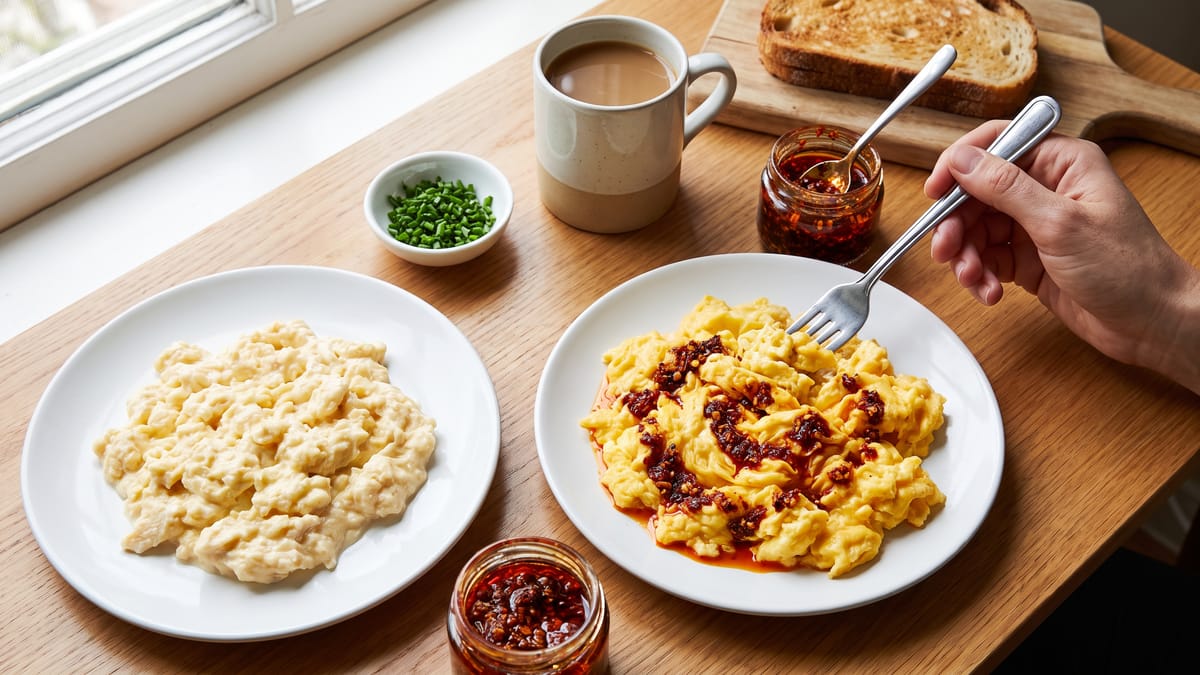
I Added One Simple Ingredient to Scrambled Eggs and the Difference Was Incredible
We've all been there, standing over the stove, spatula in hand, coaxing those humble eggs into a fluffy, golden masterpiece. Scrambled eggs, a breakfast staple, a late-night comfort, a quick and easy protein fix. They seem simple enough, right? Crack, whisk, cook, serve. Yet, achieving that elusive perfect scramble, the one that's creamy, tender, and bursting with flavor, often feels like chasing a culinary unicorn. For years, we’ve experimented, tried different techniques, obsessed over heat levels, and debated the merits of milk versus cream. We thought we had a pretty good handle on it, even developed a reliable method we were proud of. But then, a whisper, a fleeting suggestion, led us down a new path, and the results, dear readers, were nothing short of revelatory. We added one simple ingredient, and the difference, truly, was incredible.
The Quest for the Perfect Scramble: A Culinary Odyssey
Our journey to scrambled egg nirvana has been a long and winding one. Like many home cooks, we started with the basics. Overcooked, rubbery eggs were an unfortunate rite of passage. Then came the era of aggressive whisking, convinced that aeration was the key to lightness. We graduated to low and slow cooking, painstakingly stirring, hoping for that custardy texture. We tried adding a splash of milk, then a dollop of cream, each promising a silkier mouthfeel. Some mornings, we even dared to incorporate a pat of butter at the end, melting into the warm curds, enriching the experience. These methods yielded decent results, certainly edible, and often enjoyable. But there was always a subtle something missing, a je ne sais quoi that separated our scrambles from those ethereal, restaurant-quality creations that leave a lasting impression. We yearned for that delicate balance of flavor and texture, a scramble that was simultaneously light and rich, a testament to the egg's inherent deliciousness.
The Revelation: A Humble Addition
It was during a particularly engaging conversation with a seasoned chef, a true master of breakfast cookery, that the seed of this revelation was planted. We were discussing the nuances of egg preparation, and the topic of scrambled eggs naturally arose. We detailed our current process, our triumphs, and our lingering frustrations. The chef listened patiently, a knowing smile playing on their lips. Then, with a twinkle in their eye, they offered a seemingly innocuous suggestion. "Have you ever considered a touch of mayonnaise?"
Mayonnaise. Our initial reaction was a mixture of surprise and skepticism. Mayonnaise, in scrambled eggs? Our minds immediately conjured images of something heavy, perhaps even unappetizing. Mayonnaise, with its distinct tang and creamy richness, felt like an odd bedfellow for the delicate nature of eggs. But the chef's conviction was palpable, and their reputation impeccable. Intrigued, and always open to culinary experimentation, we decided to give it a try the very next morning. What did we have to lose, after all, besides a couple of eggs?
The Science Behind the Magic: Why Mayonnaise Works
Before we delve into the astounding transformation, let's unpack the "why." Why does a spoonful of mayonnaise elevate scrambled eggs to such dizzying heights? It's not just a whimsical addition; there's a fascinating scientific principle at play.
Mayonnaise is, at its core, an emulsion. It's a stable mixture of oil, egg yolk, and an acid, usually vinegar or lemon juice. This emulsion is key. When we add mayonnaise to our whisked eggs, we're introducing several beneficial elements.
First, the oil content in mayonnaise contributes fat, and fat, as we know, is a flavor carrier and a texture enhancer. It coats the egg proteins, preventing them from bonding too tightly and becoming tough. This results in a scramble that is incredibly tender and moist, far from the dry, rubbery texture that often plagues poorly cooked eggs.
Second, the emulsified nature of mayonnaise means that the fat is already suspended in a stable form. This helps to distribute the richness evenly throughout the egg mixture, creating a consistently creamy texture that is simply unparalleled. Unlike adding a splash of milk or cream, which can sometimes thin out the eggs or even make them watery if overdone, mayonnaise seamlessly integrates, adding body and luxuriousness without compromising the egg's integrity.
Third, the subtle acidity from the vinegar or lemon juice in mayonnaise plays a crucial role. Acid helps to tenderize proteins. In the context of eggs, a tiny bit of acid can prevent the proteins from coiling up too tightly when heated, leading to a softer, more delicate curd. It's a similar principle to adding a splash of vinegar to poaching water to help the egg hold its shape, but here, it's about achieving a supremely tender interior.
Finally, the egg yolk in mayonnaise adds an extra layer of richness and a deeper, more vibrant color to the finished scramble. It's like a secret ingredient that amplifies the inherent eggy flavor, making it more pronounced and satisfying.
The Method: Integrating Mayonnaise into Your Scramble
The beauty of this technique lies in its simplicity. You don't need to drastically alter your existing scrambled egg routine. It's a minor adjustment with monumental results.
Here’s our refined method, incorporating the magic of mayonnaise:
The Perfect Egg-to-Mayonnaise Ratio
The key is not to overdo it. A little goes a long way. For every two large eggs, we recommend starting with a scant half teaspoon of good quality mayonnaise. If you're making a larger batch, simply scale up proportionally. For instance, for four eggs, a full teaspoon is usually sufficient. Experiment a little to find your personal sweet spot, but err on the side of less rather than more initially.
Whisking with Purpose
Crack your eggs into a bowl. Add your chosen amount of mayonnaise. Now, whisk with purpose. We're not talking about a gentle stir here. You want to thoroughly combine the eggs and mayonnaise until the mixture is uniform in color and texture. There should be no visible streaks of mayonnaise. This thorough whisking ensures that the emulsified fat and acid are evenly distributed throughout the egg mixture, setting the stage for that incredible tenderness. We find a fork works perfectly for this, or a small whisk if you prefer.
The Heat Factor: Low and Slow is Still the Way
Even with the mayonnaise, the principle of low and slow cooking remains paramount for truly exceptional scrambled eggs. High heat will still result in rubbery curds, no matter how much mayonnaise you add. We advocate for a medium-low heat setting. This allows the eggs to cook gently and evenly, giving the proteins ample time to set without seizing up.
The Pan: Non-Stick is Your Friend
A good quality non-stick pan is invaluable here. It prevents sticking and ensures that your delicate curds can be easily maneuvered. We start by melting a small pat of butter in the pan over medium-low heat. The butter adds another layer of flavor and helps to prevent any sticking, even in a non-stick pan.
The Stirring Technique: The Gentle Fold
Once the butter is melted and slightly foamy, pour in your egg and mayonnaise mixture. Let it sit undisturbed for about 30 seconds to a minute, allowing the edges to just begin to set. Then, using a heat-resistant rubber spatula, gently push the cooked egg from the edges towards the center, allowing the uncooked egg to flow into the empty spaces. Continue this gentle folding motion, scraping the bottom and sides of the pan, until the eggs are mostly set but still slightly moist and creamy. This technique creates those beautiful, soft curds that are the hallmark of a perfectly scrambled egg. Resist the urge to stir vigorously, which can break down the curds and lead to a less desirable texture.
The Finishing Touch: Seasoning and Serving
Remove the pan from the heat when the eggs are still a tiny bit underdone, as they will continue to cook from residual heat. Season generously with salt and freshly ground black pepper. We often add a sprinkle of fresh chives or parsley for a burst of color and herbaceousness. Serve immediately, perhaps alongside some crusty toast, crispy bacon, or a fresh avocado.
The Unbelievable Results: A Sensory Experience
The first bite of those mayonnaise-enhanced scrambled eggs was a revelation. The texture was unlike anything we had achieved before. They were incredibly soft, almost custardy, yet still held their form. There was a delicate creaminess that coated the palate, a luxuriousness that made them feel far more indulgent than their simple ingredients suggested. The flavor was rich and deeply eggy, with a subtle tang that brightened the whole experience, preventing it from feeling heavy. It wasn't overtly "mayonnaise-y" in taste; rather, the mayonnaise worked its magic behind the scenes, enhancing the natural flavors of the egg and contributing to an unparalleled texture.
Friends and family, who were initially skeptical, quickly became converts. We've served these eggs to discerning palates, and the unanimous verdict has been one of delight and surprise. "What did you do differently?" is a common question, and sharing our secret often elicits a similar initial skepticism, followed by enthusiastic adoption once they try it themselves.
Beyond the Basic Scramble: Variations and Enhancements
Once you've mastered the basic mayonnaise-enhanced scramble, the world of possibilities opens up. This technique provides a fantastic foundation for countless variations.
Cheesy Delights
For a cheesy scramble, we like to stir in a handful of finely grated cheese, such as sharp cheddar, Gruyère, or Monterey Jack, just as the eggs are mostly set. The residual heat will melt the cheese into gooey perfection, creating pockets of savory deliciousness.
Herbaceous Accents
Fresh herbs are a wonderful addition. Chives, parsley, dill, and even a touch of tarragon can elevate the flavor profile. Stir them in just before serving to preserve their vibrant color and fresh taste.
Spicy Kick
For those who enjoy a bit of heat, a pinch of red pepper flakes, a dash of hot sauce, or a finely diced jalapeño can be incorporated. Add the pepper flakes or hot sauce during the whisking stage, or sauté the jalapeño briefly before adding the eggs.
Umami Boost
A tiny splash of fish sauce or a pinch of nutritional yeast can add a fantastic umami depth to your scramble, taking it to another level of savory satisfaction. Be judicious with these, as a little goes a long way.
Veggie Infusion
If you enjoy a more substantial breakfast, consider sautéing some finely diced vegetables, such as bell peppers, onions, spinach, or mushrooms, before adding the egg mixture. This adds fiber, nutrients, and a delightful textural contrast.
Common Pitfalls to Avoid
While the mayonnaise technique is remarkably forgiving, there are a few common pitfalls to be aware of:
Overdoing the Mayonnaise
As mentioned, a little goes a long way. Too much mayonnaise can lead to a scramble that feels greasy or has an overpowering mayonnaise flavor. Start small and adjust to your preference.
High Heat
This bears repeating: high heat is the enemy of tender scrambled eggs. Keep the heat at medium-low for the best results. Patience is a virtue in scrambled egg making.
Overcooking
Remove the eggs from the heat when they are still slightly moist. They will continue to cook in the residual heat of the pan, and this carryover cooking is crucial for achieving that perfect, creamy consistency. Overcooked eggs will inevitably become dry and rubbery.
Skimping on Whisking
Ensure the eggs and mayonnaise are thoroughly combined. Uneven whisking can lead to an inconsistent texture and flavor.
The Broader Implications: A Lesson in Culinary Open-Mindedness
This simple addition to our scrambled eggs taught us a valuable lesson, one that extends far beyond the breakfast table. It reminded us that sometimes, the most unexpected ingredients can unlock incredible culinary potential. It encouraged us to be more open-minded in our cooking, to question conventional wisdom, and to embrace experimentation.
In the culinary world, innovation often stems from a willingness to try something new, to challenge assumptions, and to look at familiar ingredients in a fresh light. This experience, born from a casual suggestion, transformed our approach to a fundamental dish and, in a broader sense, reinforced our belief in the endless possibilities of the kitchen.
In a nutshell
The journey to perfect scrambled eggs is a personal one, filled with experimentation and discovery. For us, the simple act of adding a touch of mayonnaise was a game-changer, elevating a humble dish to extraordinary heights. It's a testament to the power of a single ingredient, meticulously applied, to transform the ordinary into the sublime. We encourage you to try this technique, to experience the incredible difference for yourselves. We believe you'll find, as we did, that this small adjustment yields a breakfast experience that is truly unforgettable. So, whisk up those eggs, add that secret ingredient, and prepare to be amazed. Happy scrambling, and bon appétit!