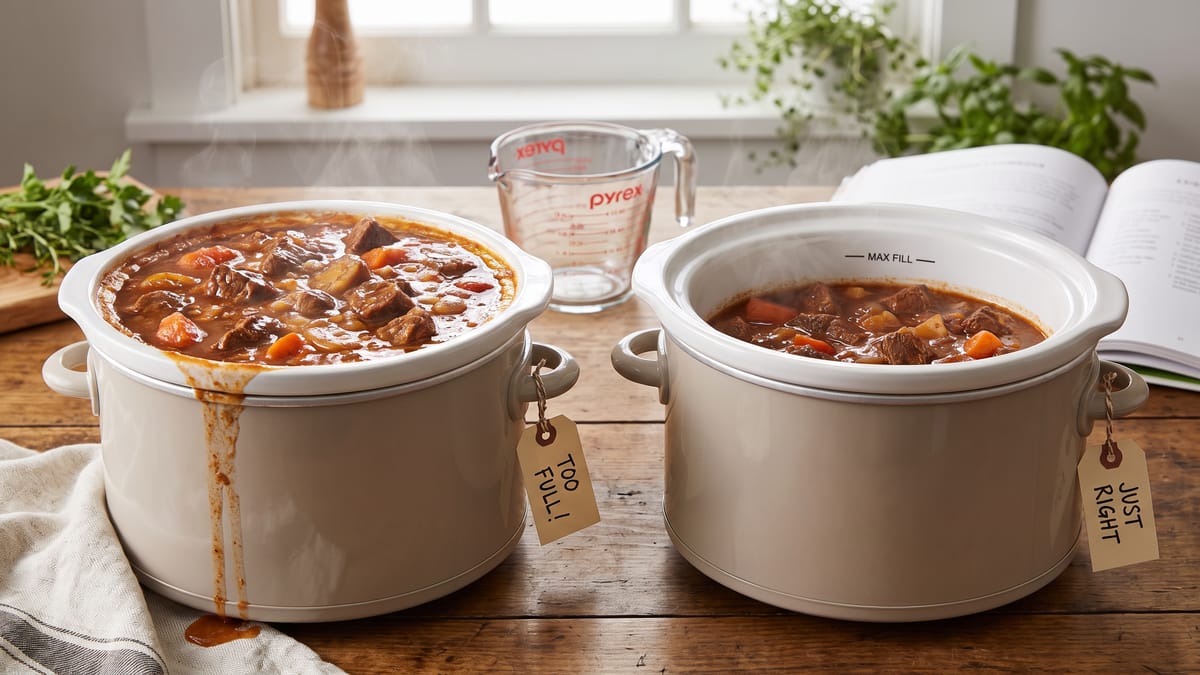
How Full Is Too Full for Your Slow Cooker? The Science Behind Fill Limits
The gentle hum of a slow cooker, the promise of a delicious meal simmering away with minimal fuss, it's a symphony of culinary convenience. We all adore our slow cookers for their ability to transform humble ingredients into tender, flavorful dishes while we go about our busy lives. But beneath that placid lid lies a delicate balance of science and safety, a balance that can be easily disrupted by one common mistake: overfilling.
It’s a question that plagues many a home cook, especially when trying to stretch a recipe or feed a hungry crowd: "How full is too full for my slow cooker?" The answer, as we’ll discover, isn't just about preventing a messy boil-over; it's profoundly tied to food safety, even heating, and the very success of your culinary endeavor. We've all seen those tantalizing recipes that seem to fill the pot to the brim, but what do the experts say? And more importantly, what's the science behind those crucial fill limits? Let's dive into the fascinating world of slow cooker physics and emerge with a clear understanding of how to use our beloved appliances safely and effectively.
The Competing Voices: A Cacophony of Capacity Advice
When we consult various sources for slow cooker fill guidelines, we might notice a slight discrepancy, a subtle divergence in recommendations that can leave us scratching our heads. On one hand, many slow cooker manufacturers, eager for us to maximize the utility of their products, often suggest filling the stoneware anywhere from one-half to three-quarters full. This seems generous, offering a broader window for capacity.
However, when we turn to the guardians of food safety and culinary science, the university extension services that rigorously test and validate cooking methods, a more conservative and consistent message emerges. These esteemed institutions, through their extensive research and commitment to public health, consistently advise filling slow cookers between one-half and two-thirds full. This tighter range emphasizes a crucial safety margin, prioritizing thorough cooking and bacterial inhibition above all else. This isn't just a minor difference in opinion; it's a fundamental distinction driven by scientific principles that directly impact the safety and quality of our food.
The Peril of the Danger Zone: Why Fill Levels Matter for Food Safety
Before we delve into the intricate dance of heat and steam, let's address the elephant in the kitchen: food safety. The primary concern with overfilling a slow cooker isn't merely about taste or texture; it's about preventing foodborne illness. Bacteria, those microscopic party crashers, thrive in what scientists call the "temperature danger zone," which spans from 40 °F to 140 °F. Our goal with any cooking method, especially slow cooking, is to move food through this zone as quickly as possible.
A slow cooker, by its very nature, operates at lower temperatures over extended periods. This makes the initial ramp-up to safe temperatures even more critical. When we overfill a slow cooker, we introduce a larger, denser mass of food that takes significantly longer to heat through. This prolonged exposure to the danger zone creates an ideal environment for harmful bacteria to multiply to dangerous levels. The scientific consensus is clear: foods should reach 140 °F within two hours to prevent bacterial growth. Overfilling directly compromises this vital timeline, turning a convenient meal into a potential health hazard.
The Physics of Flavor: Liquid Expansion and Heat Circulation
To truly understand why fill levels are so important, we need to appreciate the fundamental physics at play within our slow cooker. It's a miniature ecosystem of heat transfer, steam generation, and convection currents, all working in concert to cook our food evenly and safely.
The Role of Liquid and Steam
Liquid is not just for flavor; it's the primary medium for heat transfer in a slow cooker. As the heating elements warm the stoneware, the liquid within the pot begins to heat and convert into steam. This steam then circulates throughout the enclosed space, enveloping the food and transferring heat directly to every surface. When cooking meat or poultry, the liquid level should ideally cover the ingredients to ensure this effective heat transfer. This steamy environment also helps to tenderize food and prevent it from drying out.
However, liquids expand when heated. This is a basic principle of thermodynamics. If we fill the slow cooker too high, this expansion has nowhere to go. It can lead to a messy boil-over, where hot liquid and food erupt from under the lid, creating not only a cleaning nightmare but also a potential burn hazard. More importantly, excessive liquid volume can impede the efficient circulation of steam, creating pockets of cooler food that don't reach safe temperatures quickly enough.
Convection and Conduction: The Heat Highway
Heat transfer in a slow cooker occurs through two main mechanisms: conduction and convection. Conduction is the direct transfer of heat from the hot stoneware to the food it touches. Convection is the transfer of heat through the movement of fluids, in this case, the steam and liquid within the pot.
Adequate headspace, the empty space between the food and the lid, is absolutely crucial for proper convection. This headspace allows the steam to rise, condense, and circulate freely, distributing heat evenly throughout the entire mass of food. When the slow cooker is overfilled, this vital airspace is diminished, hindering the convective currents. The result is uneven heating, with the food at the bottom and sides potentially overcooking while the food in the center and top remains dangerously undercooked. Imagine a crowded elevator; if there's no room to move, people get stuck. Similarly, if there's no headspace, heat gets trapped and doesn't circulate.
The Temperature Sweet Spot: Reaching Safe and Delicious Doneness
Our slow cooker isn't just a warm bath for food; it's a precise cooking instrument designed to reach specific temperatures over time. A slow cooker on a low setting should ideally reach an internal temperature of 180–200 °F. To validate this, a common test involves filling the cooker one-half to two-thirds with water, heating it on low for 8 hours, and expecting the water temperature to reach 185 °F. This benchmark demonstrates the cooker's ability to maintain a safe and effective cooking temperature.
When we overfill, we challenge the slow cooker's ability to achieve these critical temperatures within the recommended timeframe. The sheer volume of cold food acts as a heat sink, absorbing energy and prolonging the time it takes for the entire contents to reach 140 °F, let alone the desired cooking temperature of 180–200 °F. This isn't just about patience; it's about food safety. If the food doesn't get hot enough soon enough, bacterial growth can occur, making the meal unsafe to eat.
The Goldilocks Zone: Not Too Little, Not Too Much
Just as overfilling poses risks, underfilling a slow cooker also presents its own set of challenges. If the cooker is less than half full, the food can overcook and dry out because the smaller mass heats up much faster and is exposed to the direct heat for longer relative to its volume. This can lead to tough, rubbery textures and diminished flavor. The ideal scenario is a "Goldilocks zone," where the fill level is just right.
This zone, as consistently recommended by university extension services like the University of Idaho Extension, is between one-half and two-thirds full. This range strikes the perfect balance: enough food to cook efficiently without drying out, and enough headspace for proper heat circulation and steam generation to ensure food safety and even cooking.
The Lid's Critical Role: A Vacuum Seal for Success
The tight-fitting lid of a slow cooker is more than just a cover; it's an integral part of the cooking process. It creates a vacuum seal that traps steam and heat, maintaining a consistent internal temperature and facilitating efficient heat transfer. This seal is crucial for building and maintaining the steamy environment that tenderizes food and ensures even cooking.
Lifting the lid, while tempting to check on our culinary creations, comes with a significant cost. Every time we peek, we cause a temperature drop of 10–15 °F. This isn't a minor setback; regaining that lost heat can add a substantial 15–30 minutes to the overall cooking time. Repeatedly lifting the lid can compromise food safety by prolonging the time food spends in the danger zone and can also lead to undercooked meals. Resist the urge to peek; trust the process and the tight seal of your slow cooker.
High Altitude Hurdles: Adjusting for Atmospheric Pressure
For those of us cooking at high altitudes, an additional consideration comes into play. At higher elevations, atmospheric pressure is lower, which causes water to boil at a lower temperature and evaporate more quickly. This means that a slow cooker, which relies on steam and sustained heat, will find it more challenging to reach and maintain safe cooking temperatures.
If you live at a high altitude, you'll need to adjust your slow cooking practices. This typically involves longer cooking times to ensure that food reaches the necessary internal temperatures. While the fill limits remain consistent, the overall duration on the "low" or "high" setting will need to be extended to compensate for the reduced boiling point and increased evaporation. Always consult altitude-specific cooking guidelines for precise adjustments.
Sizing Up Your Slow Cooker: Matching Capacity to Your Needs
Choosing the right size slow cooker for your household is another important aspect of ensuring proper fill levels and successful meals. A slow cooker that is too large for the amount of food you're cooking will essentially be "underfilled," leading to the issues of overcooking and drying out we discussed earlier. Conversely, trying to squeeze too much into a cooker that's too small inevitably leads to overfilling.
Here's a general guide to matching slow cooker capacity to your needs:
- • 1.5 quarts: Ideal for 1 person, perfect for small side dishes or single servings.
- • 2–3.5 quarts: Suitable for 2 people, great for couples or small batches.
- • 3.5–4.5 quarts: A good choice for 3–4 people, accommodating most family meals.
- • 4.5–5 quarts: Works well for 4–5 people, offering a bit more room for larger portions.
- • 5–7 quarts: Designed for 6+ people, perfect for entertaining, potlucks, or meal prepping for larger families.
The Clear Verdict: Our Culinary Compass
After exploring the physics of heat transfer, the perils of the danger zone, and the wisdom of culinary experts, the verdict on slow cooker fill levels becomes remarkably clear and consistent.
To ensure both food safety and optimal cooking results, we should always fill our slow cookers between one-half and two-thirds full.
This isn't an arbitrary guideline; it's a scientifically backed recommendation that provides the necessary safety margins. Overfilling beyond two-thirds (or even the more liberal three-quarters suggested by some manufacturers) significantly risks food remaining in the bacterial danger zone (40–140 °F) for too long. It impedes the crucial circulation of steam and heat penetration, preventing the entire mass of food from reaching 140 °F within the vital two-hour window and ultimately failing to achieve the safe cooking temperature of 185 °F on low.
Adequate headspace, achieved by adhering to the one-half to two-thirds fill level, allows the steam to circulate freely, ensuring that heat is evenly distributed throughout the food. This promotes thorough cooking, inhibits bacterial growth, and results in tender, flavorful dishes every time.
Putting It All Together: Practical Tips for Perfect Slow Cooking
Now that we understand the science, let's distill this knowledge into actionable tips for our everyday slow cooking adventures:
- • Measure with Your Eyes (and a Little Common Sense): While you don't need a measuring cup for your slow cooker, visually estimate the one-half to two-thirds mark. Err on the side of slightly less full if you're unsure.
- • Layer Wisely: Place ingredients that take longer to cook, like root vegetables, at the bottom of the slow cooker, closer to the heat source. Meats can go on top, followed by liquid.
- • Don't Skimp on Liquid (But Don't Drown It): Ensure enough liquid to create steam, especially when cooking meats. It should cover most of your ingredients, but not exceed the two-thirds fill line.
- • Preheating is Optional, Not Required: Unlike an oven, preheating a slow cooker is generally not necessary. The slow, gradual heating is part of its design.
- • Resist the Urge to Peek: We can't stress this enough. Every time you lift that lid, you're adding precious minutes to your cooking time and potentially compromising food safety. Trust the process.
- • Adjust for Altitude: If you live in a high-altitude area, remember to factor in longer cooking times for your recipes.
- • Match Size to Serving: Use the right size slow cooker for the amount of food you're preparing to avoid underfilling or overfilling.
- • Thaw Frozen Foods: Always thaw frozen meat or poultry completely before adding it to a slow cooker. Adding frozen food can significantly prolong the time it takes for the food to reach safe temperatures, increasing the risk of bacterial growth.
To Wrap Things Up
Our slow cookers are truly invaluable kitchen companions, offering convenience and delicious results with minimal effort. But like any powerful tool, they operate best when we understand their nuances and respect their limitations. The question of "how full is too full" isn't just about preventing a mess; it's a fundamental inquiry into food safety, even cooking, and the very science that makes slow cooking so effective.
By consistently adhering to the recommendation of filling our slow cookers between one-half and two-thirds full, we empower ourselves to create meals that are not only incredibly flavorful and tender but also unequivocally safe for ourselves and our loved ones. So, the next time you reach for your slow cooker, remember the science, honor the fill limits, and enjoy the comforting magic of perfectly cooked, worry-free meals. Happy slow cooking.