Building a Foolproof Weekly Meal Routine
Building a Foolproof Weekly Meal Routine
Life can get busy, and as much as we love cooking, it can sometimes feel like a chore. The good news is that establishing a weekly meal routine can transform our kitchen experience from chaotic to calm. By creating a structure around our meals, we can save time, reduce stress, and even enjoy our culinary adventures more. So, let’s dive into how we can build a foolproof weekly meal routine that fits our lifestyle and makes cooking a joy instead of a burden.
Understanding Our Needs
Before we jump into meal planning, it's essential to take a moment to reflect on our needs and preferences. What do we enjoy eating? Are there any dietary restrictions we need to consider? How many meals do we need to prepare each week? Perhaps we often find ourselves crunched for time on weekdays but have a bit more flexibility during the weekends. By understanding our unique situation, we can tailor our meal routine to suit our lifestyles and tastes.
Setting Up a Meal Planning Framework
Once we have a clear understanding of our needs, it's time to set up a framework for our meal planning. Here’s where we can get a bit creative! The idea is to create a balance between variety and simplicity. We want meals that are enjoyable yet easy to prepare.
Begin by choosing a consistent day for meal planning. Many people find weekends work best, but choose what fits us. On this day, we can gather our favorite recipes, plan our meals for the week, and create a shopping list. This helps ensure we have everything we need on hand and cuts down on those last-minute grocery runs.
Choosing Recipes
When selecting recipes, let’s focus on a mix of our favorites and new dishes we'd like to try. We can categorize our meals by type or theme, such as:
- • Meatless Mondays
- • Taco Tuesdays
- • Comfort Food Wednesdays
- • Quick and Easy Thursdays
- • Family Favorites Fridays
- • Meal Prep Saturdays
- • Relaxed Sundays
Creating a Shopping List
Once we have our recipes lined up, we can create a detailed shopping list. Organizing our list by category—produce, dairy, grains, etc.—makes our trip to the grocery store more efficient. We can also take inventory of what we already have at home to avoid buying duplicates.
As we shop, let’s keep an eye out for seasonal produce. Not only does this often save us money, but it also ensures that we’re cooking with the freshest ingredients possible. Seasonal ingredients tend to taste better and can inspire our menus, too.
Meal Prep: The Heart of Our Routine
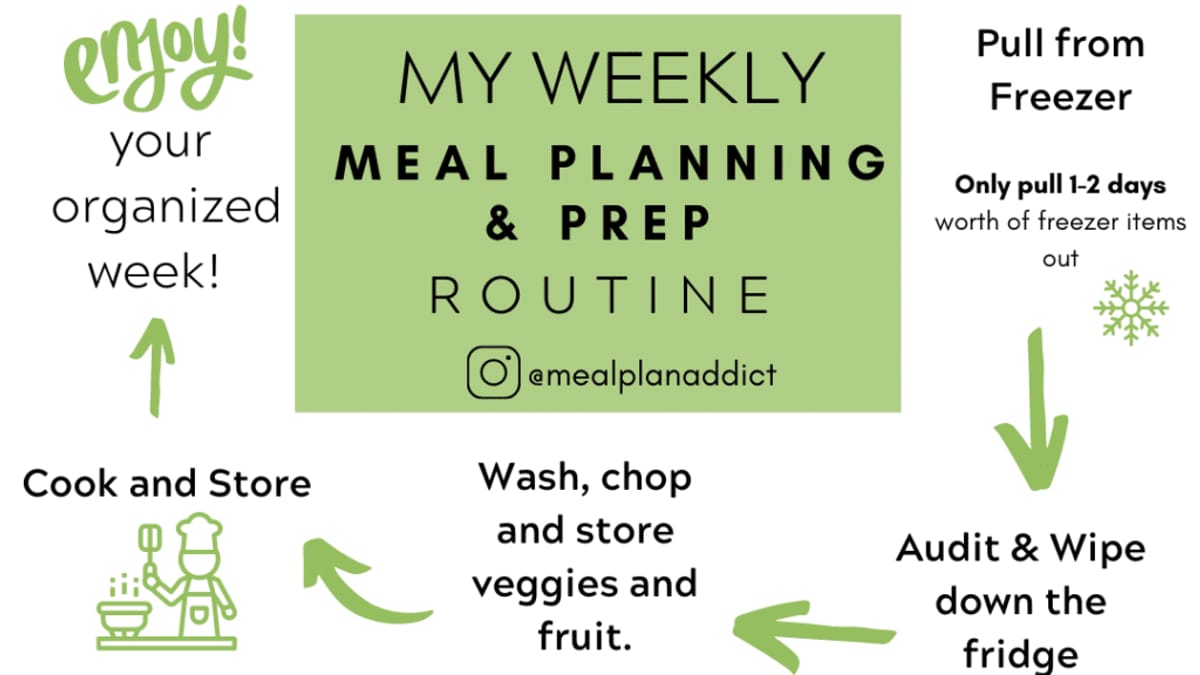
Now that we have our meals planned and our ingredients ready, it’s time to think about meal prep. This step is crucial for a successful weekly routine. We can set aside a few hours on our chosen prep day to wash, chop, and cook ingredients in advance. Think about batch-cooking grains, roasting vegetables, or even preparing a big pot of soup or stew that can be portioned out for the week.
If we enjoy cooking, we can make it an enjoyable event by putting on some music or inviting family or friends to join. Cooking together can create a sense of community and make the prep process feel less like a chore.
Storing & Organizing Food
Efficient storage is key to maintaining our meal routine. We’ll want to ensure that our prepped ingredients stay fresh throughout the week. Invest in good-quality food storage containers that are clear to help us easily see what we have on hand. Labeling containers with the contents and date can also help us keep track of freshness.
When we store our meals, consider portion sizes. Having single servings ready to go can make it easier for busy days when we’re short on time. We can also freeze meals that we know we won’t consume within the week, ensuring that none of our hard work goes to waste.
Cooking Throughout the Week
As we enter the week, we can refer back to our meal plan and utilize our prepped ingredients to make cooking during the week a breeze. By having our components ready, we can mix and match ingredients to create meals quickly. For example, if we have cooked quinoa, roasted vegetables, and grilled chicken, we can easily assemble a nourishing bowl in just a few minutes.
On days when we feel less inspired, we can rely on our pantry staples. Having a few go-to recipes that require minimal prep—like pasta with a quick sauce or a stir-fry—can save the day when we’re not in the mood to cook.
Embracing Flexibility
While having a structured meal plan is beneficial, it’s also essential to allow for flexibility. Life can be unpredictable, and we may not always stick to our plan. That’s perfectly okay! If we find ourselves too tired to cook one night, we can easily pivot to a simple fallback meal or even order in from a local restaurant.
Being flexible also means we can adapt our meals based on cravings or what’s on sale at the grocery store. If we discover a beautiful head of cauliflower or some fresh fish while shopping, we can adjust our meal plans accordingly. Cooking should be enjoyable, and sometimes spontaneity can lead to the most delightful dishes.
Making It a Family Affair
If we share our kitchen with family members or roommates, involving everyone in the meal planning and cooking process can be fantastic. We can take turns picking meals for the week, which adds variety and ensures everyone has something they enjoy.
Additionally, cooking together can be a wonderful bonding experience. We can teach each other skills, share stories, and create lasting memories. Encouraging younger family members to participate can also instill a love of cooking that lasts a lifetime.
Tracking Our Success
Finally, let’s take some time to reflect on our meal routine. At the end of the week, we can evaluate what worked well and what didn’t. Did we enjoy the meals we planned? Were there any recipes that fell flat? This reflection allows us to continuously improve our routine, making it more enjoyable and efficient over time.
Perhaps we might even want to jot down our favorite meals or the ones that received rave reviews. Keeping a recipe journal or a digital note can be a great way to build a personalized cookbook over time.
The Joy of Cooking
Creating a weekly meal routine isn’t just about efficiency; it’s also about rediscovering the joy of cooking. When we have a plan in place, we free ourselves from the daily stress of figuring out what to eat. We turn cooking into a rewarding and enjoyable experience, allowing us to try new recipes, explore new flavors, and connect with those we share meals with.
By establishing a structure around our meals, we can embrace the art of cooking with open arms. So, let’s grab our aprons and enjoy the delicious journey ahead!